

A granny flat investment property in Victoria can add a second, self-contained home to land you already own, without buying another block. Before you build, it helps to understand how the rules, tax and finance work together. This guide covers the basics every owner should know, from planning rules and tax deductions to funding the build, so you can have better conversations with your accountant and broker.
This guide is general information only and is not tax, legal or financial advice. Speak with a registered tax agent and a licensed finance professional about your situation.
Key takeaways
- A granny flat in Victoria can be rented out, but it cannot be subdivided or sold separately from the main home.
- Since 15 October 2026, a small second dwelling can be up to 80m² (previously 60m²).
- If you rent it out, some costs may be tax deductible, and the build itself may be eligible for depreciation.
- Renting part of your home can affect capital gains tax on the main residence, so get advice before you build.
- A standard 60m², two bedroom G-Flat™ costs from $195,000 to $265,000 turnkey, depending on the finish level.
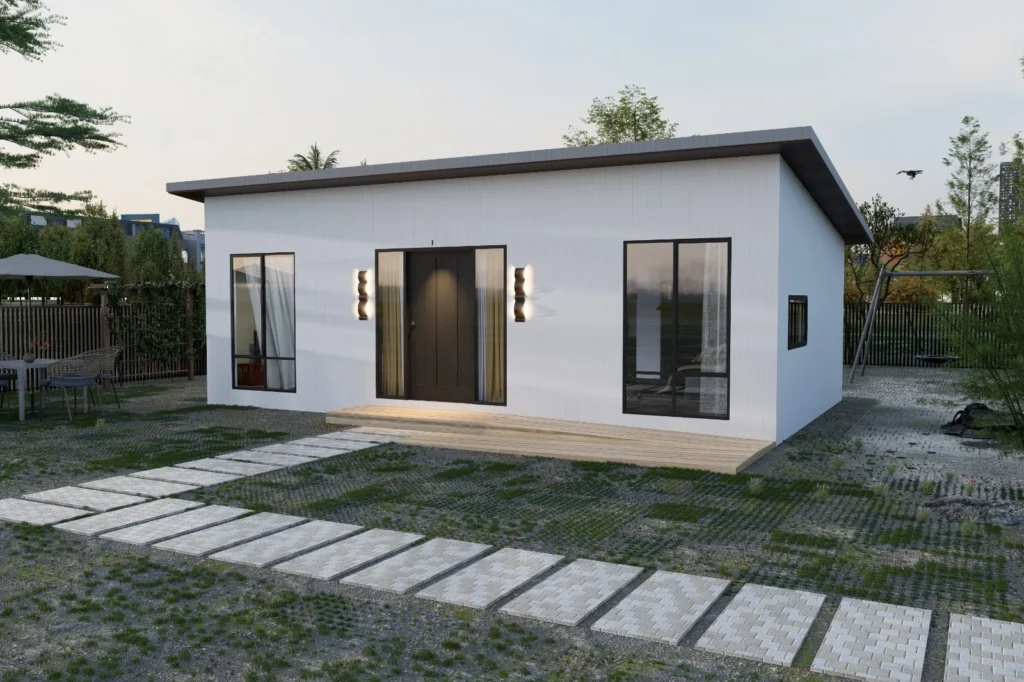
What makes a granny flat an investment property?
In Victoria, a granny flat is a small second dwelling: a self-contained home on the same lot as an existing house. Since 15 October 2026, it can be up to 80m² in floor area, up from 60m². Our guide to the 80m² granny flat rules in Victoria explains the change.
It can be lived in by family or rented to tenants. When you rent it out, it becomes an income-producing property for tax purposes, which changes what you can claim and what you need to record.
Two rules shape every granny flat investment property in Victoria:
- It must stay on the same lot as the main home and cannot be subdivided or sold separately.
- If you rent it to tenants, residential tenancy laws apply, including minimum standards for rental properties.
The Victorian Government small second dwellings page explains the planning rules, and our guide on how to legally rent out a granny flat in Victoria covers tenancy requirements.
Is a granny flat investment right for you?
A granny flat investment property in Victoria suits some owners better than others. It tends to work well if you:
- already own a home with enough backyard space and good access
- want a second income-producing home without buying more land
- like the flexibility of renting now and housing family later
- are comfortable being a landlord, or plan to use a property manager
It may not suit you if your block is small or heavily constrained, if you plan to sell soon, or if you would rather keep the backyard as open space.
Tax basics for a granny flat investment property in Victoria
Tax treatment depends on how the granny flat is used, who lives in it and whether rent is charged at market rates. The points below are general, and your accountant can confirm how they apply to you.
Deductible running costs
When a granny flat is rented to tenants, the ATO generally allows you to claim expenses related to earning that rent. These can include:
- interest on the portion of a loan used to build the granny flat
- property management fees
- landlord insurance
- repairs and maintenance (not improvements)
- the share of council rates and other costs that relate to the rented part of the property
The ATO investments and assets guidance explains what can and cannot be claimed. If the granny flat is rented to family at below market rent, the rules can be different.
Depreciation
A new granny flat may also be eligible for depreciation. In general, the construction cost can be claimed over time as capital works, and some fixtures and fittings can be depreciated separately. A quantity surveyor can prepare a depreciation schedule so you claim the right amounts. Our guide on granny flat depreciation schedules explains how schedules work.
Capital gains tax
If the granny flat sits on the same block as your own home, renting it out can affect the main residence exemption from capital gains tax when you eventually sell. The impact depends on how much of the property is used to earn income and for how long. This is one of the most important questions to raise with your accountant before you build.
Negative gearing changes
Negative gearing rules for residential property change under new law that starts on 1 July 2027. Read our guide to granny flat negative gearing in Victoria and ask a registered tax agent how it applies to you.
For more detail on claims, read what you need to know about tax deductions for granny flat investments.
Keep good records from day one
For a granny flat investment property in Victoria, good records make tax time simpler. Keep:
- your build contract, invoices and final handover documents
- loan statements showing how the borrowed funds were used
- rental agreements, rent receipts and bond records
- receipts for repairs, maintenance, insurance and rates
- your depreciation schedule once it has been prepared
Financing a granny flat investment property in Victoria
Most owners fund a granny flat through one or a mix of:
- savings
- equity in the existing home, through a loan top-up or line of credit
- a construction loan, where funds are released in stages as the build progresses
Lenders assess each situation differently, so a mortgage broker can compare options before you commit. Our guides on how to finance a granny flat build and granny flat grants in Victoria cover the options in more detail.
What a G-Flat™ costs
The standard G-Flat™ is a 60m², two bedroom, one bathroom turnkey home with a set price for each finish level.
| Finish level | Turnkey price |
|---|---|
| Affordable Lite | $195,000 |
| Affordable | $208,000 |
| Homestead | $218,000 |
| Signature | $238,000 |
| Luxe | $265,000 |
A one bedroom, one bathroom layout is $15,000 less, and each extra bedroom or bathroom adds $15,000. Each price includes the building permit and all reports, connection of services up to 10m from the main home and a 10-year structural warranty. All five floor plans (Stella, Aurora, Lana, Lana 2 and Sirius) cost the same within each finish level.
Prices are a guide for a standard 60m², two bedroom G-Flat™ and depend on your site. Sites 70km or more from the Melbourne CBD attract a 12.5% regional surcharge, sites with no driveway or tight backyard access attract a $7,000 surcharge, and sloping or elevated sites can affect the final price. A free site assessment confirms the price for your block.
For a full breakdown, see granny flat pricing in Victoria.

Choosing a floor plan and finish level for renting
The choice of floor plan comes down to your block. Aurora suits narrow and side-access lots, Stella suits corner blocks, Lana fits most backyards, Sirius gives larger bedrooms, and Lana 2 adds a second bathroom for shared living. Larger layouts under the new 80m² limit can be discussed.
For a granny flat investment property in Victoria, many owners weigh up Affordable Lite or Affordable for a lower build cost against Signature or Luxe for comfort features such as skylights, deeper front decking and upgraded appliances. Our guide to Luxe vs Signature compares the top two.
Designing a granny flat for tenants
If you plan to rent the granny flat, design choices made now affect how easy it is to let and maintain later:
- Privacy: a separate entry and windows that do not look into the main home.
- Practical layout: proper bedrooms, a full kitchen and its own laundry.
- Durable finishes: stone benchtops and hard flooring hold up well to everyday use.
- Comfort: a reverse cycle split system and heat pump hot water are included, with skylights and multi-head split systems in higher finish levels.
- Utilities: decide early whether bills will be separate. See setting up a separate electricity meter.
Questions to ask before you build
Take these questions to your accountant, broker and builder before committing:
- How will renting the granny flat affect my tax and capital gains position?
- Which costs can I claim, and do I need a depreciation schedule?
- What does the turnkey price include, and what could change it on my site?
- Do I need a planning permit for my lot?
Rent and returns
Rents for granny flats vary widely by suburb, finish, size and demand, so we do not publish rental estimates. A local property manager can give you a rental appraisal for your property, and your accountant can model the after-tax position based on your own circumstances. Include vacancy, fees, insurance and maintenance in any scenario.
How long it takes
A G-Flat™ takes approximately 5 months end to end, from planning through to handover, including the building permit, construction and connection of services.
Frequently asked questions
Yes. A small second dwelling can be rented to family or tenants, and residential tenancy laws apply.
No. It cannot be subdivided or sold separately from the main home.
If it is rented to tenants, some costs may be deductible and the build may be eligible for depreciation. Your accountant can confirm what applies.
It can affect the main residence exemption. Get advice before you build.
Start with the right advice
A granny flat investment property in Victoria works best when the build, finance and tax plan are lined up before construction starts. Our free site assessment starts with an online review of your block by our CEO, Theo Stone, using satellite imagery, followed by an on-site inspection and a proposal for the best use of your land within council guidelines.
Book your free site assessment or visit our display G-Flat™.