
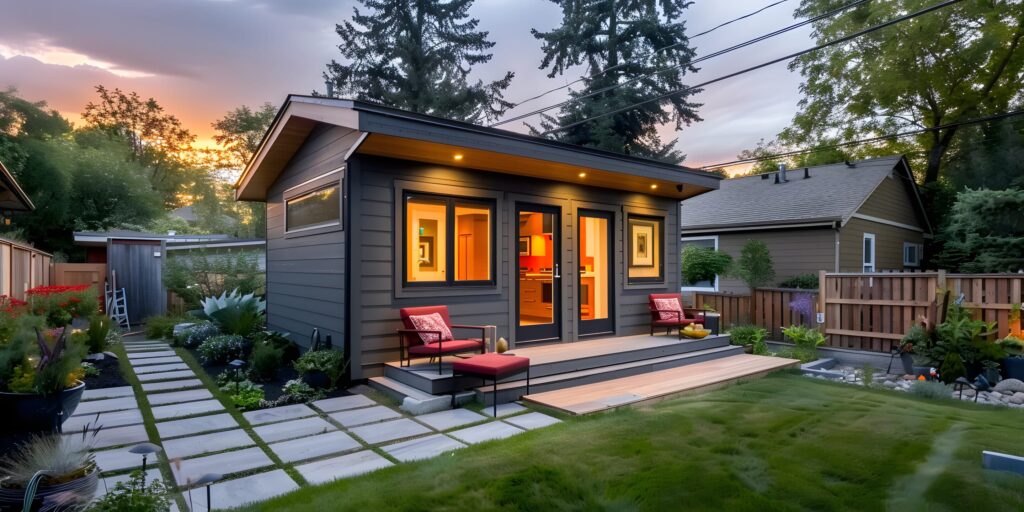
Melbourne homeowners planning granny flats face a compliance requirement many builders fail to explain properly: Livable Housing Design Silver Standard. Since National Construction Code 2022 took effect in Victoria (May 2024), all new Class 1a dwellings including granny flats in Melbourne must meet accessibility standards previously considered optional upgrades.
This isn’t about building disability accommodation. Livable Housing Silver Standard creates homes adaptable across occupants’ lifetimes, accommodating aging parents today, wheelchair users tomorrow, or simply making everyday life easier for everyone. Yet many families discover these requirements only when building surveyors reject applications for missing flush entries, inadequate corridor widths, or absent wall reinforcement.
Understanding Livable Housing requirements, specific technical standards granny flats in Melbourne must meet, costs to implement properly, and how quality builders integrate accessibility from initial design prevents expensive redesigns and approval delays.
Here’s everything about mandatory Livable Housing Silver Standard for granny flats, technical specifications, compliance costs, and future-proofing benefits.
What Livable Housing Silver Standard Requires
National Construction Code 2022 Volume 2 Section G7 mandates Livable Housing Design Standard (based on Silver Level from Livable Housing Australia guidelines) for all new houses and granny flats. These requirements apply whether building for family, rental income, or future sale. Understanding council approval processes includes ensuring designs meet accessibility standards.
Six core accessibility features:
Step-free access from boundary/parking to entrance (Part 1): Continuous accessible path from street, driveway, or parking area to at least one granny flat entrance. Path must be minimum 1,000mm wide, maximum 1:14 gradient (steeper slopes require ramps meeting specific standards), firm, stable, slip-resistant surface, and level landings at changes of direction.
This doesn’t mean entire property must be flat. Sloped sites can use ramps, but must meet gradient limits. Properties with steps to main house can still build compliant granny flats using alternative access paths.
Step-free entrance into dwelling (Part 2): At least one entrance door must have maximum 5mm threshold (essentially flush). Traditional door thresholds (20-40mm high) fail compliance. Modern flush threshold systems integrate weatherproofing without creating step barriers.
Entry door must provide minimum 850mm clear opening width. Standard 820mm doors with frames/architraves typically provide inadequate clearance. Most compliant installations use 870mm or 920mm doors.
Wide internal doorways and corridors (Part 3): All habitable room doorways require minimum 820mm clear opening width. Corridors must be minimum 1,000mm wide. These dimensions allow comfortable wheelchair passage, furniture moving, and walker use.
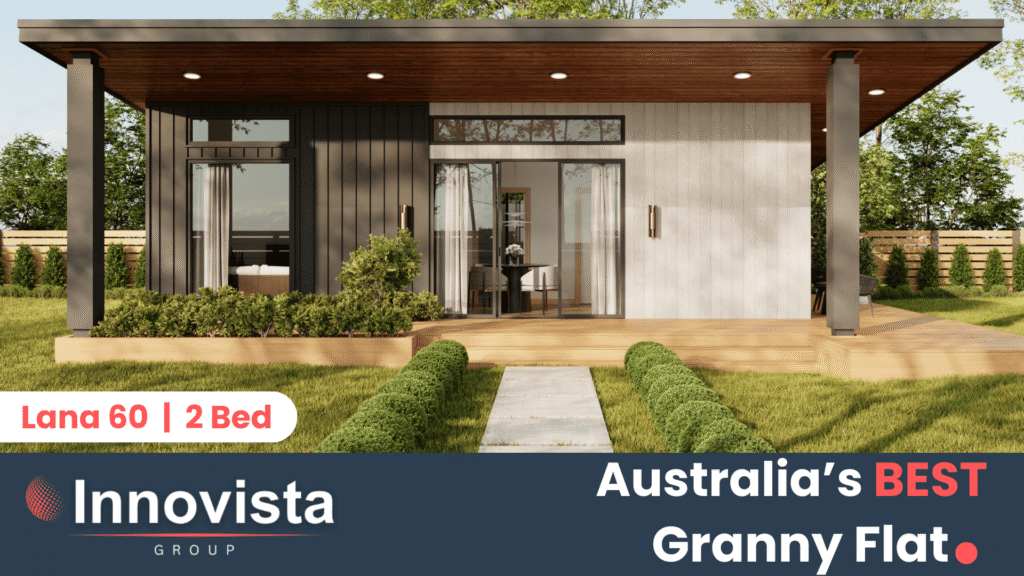
Small granny flats (40-50m²) sometimes struggle accommodating 1,000mm corridors without sacrificing living space. Efficient layout design becomes critical. Reviewing compact floor plans like the Stella 50m² demonstrates how professional designs meet corridor requirements without wasting space.
Accessible toilet on entry level (Part 4): At least one toilet must be located on ground/entry level with specific clearances: minimum 1,200mm circulation space in front of toilet pan, minimum 900mm space beside toilet (measured from pan centerline to nearest obstruction), door swings outward or slides (inward-swinging doors block emergency access if occupant falls).
Single-storey granny flats automatically satisfy “entry level” requirement. Two-storey designs must include ground floor toilet even if main bathroom upstairs.
Hobless (step-free) shower (Part 5): At least one shower must be step-free with maximum 5mm threshold. Traditional shower hobs (50-150mm steps) prevent wheelchair access and create trip hazards.
Step-free showers require careful waterproofing and floor grading (typically 1:80 gradient toward drain). Quality builders incorporate proper drainage systems during initial construction. When planning all-electric granny flats, ensure hot water systems integrate with step-free shower specifications.
Shower must provide minimum 900mm x 900mm clear floor space (no fixtures/fittings within this area).
Reinforced bathroom walls (Part 6): Walls around toilet, shower, and bath must include reinforcement allowing future grab rail installation. This doesn’t require installing grab rails now, but ensures walls can support them later without major renovation.
Reinforcement typically involves timber blocking or structural ply behind wall linings at specific heights (750-850mm above floor for horizontal rails, various heights for vertical rails). Costs approximately $300-$600 additional materials and labor during construction versus $3,000-$6,000 retrofitting later.
Additional Livable Housing Elements
Beyond six mandatory features, Silver Standard includes optional elements improving accessibility:
Kitchen clearances: Minimum 1,200mm space between facing benches/appliances allows wheelchair maneuvering. Not mandatory but strongly recommended for aging occupants.
Power point heights: 500-1,200mm above floor (rather than traditional 300mm) reduces bending for elderly users. Light switches at 900-1,100mm height similarly improve accessibility.
Slip-resistant flooring: Particularly important in bathrooms and kitchens. Minimum R10 slip resistance rating for wet areas.
Window sill heights: Maximum 1,000mm above floor allows seated viewing. Properties requiring specific design features for aging parents benefit from comprehensive accessibility planning.
Compliance Costs and Implementation

Cost implications of Livable Housing compliance:
Incorporating accessibility from initial design adds approximately 1-3% to total construction costs (roughly $2,000-$6,000 on typical $200,000 granny flat). This covers flush thresholds, wider doors/corridors, reinforced walls, step-free shower systems.
Retrofitting non-compliant granny flats costs significantly more: $8,000-$18,000 depending on modifications required. This explains why building correctly from the start makes financial sense.
Design efficiency matters: Poor designers treat accessibility as burden, creating awkward layouts with wasted space. Quality designers integrate requirements seamlessly. Our package pricing includes Livable Housing compliance in all designs.
Comparing 45m² non-compliant layout versus compliant alternative: non-compliant might use 800mm corridors saving 200mm width but creates cramped feel and fails approval. Compliant design uses 1,000mm corridors but optimizes room shapes maintaining generous living areas.
Building Surveyor Expectations
Victorian building surveyors verify Livable Housing compliance during permit applications and inspections.
Documentation requirements: Building permit applications must include annotated floor plans showing corridor widths, door clearances, toilet circulation spaces, shower dimensions, reinforcement locations. Simply claiming “compliance” without dimensional proof results in application rejection.
Inspection checkpoints: Surveyors inspect at frame stage (verifying wall reinforcement before lining installation) and final stage (measuring finished doorway widths, corridor dimensions, shower thresholds).
Common rejection reasons: Doors too narrow (820mm instead of 850mm+ clear width), corridors 950mm instead of required 1,000mm, shower thresholds 15mm instead of maximum 5mm, missing wall reinforcement documentation, toilet circulation space obstructed by vanity/fixtures.
Properties with restrictive covenants sometimes face additional compliance complexity requiring careful coordination.
Benefits Beyond Compliance
Rental market advantage: Accessible granny flats in Melbourne attract wider tenant pool including older professionals, downsizers, disability support participants. This reduces vacancy rates and supports premium rents.
Research shows accessible rentals achieve 15-25% lower vacancy rates due to limited supply meeting strong demand.
Resale value premium: Properties with compliant accessible granny flats command higher sale prices. Buyers recognize future-proofing value particularly as Australia’s population ages (Victoria’s 65+ population growing 42% by 2030).
Family flexibility: Today’s granny flat might house adult children, tomorrow accommodate aging parents requiring walkers, next year provide accessible guest accommodation. Livable Housing eliminates expensive future modifications.
Improved daily usability: Accessibility features benefit everyone regardless of age/ability. Wider doorways ease furniture moving, step-free entries eliminate trip hazards, reinforced walls support safety rails if needed. Understanding two-storey designs requires ground-floor accessibility planning.
Choosing Compliant Builders
Verification questions for granny flat builders in Melbourne:
Request sample floor plans showing dimensional compliance (corridor widths, door clearances, toilet spaces clearly marked). Builders confident in compliance provide these immediately.
Ask about flush threshold systems used. Quality builders specify proprietary systems (Stegbar, AWS, Bradnam’s accessibility threshold systems) with proven weatherproofing performance.
Confirm wall reinforcement specifications. Proper reinforcement uses 18mm structural ply or timber blocking at prescribed locations, not arbitrary placement.
Request building surveyor approval track record. Builders achieving first-time approvals demonstrate compliance expertise. Multiple resubmissions indicate compliance gaps.
Review warranty coverage ensuring accessibility features included in structural warranties.
Ready to build compliant accessible granny flats in Melbourne? Contact our team for Livable Housing integrated designs, or review our completed accessible projects. Verify Livable Housing requirements through Victorian Building Authority.