

Melbourne’s Bayside suburbs offer premium property values and desirable coastal lifestyle, making them attractive for granny flat investment. However, properties within 5 kilometres of Port Phillip Bay face accelerated corrosion from salt-laden air affecting metal fixtures, roofing, and structural elements. Standard inland construction methods fail catastrophically in coastal environments, with corrosion damage appearing within 2-3 years rather than the 10-15 year lifespan expected from quality builds.
Understanding which materials and construction methods protect against coastal corrosion helps you avoid expensive failures whilst ensuring long-term durability. This guide explains exactly what granny flat builders must do differently in coastal Melbourne, which suburbs face highest corrosion risk, and whether the additional $10,000-$15,000 investment in marine-grade protection delivers proportional value.
Melbourne Coastal Suburbs Requiring Marine-Grade Construction
Salt corrosion severity varies by distance from water and prevailing wind exposure. Understanding your specific risk level helps determine necessary protection.
Highest corrosion risk (0-2km from bay):
- Brighton, Hampton, Sandringham (direct bay frontage)
- St Kilda, Elwood, Middle Park (exposed bay locations)
- Altona, Williamstown (western bay areas)
- Beaumaris, Black Rock, Mentone (eastern bayside)
- Frankston, Seaford, Carrum (southeastern coast)
Moderate corrosion risk (2-5km from bay):
- Bentleigh, Cheltenham, Moorabbin
- Port Melbourne inland areas
- Parkdale, Mordialloc
- Chelsea, Bonbeach
Properties 5km+ from coastline: Generally use standard construction specifications unless specific local conditions create salt exposure (elevation, wind patterns).
Wind direction matters: Properties on the windward side of Port Phillip Bay (prevailing south/southwest winds) experience higher salt exposure than sheltered locations. Granny flat builders Melbourne teams experienced in coastal construction understand these microclimate variations.
What Salt Corrosion Actually Does To Buildings
Understanding failure mechanisms helps you appreciate why coastal protection matters and justifies additional investment.
Metal fixture corrosion: Standard steel fixtures, window frames, and door hardware corrode rapidly in salt environments. Surface rust appears within 12-18 months. Structural failure occurs within 3-5 years. Replacement costs $8,000-$15,000 depending on extent.
Roof fastener failure: Standard roofing screws corrode at attachment points, allowing sheets to lift in wind. This creates water ingress destroying insulation and ceilings. Full roof replacement becomes necessary at $12,000-$18,000 within 5-7 years of initial construction.
Structural steel degradation: Steel posts, beams, or lintels using standard galvanising corrode internally, losing load-bearing capacity. This creates dangerous structural weakness requiring expensive remediation or replacement.
Gutter and downpipe failure: Standard Zincalume or Colorbond gutters pit and perforate within 5-8 years in coastal areas. Continuous replacement every 8-10 years costs $2,000-$3,500 each time.
Paint and coating breakdown: Standard paint systems fail rapidly as salt penetrates protective layers. Extensive repainting becomes necessary every 3-4 years instead of 10-12 years in non-coastal areas.
Concrete cancer: Salt accelerates concrete spalling (cancer) where reinforcing steel sits too close to surfaces. This affects foundations, slabs, and any concrete elements.
Marine-Grade Materials That Actually Protect
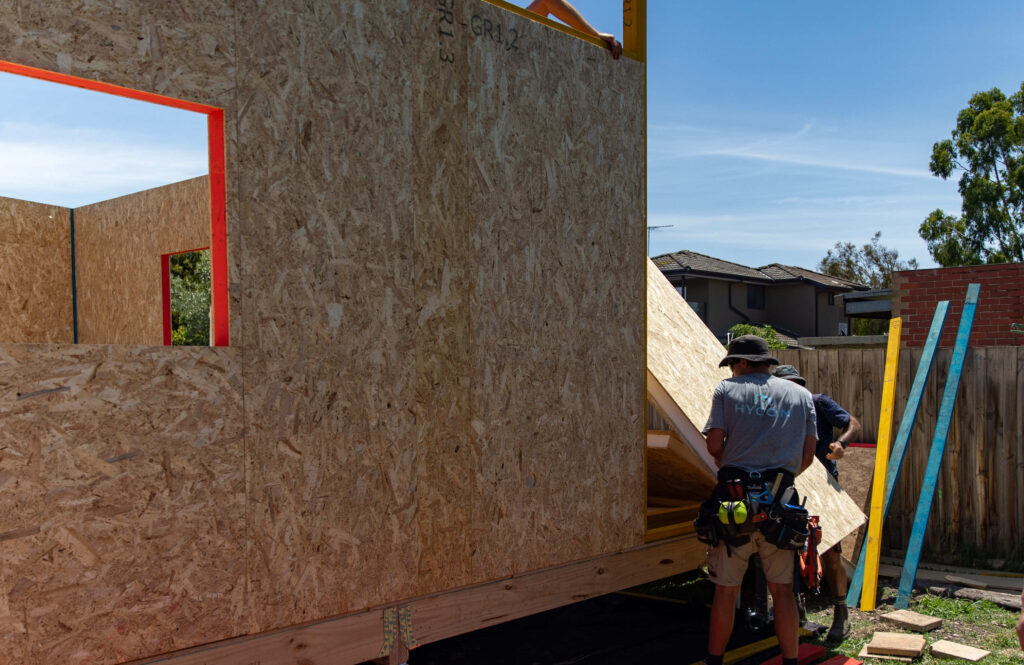
Quality granny flat builders in coastal areas specify these upgraded materials preventing premature failure.
Stainless steel fixtures and fasteners:
| Component | Standard Material | Marine-Grade Alternative | Cost Difference |
|---|---|---|---|
| Door hardware | Zinc-plated steel | 316 Stainless steel | +$400-$600 per granny flat |
| Window frames | Standard aluminium | Marine-grade powder-coated aluminium | +$2,000-$3,500 |
| Roofing screws | Zinc-plated | Stainless steel (A4-grade) | +$500-$800 |
| Outdoor taps/fixtures | Chrome-plated brass | 316 Stainless steel | +$300-$500 |
| Structural fasteners | Galvanised steel | Hot-dip galvanised or stainless | +$800-$1,200 |
Enhanced roof specifications: Marine-grade Colorbond with additional protective coatings lasts 25-30 years versus 12-15 years for standard materials. The $1,500-$2,500 upgrade prevents two complete roof replacements over the building’s life.
Marine-grade guttering: Stainless steel or marine-grade Zincalume gutters last 30+ years in coastal areas versus 8-10 years for standard materials. Initial $1,200-$2,000 additional cost eliminates repeated replacements.
Protective paint systems: Multi-coat systems designed for coastal exposure cost $2,000-$3,500 more than standard painting but extend repainting intervals from 4 years to 10-12 years.
Concrete specifications: Increased concrete cover over reinforcement (50mm instead of 30mm) and marine-grade concrete mixes resist salt penetration. Additional cost: $1,500-$2,500.
Total marine-grade protection investment: $10,000-$15,000 beyond standard construction costs.
Warranty Implications In Coastal Areas
Standard building warranties often exclude coastal corrosion or significantly limit coverage in salt-affected areas.
Standard warranty exclusions: Most 10-year structural warranties exclude corrosion damage in coastal zones unless builders specified and installed marine-grade materials. Using standard materials voids warranties for corrosion-related failures.
Proving compliance: Warranties require documentation showing marine-grade specifications were actually installed, not just specified. Demand written material lists with specific product codes and grades confirmed at handover.
Manufacturer warranties vary: Some fixture manufacturers void warranties entirely for coastal installations. Others provide reduced warranty periods (5 years instead of 10 years). Verify actual warranty coverage before accepting fixtures.
Insurance complications: Building insurance sometimes excludes corrosion damage or requires specific marine-grade construction for coverage. Verify insurance terms before construction, not after damage occurs.
At Innovista Group, our coastal builds include marine-grade specifications as standard in identified coastal zones. We document everything for warranty and insurance verification.
The True Cost Of Skipping Marine-Grade Protection
Saving $10,000-$15,000 upfront by using standard materials creates significantly higher long-term costs.
Replacement timeline and costs (20-year comparison):
Standard construction in coastal area:
- Year 3: Window frame corrosion treatment – $1,500
- Year 5: Door hardware replacement – $800
- Year 6: Complete roof replacement – $15,000
- Year 8: Gutter/downpipe replacement – $2,500
- Year 10: Structural steel treatment – $4,000
- Year 12: Complete repaint – $6,000
- Year 14: Window replacement – $8,000
- Year 15: Second roof replacement – $15,000
- Total 20-year cost: $53,800 in repairs/replacements
Marine-grade construction in coastal area:
- Year 12: Repaint – $6,000
- Total 20-year cost: $6,000 in maintenance
Net benefit of marine-grade: $47,800 savings over 20 years for $10,000-$15,000 upfront investment. This doesn’t account for disruption, tenant displacement during repairs, or reduced property values from visible corrosion.
Design Strategies Reducing Salt Exposure
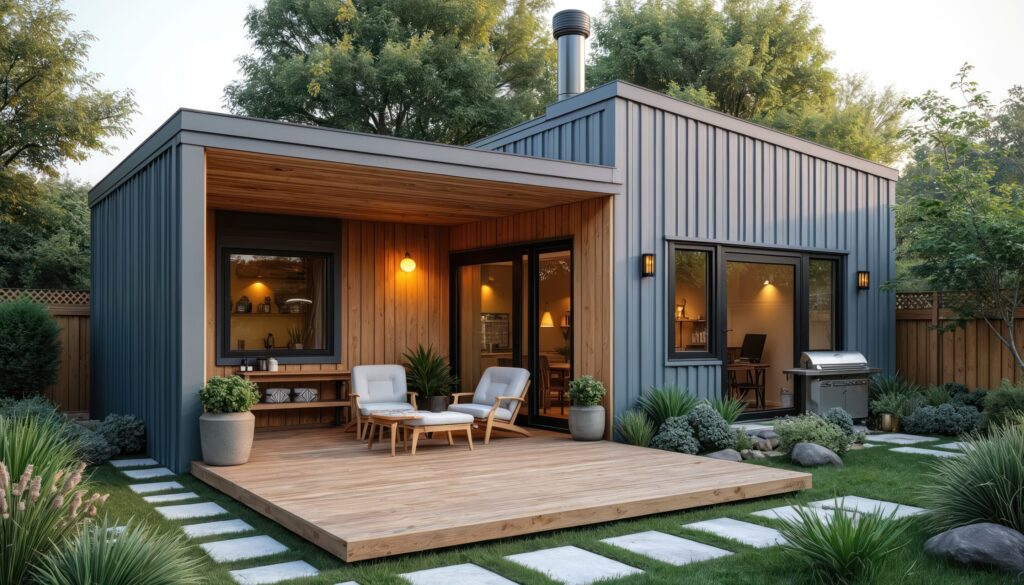
Beyond material specifications, intelligent design reduces salt exposure minimising corrosion regardless of materials used.
Protective eaves and overhangs: Generous eaves (600-900mm) protect walls and windows from direct salt spray. This costs $1,000-$2,000 additional but dramatically extends paint life and reduces fixture exposure.
Covered outdoor areas: Decks and outdoor spaces benefit from roof coverage preventing direct rain carrying salt onto surfaces. Protected decks last 2-3x longer than exposed equivalents.
Strategic window positioning: Placing windows on sheltered elevations (away from prevailing winds) reduces direct salt exposure. When coastal views require wind-facing windows, marine-grade frames become essential.
Drainage design: Proper drainage preventing water pooling near foundations reduces concrete cancer risk. Ensure 100mm minimum clearance between ground and building elements.
Regular washing schedule: Salt accumulation is cumulative. Regular washing (quarterly minimum) removes salt deposits before they penetrate protective layers. Include this in property management plans.
Coastal-Specific Maintenance Requirements
Marine-grade materials reduce but don’t eliminate maintenance needs. Ongoing care extends material lifespan significantly.
Quarterly tasks:
- Rinse all external surfaces with fresh water
- Clean window and door tracks removing salt accumulation
- Inspect and clean gutters
- Check fixture operation, lubricating hinges and locks
Annual tasks:
- Professional inspection of roof fasteners
- Detailed corrosion inspection of metal elements
- Touch-up painting on any chips or damage
- Gutter and downpipe integrity verification
5-yearly tasks:
- Comprehensive external repaint (even marine-grade benefits from this)
- Replacement of sacrificial anodes if used in plumbing systems
- Detailed structural inspection
Maintenance costs: Budget $800-$1,200 annually for coastal-specific maintenance versus $300-$500 for inland properties. This ongoing investment protects the $10,000-$15,000 marine-grade material investment.
Investment Property Considerations In Coastal Areas
Coastal granny flats Melbourne properties command premium rents but require careful financial modeling accounting for additional costs.
Rental premiums in Bayside: Quality coastal granny flats achieve $50-$80/week rental premium over equivalent inland properties. That’s $2,600-$4,160 additional annual income.
However, additional costs include:
- Marine-grade construction: +$10,000-$15,000 upfront
- Higher insurance: +$400-$800 annually
- Increased maintenance: +$500-$900 annually
- Tenant turnover (coastal areas): More frequent
ROI calculation example:
Inland granny flat:
- Construction cost: $230,000
- Annual rent: $26,000
- Annual expenses: $3,500
- Net yield: 9.8%
Coastal granny flat (marine-grade):
- Construction cost: $243,000
- Annual rent: $29,000 (+$3,000 coastal premium)
- Annual expenses: $4,800
- Net yield: 10.0%
The coastal premium slightly improves yield despite higher costs, but only when marine-grade construction prevents expensive repairs reducing returns.
Questions Revealing Coastal Experience

When evaluating granny flat builders for coastal properties, these questions expose genuine coastal construction experience.
“What specific marine-grade materials do you specify for coastal builds?” Experienced builders name specific products and grades (316 stainless, A4 fasteners, marine Colorbond). Vague answers about “suitable materials” indicate insufficient coastal experience.
“Can I see recently completed coastal projects?” Builders confident in coastal methods readily provide references. Hesitation suggests they’re learning on your investment.
“How do your warranties differ for coastal versus inland properties?” Honest builders explain reduced coverage periods or additional maintenance requirements in coastal zones.
“What ongoing maintenance do you recommend?” Experienced coastal builders provide detailed maintenance schedules. Those unfamiliar with coastal challenges offer generic advice.
“Do you document marine-grade specifications for warranty purposes?” Professional coastal builders provide material certificates and installation documentation protecting warranty coverage.
Your Next Steps For Coastal Protection
Building granny flats in coastal Melbourne requires specialized knowledge and material specifications standard inland construction doesn’t need.
Verify your risk level: Book a free site assessment where we’ll assess your property’s specific salt exposure based on distance, elevation, and wind patterns.
Get coastal-specific pricing: Contact Innovista Group for transparent pricing including necessary marine-grade protection, not generic quotes requiring expensive variations later.
Review material specifications: Demand written confirmation of marine-grade materials with specific product codes and grades, not verbal assurances.
Plan maintenance budget: Factor ongoing coastal maintenance into investment calculations, not just construction costs.
Ready to build coastal granny flats that actually last? Our experience with Bayside construction includes proper marine-grade specifications from initial design, eliminating the corrosion failures that plague coastal buildings using inland construction methods. Melbourne’s coastal properties deserve construction matching their premium values with quality that withstands Australia’s harsh marine environment.