

Prefab granny flats in Melbourne sit in an interesting position in the secondary dwelling market. They promise speed and cost efficiency. They deliver both of those things in some circumstances and neither in others.
The prefab category covers a wide range of products from quality modular builds that perform comparably to site-built structures through to basic flat-pack kit homes that require significant additional work to reach compliance. Understanding where a specific prefab product sits on that spectrum is the most important thing a Melbourne homeowner can do before committing to this pathway.
This guide covers what prefab granny flats Melbourne suppliers are actually offering in 2026, what the real costs look like once the full picture is on the table and how prefab options compare to a permanent G-Flat™ build.
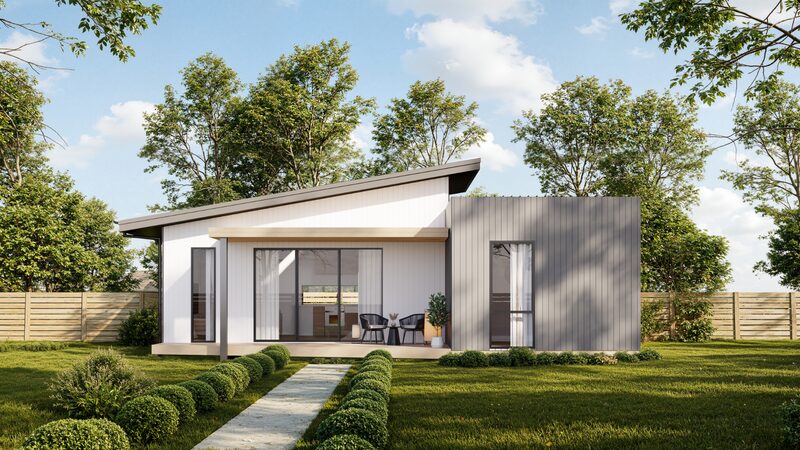
What Does Prefab Actually Mean
The term prefab covers several distinct construction methods that are often used interchangeably but deliver meaningfully different products.
Modular construction. A modular granny flat is built in one or more volumetric modules in a factory, transported to the site and craned into position. The modules arrive substantially completed with internal fit-out, plumbing and electrical already installed. On-site work is limited to the foundation, crane installation, service connections and any joining work between modules. This is the most advanced form of prefab and produces the highest quality result.
Panel construction. A panel-built prefab arrives as pre-made wall, floor and roof panels that are assembled on site. The panels are manufactured to precise dimensions in a factory and bolted or fixed together on site. Internal fit-out, plumbing and electrical happen after panel assembly, similar to a site-built structure but faster due to the precision of the manufactured components.
Flat pack and kit home. These arrive as pre-cut components, frames and cladding that are assembled on site from scratch. This is the most site-labour-intensive form of prefab and in practice resembles a standard site build more than a true prefab. Our guide to flat pack granny flats Melbourne covers this category in specific detail.
The distinction matters because the cost, timeline, quality and compliance pathway are different for each category.
What Prefab Granny Flats Cost in Melbourne

Prefab granny flat prices in Melbourne vary significantly by category, supplier and specification level.
Modular granny flats. Fully modular secondary dwellings from established Australian manufacturers typically start at approximately $150,000 to $180,000 for a basic one bedroom configuration and $200,000 to $280,000 for a two bedroom configuration. These prices generally include the module manufacture and fit-out but exclude delivery, crane hire, foundation work, site preparation and service connections.
Panel construction. Panel-built secondary dwellings typically sit in a similar price range to modular but with more variation depending on the supplier and the level of factory pre-completion. Base prices from $130,000 to $200,000 are common, again before delivery, foundation, site preparation and services.
Once the full scope of work is included, the realistic all-in cost for a compliant, liveable modular or panel-built secondary dwelling on a standard Melbourne block typically runs between $200,000 and $320,000 depending on the specification level, the supplier and the site conditions.
All cost figures are indicative estimates based on current market conditions and should be independently verified with your specific supplier. Costs vary significantly by site, supplier and specification level.
What the Prefab Price Excludes
This is the most important section for any Melbourne homeowner comparing prefab granny flat prices against a fixed-price permanent build.
Foundation and site preparation. Every prefab dwelling needs a compliant foundation. For a modular build this is typically a concrete slab or a steel post foundation system designed to accept the module. Site preparation, earthworks and the foundation are almost always excluded from prefab advertised prices. Budget $8,000 to $25,000 depending on site conditions and slope.
Delivery and crane costs. A modular granny flat needs to be transported from the factory and craned into position on your block. Delivery costs depend on the distance from the factory. Crane hire in Melbourne typically runs from $2,500 to $8,000 for a standard residential lift depending on the crane size required and the access conditions.
Access requirements. If your block does not have sufficient access for a crane or a large delivery vehicle, modifications may be needed. Temporary fencing removal, overhead wire clearance and traffic management add cost and complexity.
Service connections. Water supply, sewerage, electrical and communications connections from the primary dwelling to the secondary dwelling are excluded from prefab prices. Budget $5,000 to $15,000 depending on distance and complexity.
Building permit and engineering. A building permit is required for any habitable secondary dwelling in Victoria regardless of construction method. The permit requires engineering drawings, an energy rating assessment and building surveyor fees. Budget $3,000 to $8,000.
How Prefab Compares to a Permanent G-Flat™
The comparison between a prefab granny flat Melbourne option and a permanent Innovista G-Flat™ comes down to four factors.
True total cost. Once all exclusions are accounted for, the all-in cost of a quality modular prefab secondary dwelling on a standard Melbourne block typically sits between $200,000 and $280,000. An Innovista Affordable G-Flat™ on a fixed-price turnkey basis typically starts at approximately $198,000, including the building permit, foundation, service connections and all fit-out to handover. At the same total cost, the permanent build delivers certainty that the prefab pathway does not.
All prices are indicative only and may vary based on site conditions, design selections and council requirements. Always request a current written quote.
Design flexibility. A prefab product comes in standard module sizes and configurations. A purpose-designed G-Flat™ is matched to your specific block. The Stella G-Flat™ wraps corner blocks in a way standard prefab rectangles cannot. The Aurora suits side-access blocks that modular deliveries often cannot even reach. You can see all five G-Flat™ floor plans across all four finish levels on our G-Flat™ page.
Build speed. This is where prefab genuinely has an advantage in some cases. A modular build with a pre-prepared foundation can be installed in a single day and completed within weeks rather than the ten to fourteen weeks of on-site construction for a permanent build. For homeowners who have a pressing timeline, the speed advantage of modular is real and worth accounting for in the comparison.
Long-term performance and value. A permanently constructed secondary dwelling on engineered footings with a 10-year structural warranty contributes more predictably to a property valuation and is more straightforwardly financed through a construction loan than a modular structure. Lender and valuer treatment of modular secondary dwellings varies.
What to Check Before Committing to a Prefab Supplier

VBA registration. Any supplier delivering and installing a prefab granny flat in Victoria as a habitable dwelling must be VBA registered. Verify registration at vba.vic.gov.au before you proceed.
NCC compliance certification. The prefab product must comply with the National Construction Code. Ask the supplier for evidence of NCC compliance certification for the specific product you are purchasing. A product that has not been certified to the NCC cannot receive a building permit in Victoria.
What is and is not included in the quoted price. Get a written breakdown of exactly what the supplier’s price covers and what you will need to arrange separately. Foundation, delivery, crane, service connections and building permit are the most common exclusions. Our granny flat cost Melbourne 2026 guide covers the full cost picture for comparison.
Access assessment. Before signing anything, confirm with the supplier whether your property can physically accommodate the delivery and crane placement required for a modular build. Some Melbourne blocks with limited street access or overhead obstructions rule out modular delivery entirely.
Frequently Asked Questions
Are prefab granny flats legal in Melbourne? Yes, provided they comply with the National Construction Code, obtain the required building permit, are installed on a compliant foundation and are connected to services by licensed trades. The construction method does not determine legality. NCC compliance and the Victorian planning framework apply regardless of how the dwelling is built.
Can I finance a prefab granny flat in Melbourne through a construction loan? Some lenders will fund a prefab secondary dwelling through a construction loan. Others prefer permanently constructed site-built structures. Check with your lender or a mortgage broker experienced in secondary dwelling finance before committing to a prefab product. Our guide to granny flat loans Victoria covers the financing landscape for secondary dwelling builds.
How long does a modular granny flat last in Melbourne’s climate? A quality modular granny flat built to NCC standards with appropriate cladding and weatherproofing should last as long as a site-built structure of equivalent specification. Melbourne’s variable climate, including UV exposure, temperature extremes and rainfall, places demands on any external structure. The quality of the cladding, sealing and waterproofing systems is the critical factor in long-term performance.
Do prefab granny flats add the same value as permanent builds? Generally no, but the gap has narrowed as modular construction quality has improved. A high-quality modular secondary dwelling that is NCC compliant, permanently fixed to its foundation and finished to a good standard will contribute positively to a property valuation. The contribution may be assessed slightly differently by valuers than an equivalent site-built structure, but the difference for quality products has become less significant over time.
What is the fastest way to get a granny flat built in Melbourne? A quality modular prefab on a pre-prepared foundation can be installed and completed faster than a site-built secondary dwelling. However, the building permit and foundation preparation stages add time regardless of construction method. For most Melbourne homeowners the overall timeline difference between a well-managed site build and a modular prefab is less significant than suppliers often suggest.
The Next Step
Whether you are comparing prefab options against a permanent G-Flat™ or you have already decided on the permanent build pathway, the starting point is the same. Innovista offers a free site assessment where our team visits your property and provides a fixed-price quote that covers everything from the building permit through to handover.
Book your free site assessment here or contact us to start the conversation.