

Design approval represents the essential regulatory process ensuring granny flats Melbourne meet planning, building, and safety standards before construction. The approval process involves planning permits and building permits. Understanding which permits your project requires, required documentation, expected timelines, and costs prevents delays.
Victorian regulations transformed approvals through Amendment VC253 in December 2023. These streamlined rules now permit many granny flats without planning permits whilst building permits remain mandatory. The simplified process reduces approval times and costs. This guide explains the approval process for granny flats Melbourne.
Planning Permit Requirements
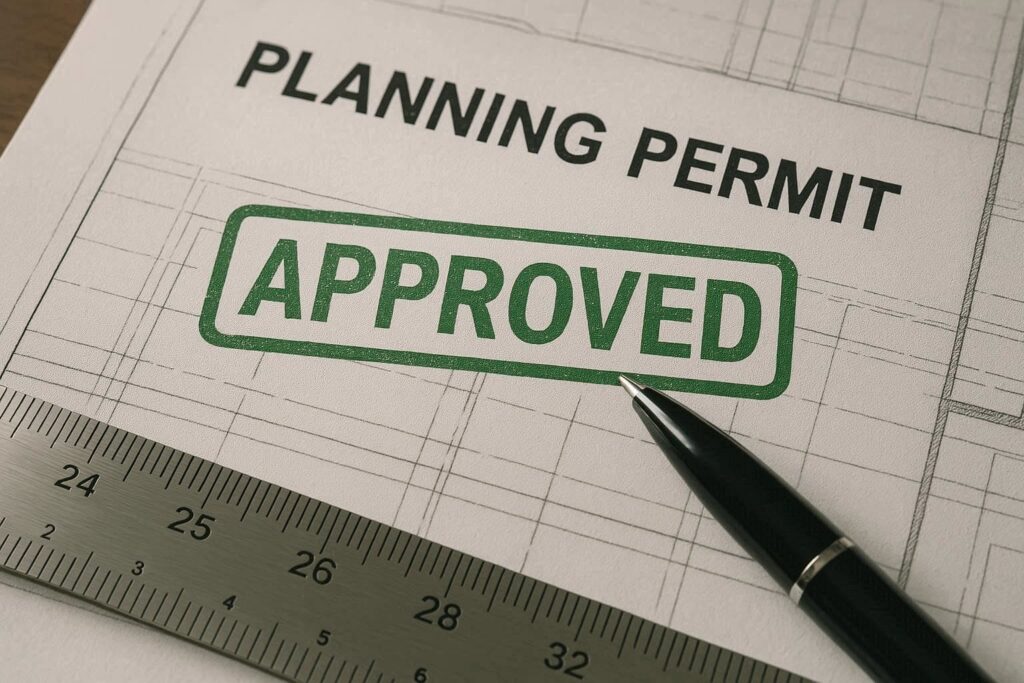
Planning permits assess whether proposed developments comply with local planning schemes.
Planning permit exemption applies to most granny flats Melbourne. Dwellings up to 60 square metres in residential zones typically do not require planning permits provided they meet standard requirements. This exemption simplifies approvals eliminating months of assessment.
The exemption applies when properties avoid specific triggers. Dwellings must remain under 60 square metres. Properties must sit in residential zones. Sites must avoid planning overlays. Standard setbacks must be met.
Planning overlays represent the primary circumstance requiring planning permits. Heritage overlays protecting neighbourhood character require permits. Vegetation protection overlays preserve significant trees. Bushfire management overlays require additional assessment. Flooding overlays assess drainage impacts. Understanding council requirements helps identify whether properties trigger planning permits.
Planning permit process when required involves several stages. Applications include site plans, design drawings, planning reports, and neighbour notification. Council planners assess applications considering objections. Timelines typically require 6 to 12 weeks. Costs range from $800 to $2,000 for application fees plus professional consultant fees of $2,000 to $5,000.
Building Permit Requirements
Building permits are mandatory for all granny flats Melbourne regardless of size or planning permit status. Building permits ensure construction meets Building Code standards covering structural integrity, energy efficiency, accessibility, and safety.
Building permit scope assesses complete construction documentation ensuring designs comply with all building regulations. Permits cover structural engineering, plumbing and drainage, electrical installations, energy performance meeting 7-star NatHERS requirements, accessibility features meeting Livable Housing Design Standards, and fire safety.
Building permits do not assess planning or neighbourhood character. These remain planning permit territory. Building permits focus exclusively on construction safety and regulatory compliance.
Private building surveyors issue most building permits providing faster service than council departments. Private surveyors assess documentation, conduct site inspections during construction, and issue certificates of final inspection authorizing occupancy.
Private surveyor fees typically range from $2,500 to $4,000. This delivers faster permit processing typically completing in 3 to 6 weeks compared to 8 to 12 weeks through council departments.
Council building departments also issue permits though slower processing makes private surveyors preferable. Council fees approximate private surveyor costs whilst processing takes substantially longer.
Required Documentation
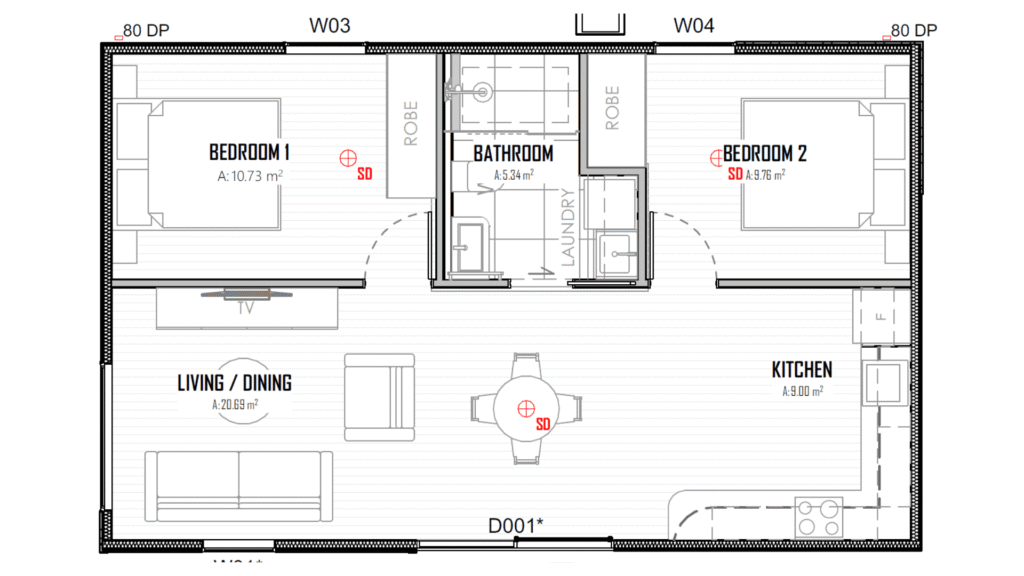
Comprehensive documentation supports permit applications.
Architectural drawings represent foundation documentation. Site plans show dwelling locations, setbacks, existing structures, and easements. Floor plans detail internal layouts. Elevations show external appearances. Cross-sections illustrate internal construction.
Professional architectural drawings cost approximately $2,000 to $5,000 depending on design complexity. Quality drawings prevent costly resubmissions from incomplete documentation.
Engineering documentation covers structural, plumbing, drainage, and electrical systems. Structural engineering drawings specify foundations, framing, and connections. Soil reports from geotechnical assessments inform foundation design. Plumbing and drainage plans show water supply and sewerage. Electrical plans detail switchboards and circuits.
Engineering documentation costs approximately $1,500 to $3,000. Reactive clay soils or sloped sites requiring specialized foundations increase costs.
Energy performance documentation includes NatHERS certificates demonstrating 7-star compliance. Licensed assessors use approved software modeling thermal performance. NatHERS assessments cost $400 to $800.
Livable Housing Design compliance demonstrates accessibility features including step-free entries, wider doorways, accessible toilets, and reinforced bathroom walls. Compliance statements typically integrate with architectural drawings.
Understanding building permits helps navigate documentation requirements.
Approval Timelines

Approval timelines vary depending on permit requirements.
Planning permit exemption pathway when applicable delivers fastest approvals. Building permit only projects typically complete in 4 to 8 weeks total including 1 to 2 weeks documentation preparation, 3 to 6 weeks building permit processing, and immediate construction commencement.
Planning permit pathway when required extends timelines substantially. Total approval duration typically requires 10 to 18 weeks including 2 to 3 weeks documentation preparation, 6 to 12 weeks planning permit processing including neighbour notification, 3 to 6 weeks building permit processing, and construction commencement following both permits.
Objections from neighbours extend planning permit timelines requiring additional assessment or tribunal hearings potentially adding 8 to 16 weeks.
Concurrent applications can reduce total timelines when planning permits are required. Some councils accept concurrent planning and building permit applications processing both simultaneously saving approximately 4 to 6 weeks though not all councils permit concurrent processing.
Approval Costs
Understanding complete approval costs enables accurate budgeting.
Building permit pathway costs for planning permit exempt projects typically total $5,000 to $9,000 including architectural drawings $2,000 to $5,000, engineering documentation $1,500 to $3,000, NatHERS energy assessment $400 to $800, and private building surveyor fees $2,500 to $4,000.
Planning and building permit pathway costs when planning permits are required increase to $8,000 to $16,000 including all building permit costs plus planning application fees $800 to $2,000 and planning consultant fees $2,000 to $5,000.
Heritage overlays or complex sites requiring specialized reports increase costs substantially adding $3,000 to $8,000 for heritage assessments, arborist reports, or drainage studies.
Common Approval Issues
Several common issues cause approval delays or refusals.
Incomplete documentation represents the most frequent issue. Applications missing required drawings, reports, or certifications face rejection requiring resubmission. Working with experienced professionals ensures complete applications.
Non-compliant setbacks occur when designs position dwellings too close to boundaries. Variations require planning permits even when general exemptions would otherwise apply. Adjusting designs meeting standard setbacks avoids planning permits.
Easement encroachment happens when designs overlap utility corridors. Dwellings cannot build within easement areas typically spanning 1 to 3 metres. Repositioning designs avoiding easements resolves these issues.
Energy performance failures occur when designs don’t achieve 7-star NatHERS ratings. Inadequate insulation, excessive glazing, or poor orientation cause failures. Adjusting specifications before finalizing designs prevents costly redesigns.
Ready to navigate the approval process? Contact us for complete approval management, or explore our projects showcasing approved construction for granny flats Melbourne.