
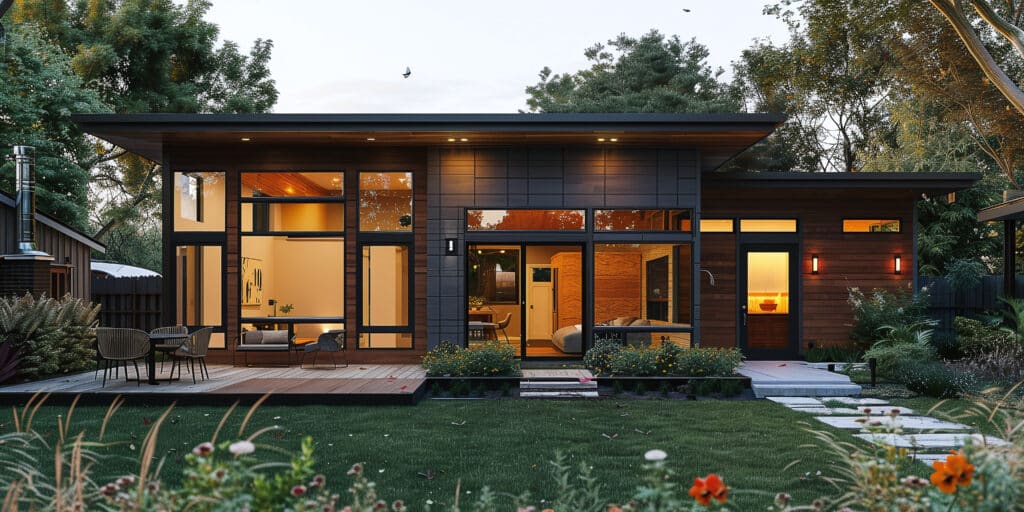
Melbourne’s established suburbs feature increasingly compact blocks. Properties subdivided over decades transformed 800m² lots into 400-500m² parcels. Single-storey granny flats Melbourne homeowners build consume significant yard space—60m² footprint plus setbacks equals 80-100m² total coverage. Two-storey granny flats Melbourne solve this by building vertically.
Double-storey construction delivers identical 60m² living space whilst occupying half the ground footprint. A two-storey design uses 30-40m² of yard versus 60m² single-storey. That extra 20-30m² retained outdoor space makes substantial difference on blocks under 500m². However, vertical building involves additional costs ($240,000-$270,000 versus $220,000-$240,000), stricter council regulations, design considerations around stairs and privacy.
This guide explains when two-storey granny flats Melbourne properties need, what regulations apply, and how compact footprints preserve yard space.
When Your Block Actually Needs Two Storeys
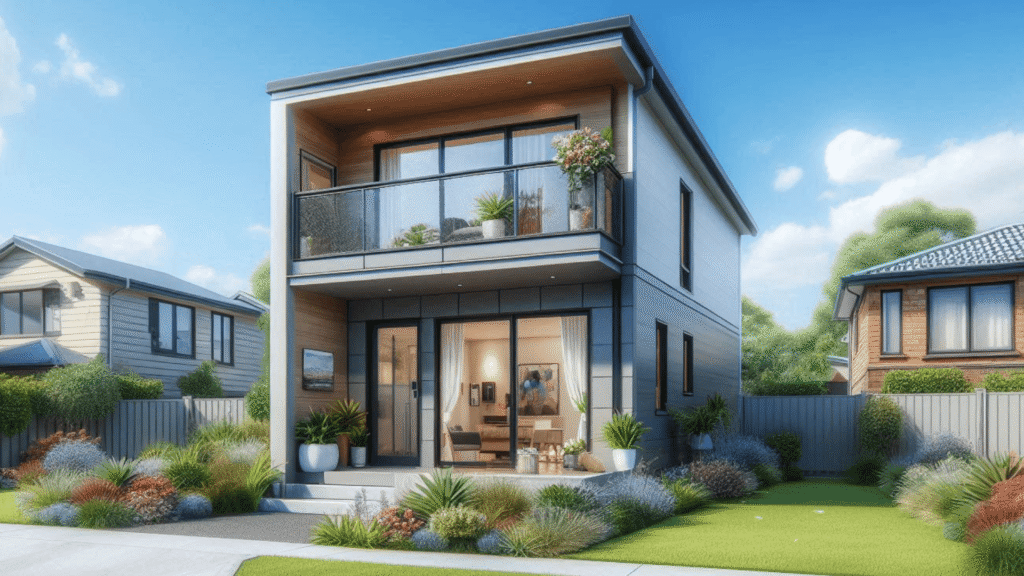
Blocks under 450m² with narrow proportions: Lots 12-15 metres width leave insufficient space for single-storey 60m² builds after setbacks. Building upward creates necessary floor area without exceeding ground coverage limits.
Significant slope or elevation: Blocks dropping/rising 2+ metres front-to-back suit split-level or two-storey better than expensive earthworks. Using natural slope reduces site costs whilst creating distinctive architecture.
Heritage overlays restricting footprint: Some councils limit ground coverage percentages in heritage areas. Two-storey achieves required size whilst respecting restrictions.
Preserving established landscaping: Mature trees, established gardens benefit from minimal ground disturbance. Smaller footprint preserves vegetation meeting council tree protection.
Maximizing usable outdoor space: Families valuing backyard recreation preserve substantially more functional yard with compact two-storey versus sprawling single-storey.
Middle-ring suburbs (Boroondara, Monash, Glen Eira) with 400-550m² blocks commonly justify two-storey. Outer growth corridors with 600m²+ blocks rarely need vertical construction.
Height Restrictions and Council Regulations
Victorian regulations permit two-storey granny flats Melbourne-wide but impose stricter controls than single-storey.
Height limits: Maximum 6.5-8 metres depending on council. Most designs measure 6.5-6.8 metres fitting standard limits. Heritage areas sometimes restrict to 5 metres (single-storey only).
Setback increases: Single-storey might need 1 metre from side boundaries, two-storey 1.5-2 metres. Increased setback partially offsets footprint advantage on narrow blocks.
Overlooking regulations: Upper floor windows cannot overlook neighbouring private open space. Councils rigorously enforce privacy provisions. Solutions include frosted glass, clerestory windows (high windows providing light without views), window placement facing your yard, screening or louvres near boundaries.
Planning permits: Some councils require permits for two-storey even when single-storey qualifies for faster approvals. Adds 8-16 weeks to timelines.
Inner councils (Yarra, Port Phillip, Boroondara) scrutinize two-storey intensively. Outer councils (Wyndham, Casey) more supportive.
Footprint Mathematics: Ground Coverage Savings
Example: 450m² block
Main house 140m². After setbacks, approximately 200m² usable yard remains.
Single-storey 60m²: Footprint plus setbacks consumes 90-100m², leaving 100-110m² outdoor space. Tight, cramped feeling.
Two-storey 60m²: Footprint plus setbacks consumes 50-60m², leaving 140-150m² outdoor space. 40m² additional yard—significant difference.
That 40m² equals entertaining deck plus garden beds, play equipment, or vegetable garden. Substantial quality-of-life improvement. Understanding council requirements helps visualize footprint restrictions.
Ground coverage compliance: Many schemes limit total coverage to 60-70% of lot area. Two-storey helps compliance where main house already consumes substantial percentage.
Staircase Design and Space Efficiency
Internal stairs consume 6-9m² from total 60m² allowance whilst creating accessibility barriers.
Positioning strategies: Against wall minimizes consumption, positioned where stairs don’t block windows, space underneath utilized for storage (coat cupboard, linen, utilities), L-shaped or straight configurations better than spiral for code compliance and elderly accessibility.
Spiral considerations: Smaller footprint (1.5m diameter) versus straight stairs (2.5-3m length). However, create accessibility challenges, furniture movement difficulties, often fail Building Code requirements. Most councils prefer traditional stairs for granny flats Melbourne compliance.
Storage integration: Under-stair storage maximizes every cubic metre. Ground floor entry with immediate stairs allows storage cupboard underneath.
Typical Two-Storey Layouts
Ground floor (30-35m²): Open-plan living/dining/kitchen (18-22m²), powder room or full bathroom (3-4m²), European laundry in bathroom, entry and stairs (6-8m²). Some include one bedroom downstairs.
Upper floor (25-30m²): Two bedrooms (main 10-12m², second 7-9m²), full bathroom (4-5m²), linen storage. Total: 55-65m² across two levels.
Natural light: Upper floor captures more light, reduced shadowing from neighbours, potential for clerestory windows or skylights. Ground floor requires careful window placement maximizing light whilst respecting privacy.
Construction Cost Premium Breakdown
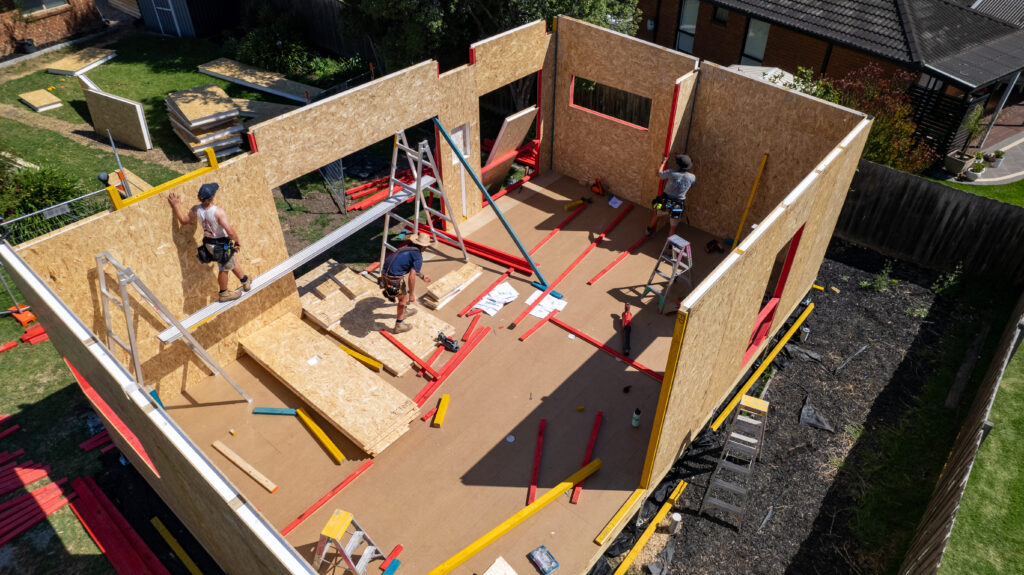
Two-storey costs approximately 10-15% more than single-storey.
Structural requirements: Stronger ground floor supporting upper loads, reinforced framing, engineering calculations. Additional: $12,000-$18,000.
Staircase: Quality internal stairs cost $8,000-$15,000 depending on materials (timber, steel, carpeted).
Scaffolding and safety: Working at height requires extensive scaffolding. Safety equipment, edge protection adds $5,000-$8,000.
Labour: Delivering materials to upper floors, elevated work reduces efficiency. Labour costs increase 15-20% for upper floor work.
Total: Single-storey $220,000-$240,000. Two-storey $240,000-$270,000. Premium: $20,000-$30,000 (10-12%).
However, on blocks where two-storey represents only viable option, comparing “no granny flat” versus “two-storey for $250,000” makes decision straightforward.
Design Considerations Beyond Cost
Occupant accessibility: Elderly parents or mobility-impaired family struggle with daily stair use. Consider ground floor bedroom or evaluate whether single-storey better serves their needs.
Furniture movement: Moving furniture, mattresses, appliances up narrow stairs creates challenges. Ensure adequate stair width (minimum 900mm clear), consider delivery logistics.
Ventilation: Upper floors benefit from elevated breezes but require operable windows on multiple walls for cross-ventilation. Ground floor sometimes needs mechanical ventilation.
Acoustic separation: Footfall noise from upper floor transmitted to ground floor. Quality floor construction with acoustic insulation prevents disturbance. Understanding building permits ensures acoustic requirements meet Building Code standards.
Ready to determine whether your block needs two-storey? Contact our design team for site assessment, or explore our two-storey projects showcasing compact footprint solutions.