
test
If you built a dependent person unit (DPU) on your Melbourne property before December 2023, you need to understand what’s happening on March 28, 2026. That’s the date Victoria’s transitional provisions expire—the temporary rules allowing existing DPUs to operate alongside the new small second dwelling regulations introduced in late 2023.
This isn’t just bureaucratic noise. The expiry affects thousands of granny flats Melbourne homeowners built under the old DPU framework, and the implications depend on whether your structure qualifies as genuinely “movable” or sits permanently on stumps or slabs. Here’s what you need to know, what changes on March 28, and what happens if your DPU doesn’t comply with the new rules.
Victoria’s Amendment VC253 in December 2023 removed the “dependent person” restriction, allowing granny flats Melbourne homeowners to rent to anyone. New small second homes are capped at 60m² with no planning permit needed on blocks over 300m².
Thousands of existing DPUs didn’t fit this framework—many exceeded 60m² or sat on permanent foundations. The Victorian Government created transitional provisions allowing pre-December 2023 DPUs to continue under old rules. After extensions to March 2024, then March 2025, the final deadline is March 28, 2026 via Amendment VC266. No further extensions are expected.
After March 28, 2026, you can no longer build new DPUs. Every secondary dwelling must comply with small second home rules: 60m² maximum, 7-star energy ratings, and council-specific requirements.
For granny flats Melbourne homeowners mid-planning right now, time has run out. Even modular builders struggle to get DPUs permitted and installed before the deadline. Start fresh with small second dwellings under the 60m² framework.
The outcome depends on whether your DPU is genuinely movable and council enforcement approaches.
Genuinely movable DPUs meeting strict definitions—designed for relocation to at least three sites with proper disassembly capability—can likely continue indefinitely. The Victorian Planning Provisions require movable buildings to demonstrate multiple relocation capacity. Most DPUs on concrete stumps or timber subfloors don’t meet this test.
Permanently sited DPUs face uncertainty. Planning provisions don’t force removal, but councils could require compliance with 60m² small second home regulations. Some councils may allow legal non-conforming status—structures permitted under previous rules that can remain but can’t be substantially modified. Others might issue compliance notices, particularly following neighbour complaints.

Retrofitting to 60m² involves reducing floor area through partial demolition and reconfiguring layouts. Costs typically reach $15,000-$35,000 depending on structural changes required.
Demonstrating movability requires engineering certification proving relocation capacity and council acceptance. This suits modular DPUs but fails for most site-built structures.
Accepting legal non-conforming status means operating under grandfather provisions until you sell or substantially modify. The risk? Future councils could challenge continued use, though mass enforcement seems unlikely.
Good news: rental flexibility introduced in December 2023 applies to all secondary dwellings regardless of build date. Even non-compliant DPUs can legally rent to anyone—family or unrelated tenants.
Properties built for elderly parents can now generate rental income when circumstances change. However, rental permission doesn’t equal building compliance—councils can still enforce modification requirements if permits are triggered.
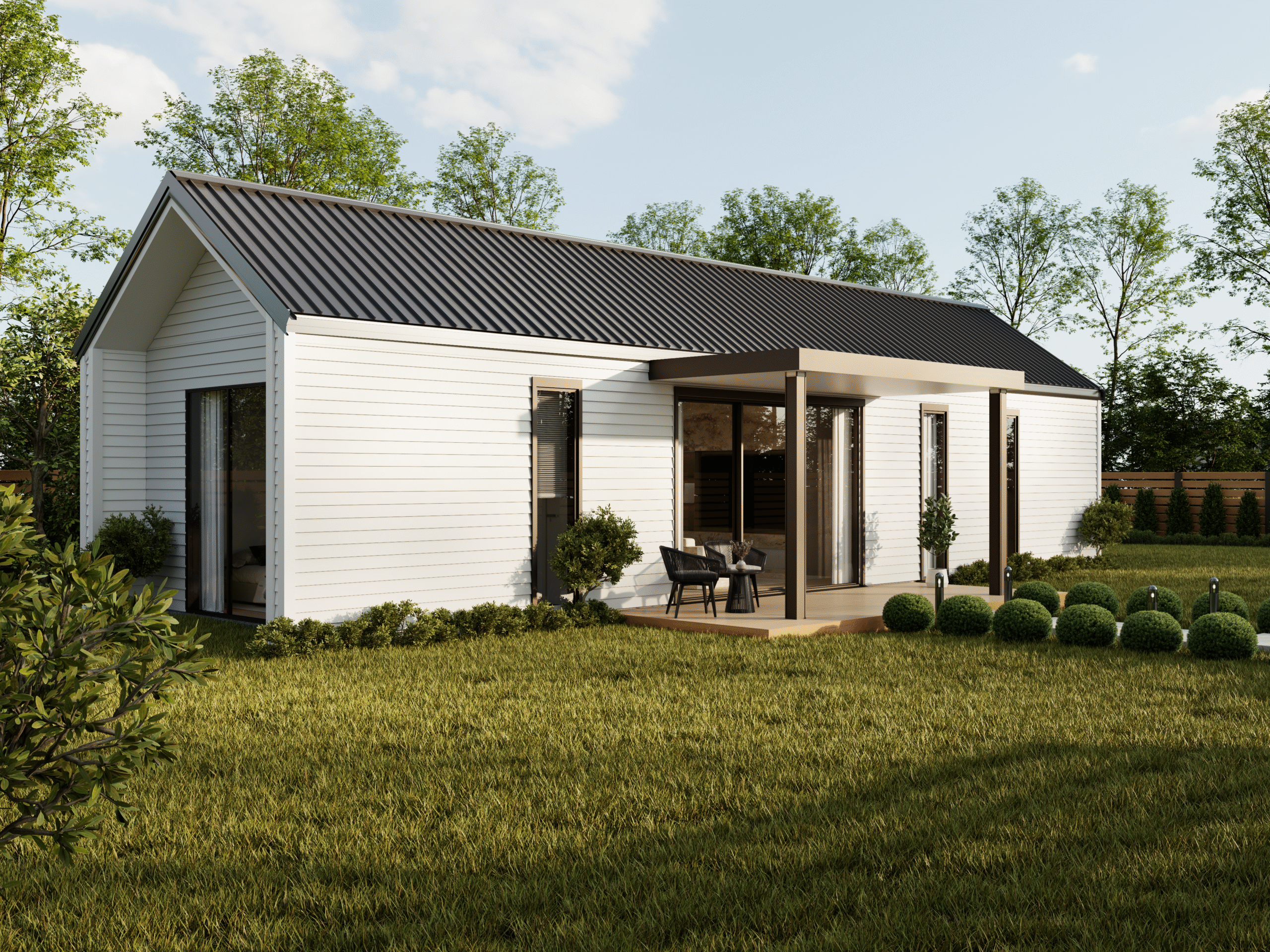
For most homeowners with established DPUs, March 28, 2026 changes little practically. Councils aren’t planning mass enforcement. Problems arise when attempting substantial renovations, receiving neighbour complaints, or selling properties where solicitors identify non-compliance.
If concerned, book a consultation with planning professionals who can assess your structure and advise on compliance pathways.
Forget DPUs—the framework no longer exists. Focus on small second homes meeting current regulations: 60m² maximum, 7-star energy ratings, and council-compliant siting.
Modern 60m² designs like Stella, Aurora and Lana floor plans prove this size delivers comfortable living when designed thoughtfully. Contact us to discuss compliant small second home options avoiding transitional provision headaches.
Download our in-built 25 page “Ultimate Guide to Granny Flats in Victoria (2025 Edition)” to unlock expert insights, design tips, planning advice & construction costs to build your perfect Granny Flat. Get your free copy instantly – just enter your details below.