
Last updated October 2026
Choosing between a granny flat vs extension comes down to one question: do you need more room inside your home, or a second, separate home on your block? An extension adds space to the house you already live in. A granny flat adds a self-contained home with its own kitchen, bathroom and entry. This guide compares the two on approvals, privacy, flexibility, disruption and cost, so you can decide which suits your family and your property.
Key takeaways
- An extension adds space to your existing home. A granny flat creates a separate, self-contained home on the same lot.
- In Victoria, a granny flat of 60m² or less usually does not need a planning permit. An extension may or may not, depending on your zone and overlays.
- Both need a building permit.
- A granny flat can be rented out or used by family, but it cannot be sold separately.
- A turnkey G-Flat™ costs $198,000 to $265,000, depending on the finish level.
The key difference
An extension makes your existing home bigger. It might be an extra bedroom, a larger living area or a second storey. Everyone still shares the same front door, kitchen and living spaces.
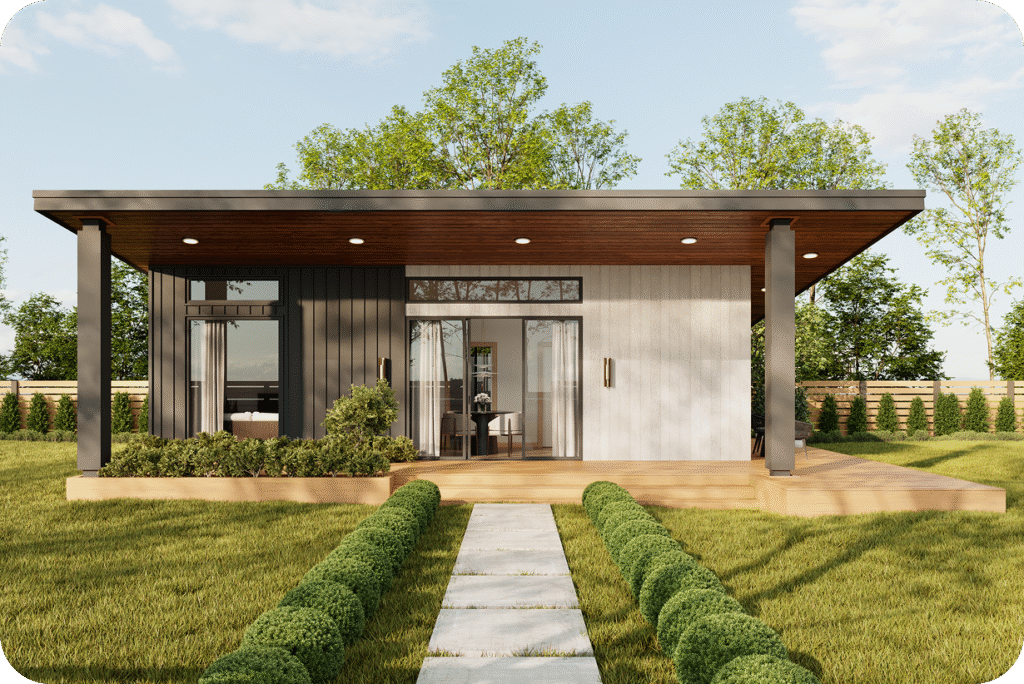
A granny flat is a separate building. In Victoria, a small second dwelling of up to 60m² must have its own kitchen, bathroom and toilet, and it sits on the same lot as the main home. That independence is what makes it useful for ageing parents, adult children, guests or tenants.
Granny flat vs extension at a glance
| Factor | Granny flat | Extension |
|---|---|---|
| What you get | A separate, self-contained home | More space in your existing home |
| Planning permit | Usually not needed up to 60m² | Depends on zone, overlays and design |
| Building permit | Required | Required |
| Privacy | Separate entry, kitchen and bathroom | Shared with the main household |
| Disruption to your home | Built in the backyard | Work happens on or inside your house |
| Can be rented out | Yes, tenancy laws apply | Not as a separate home |
| Can be sold separately | No | Not applicable |
Approvals and permits
Victoria’s small second dwelling rules allow a granny flat of 60m² or less to be built without a planning permit in most residential zones. Lots under 300m² and properties affected by certain overlays may still need one, and a building permit is always required. The Victorian Government small second dwellings page sets out the rules.
An extension follows the planning rules for changes to an existing house. Whether it needs a planning permit depends on your zone, any overlays and the size and siting of the work. Your council or a building surveyor can confirm what applies to your property. Our granny flat compliance guide for Victoria explains the granny flat side in more detail.
Privacy and independence
This is where the granny flat vs extension decision is often made. If the space is for an ageing parent or an adult child, a separate home lets everyone keep their own routines. Each household has its own kitchen, bathroom and front door, while family is still just a few steps away.
An extension keeps everyone under one roof. That can suit families who want a bigger shared living area or an extra bedroom for a growing household, but it offers less independence for the person using the new space. Our guide to multi-generational living on one block looks at how families make shared living work.
Disruption during the build
An extension usually means work on or inside your existing home, which can involve noise, dust and rooms being out of use for a time.
A granny flat is built in the backyard as a separate structure, so daily life in the main house can usually carry on. Services are connected from the main house, with connections up to 10m included in every G-Flat™.
Flexibility over time
Flexibility is another point where a granny flat vs extension differs. Needs change. A granny flat built for a parent today could become a home office, a space for a returning adult child or a rental later on, without changing the building. Because it is self-contained, it suits several different uses over its life.
An extension becomes part of your house. It is flexible within the home, as a bedroom, study or living space, but it cannot easily become independent accommodation.
Renting out the space
A granny flat in Victoria can be rented to family or tenants, and residential tenancy laws apply. Rents vary by suburb, finish and demand, so a local property manager is the best source for a rental appraisal. Our guide on how to legally rent out a granny flat in Victoria explains the requirements.
An extension adds space to your own home rather than creating a separate home to rent. If renting is part of your plan, speak with your accountant about the tax position before you build. Read tax deductions for granny flat investments for an overview.
Comparing the cost
Cost is a big part of any granny flat vs extension decision. Extension costs vary widely depending on size, design, structural work and finishes, so the only reliable way to price one is a detailed quote for your home.
A G-Flat™ has a fixed turnkey price for each finish level:
| Finish level | Turnkey price |
|---|---|
| Affordable | $198,000 |
| Homestead | $208,000 |
| Signature | $238,000 |
| Luxe | $265,000 |
Each price is for a 60m², two bedroom home and includes the building permit, all plans, connection of services up to 10m and a 10-year structural warranty. All five floor plans cost the same within each finish level.
Prices are a guide only and depend on your site. Sites 70km or more from the Melbourne CBD attract a 12.5% regional surcharge. A free site assessment confirms the price for your block.
See granny flat pricing in Victoria for the full breakdown.
Which one is right for you?
A granny flat is usually the better fit if:
- the space is for a parent, adult child or tenant who needs independence
- you want to keep your main home as it is
- you want the option to rent the space now or later
An extension is usually the better fit if:
- you need a bigger kitchen, living area or extra bedrooms for your own household
- you do not have the backyard space for a separate building
- the new space will always be used by the main household
How long it takes
A G-Flat™ takes approximately 5 months end to end, from planning through to handover, including the building permit, approvals, construction and connection of services.
Frequently asked questions
Granny flat vs extension: which needs fewer approvals?
A granny flat of 60m² or less usually does not need a planning permit in residential zones. An extension may, depending on your property. Both need a building permit.
Can I rent out a granny flat?
Yes. A small second dwelling can be rented to family or tenants, and tenancy laws apply.
How much does a granny flat cost?
A turnkey G-Flat™ costs $198,000 to $265,000, depending on the finish level and your site.
Find out what suits your block
The best way to settle the granny flat vs extension question is to see what your block allows. Book your free site assessment or visit our display G-Flat™.