
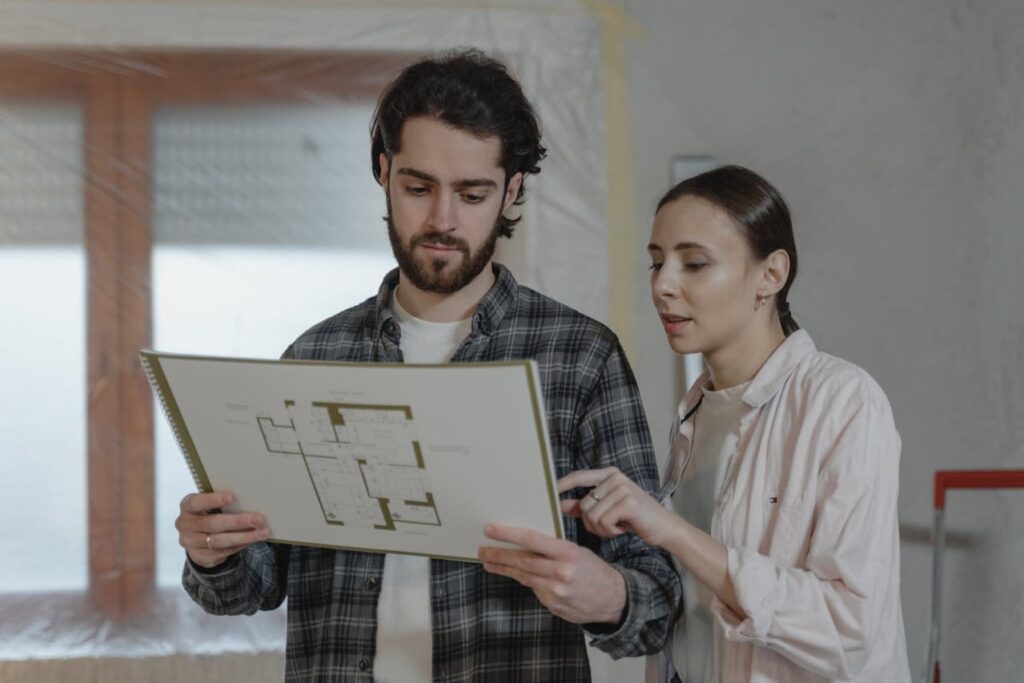
Building a granny flat is exciting. You’re adding value to your property, creating space for family, or setting yourself up with solid rental income. But here’s the thing—it’s also a significant investment, usually somewhere between $200,000 and $250,000.
With that much money on the line, you’d think everyone would take their time and do thorough research. Yet every year, property owners across Melbourne make preventable mistakes that end up costing them thousands in wasted expenses, frustrating delays, and missed opportunities.
Some people discover their dream design won’t actually fit on their block. Others get hit with unexpected council rejections. Many underestimate what the project will really cost, then find themselves scrambling for extra funds halfway through construction.
The good news? These mistakes aren’t inevitable. Understanding where others have stumbled helps you avoid the same pitfalls entirely. Here are five costly errors the Granny Flat King sees time and again—and more importantly, how you can sidestep them.
Mistake #1: Falling in Love with a Design Before Assessing Your Site
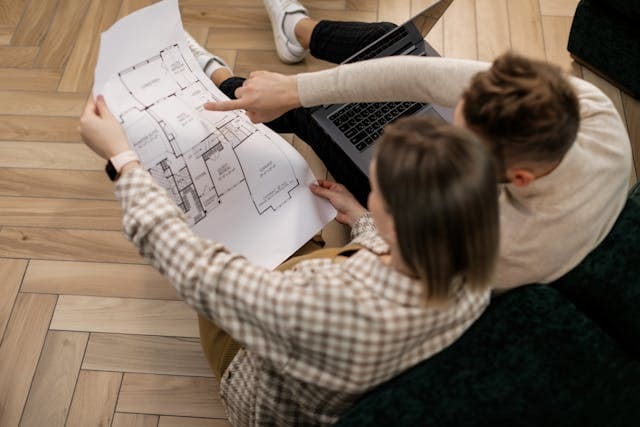
This is the big one, and it happens all the time. You’re scrolling online, maybe looking at Instagram or builder websites, and you find the perfect granny flat. Beautiful layout, exactly what you want. So you contact a designer, pay for plans, maybe even lodge them with council—only to discover your property can’t actually accommodate that design.
It’s a heartbreaking and expensive mistake. You’ve already spent $3,000 to $5,000 on plans that are now useless. You need to start again, which means more fees, more time, and a whole lot of frustration.
The problem is that site constraints aren’t always obvious when you’re standing in your backyard imagining possibilities. There might be a sewer easement running through the only suitable building spot. Underground services could limit where you can dig. That gentle slope you barely notice might require $15,000 worth of earthworks to level properly.
According to Theo Stone, the Granny Flat King: “Foundations, drainage, and structural integrity, the stuff you can’t see. Anyone can make something look pretty, but engineering is what lasts 50 years.”
Here’s the smarter approach: get a professional site assessment first. Yes, it costs $500 to $1,500 depending on your property’s complexity. But this investment identifies every constraint and opportunity before you commit to anything. You’ll know exactly what’s buildable, where it can sit, and what site preparation you’ll need. That knowledge saves you from expensive redesigns and ensures your chosen design actually works for your specific block.
Mistake #2: Choosing Your Builder Based on Price Alone
Let’s be honest—when you’re comparing quotes and one builder comes in at $185,000 whilst another quotes $240,000, that cheaper option looks pretty tempting. Especially when you’re trying to stick to a budget.
But here’s what often happens: that $185,000 quote doesn’t include everything. Site costs? Extra. Council fees? Not included. Driveway and landscaping? You’ll need to organise that separately. Utility connections? Also extra. By the time you’ve added everything needed for a finished, liveable granny flat, you’re at $230,000 anyway—and you’ve dealt with the stress of coordinating multiple contractors.
Meanwhile, the $240,000 quote might have included absolutely everything from the start, with better quality materials and a longer warranty to boot.
The Granny Flat King puts it simply: “Compare inclusions line-by-line, not just the price. Ask about warranties, timelines, and who actually builds it. The cheapest quote usually costs you more in the end.”
When you’re comparing builders, look beyond the headline number. Ask for detailed breakdowns of what’s included. Check what warranties they offer—six years or ten years makes a real difference. Find out who’s actually doing the work. Ask about their experience with your local council. Request references from recent clients.
Quality builders stand behind their work because they know how they build. They’re transparent about costs because they’ve done this hundreds of times and know exactly what’s involved. They don’t lure you in with a low price then hit you with endless variations and extras.
Mistake #3: Underestimating Your True Budget Requirements
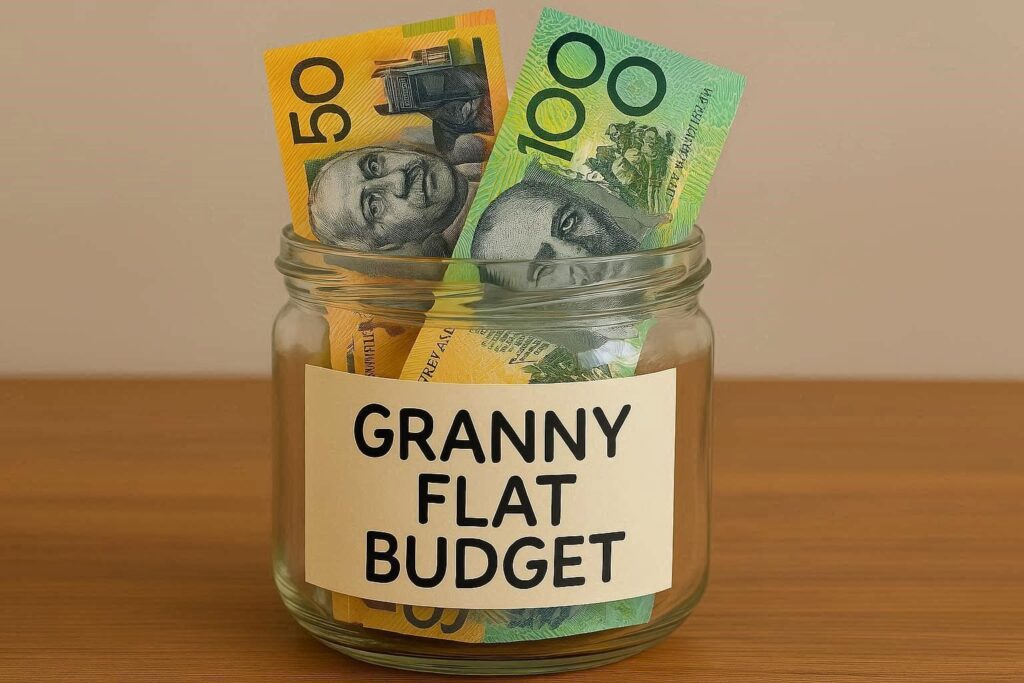
Most property owners budget for the granny flat build itself. That makes sense—it’s the biggest cost. But successful projects require more than just construction funds.
Let’s walk through the real numbers. Your builder quotes $210,000 for the granny flat. Brilliant. But you’ll also need to budget for soil tests ($800 to $1,500), engineering reports if you have slope or difficult soil ($1,500 to $3,000), council application fees ($1,500 to $2,500), and building permit fees (around $2,000).
Then there’s the stuff people forget. Fencing might need adjusting or replacing where the granny flat sits ($2,000 to $5,000). Landscaping around the new building ($3,000 to $8,000). Connecting to existing services or upgrading your electrical switchboard ($2,000 to $4,000). Maybe your driveway needs extending ($5,000 to $12,000).
Suddenly your $210,000 granny flat becomes a $235,000 total project. If you’ve only arranged finance for $215,000, you’ve got a problem.
Smart property owners budget an extra 10% to 15% on top of the build cost for these additional requirements. Not every project needs everything, but having the buffer prevents financial stress when unexpected costs appear.
As Theo Stone explains: “If they haven’t thought about why they’re building it. Investment or family? Short-term or long-term? You need clear goals before spending $200k. I’d rather talk someone out of it than into it.”

Mistake #4: Ignoring Your Specific Council’s Requirements
Here’s something that catches people out constantly: assuming all Victorian councils have the same granny flat rules. They absolutely don’t.
What gets approved in Manningham might get rejected in Bayside. The design that works perfectly in Frankston could face objections in Yarra Ranges. Every council interprets state planning provisions differently, and many have their own specific overlays and requirements.
Some councils love granny flats and process applications quickly. Others scrutinise every detail and regularly request additional information. Some have specific design requirements about materials, roof pitch, or architectural style. Others worry primarily about neighbour amenity and overshadowing.
The Granny Flat King sees this regularly: “People dive in without checking their specific council’s rules first. Every council is different. Do your homework before you fall in love with a design.”
Lodging an application without understanding your council’s specific requirements leads to one of two outcomes. Best case scenario, you get a request for further information, which delays everything by weeks or months. Worst case, you get rejected outright and need to completely redesign.
The smarter approach involves researching your council’s planning scheme before finalising designs. Many councils offer pre-application meetings where planners provide informal feedback. This guidance is invaluable—it helps you understand what will fly and what won’t before you’ve spent money on formal applications.
Working with builders experienced in your specific council area gives you another advantage. They know the local planners, understand what each council prioritises, and know how to present applications for success.
Mistake #5: Cutting Corners on Quality to Save Money
When budgets get tight, the temptation to trim costs by downgrading materials or skipping features feels sensible. After all, do you really need stone benchtops when laminate looks fine? Is that upgraded insulation really necessary?
The problem is that many of these “savings” cost you more in the long term. Cheap flooring needs replacing within five to eight years instead of lasting fifteen. Basic insulation means higher energy bills forever. Budget fixtures start leaking and need repairs much sooner.
This is especially critical if you’re building for investment returns. Quality fixtures and finishes attract better tenants who pay higher rents and stay longer. A granny flat that feels cheap and looks dated sits vacant longer between tenants. One that feels quality and well-appointed practically rents itself.
The Granny Flat King’s philosophy is clear: “Premium doesn’t mean overpriced—it means doing it right the first time. Quality materials, proper engineering, and smart design shouldn’t be luxuries.”
There’s a difference between paying more for genuine quality versus paying more for unnecessary bells and whistles. Quality foundations, proper drainage, good insulation, and durable fixtures represent smart investments. Fancy feature walls and designer light fittings? Those are nice-to-haves that you can skip if budget requires.
Focus your money where it matters most: the structural elements you can’t see and the high-use areas like kitchens and bathrooms. These are the components that affect long-term performance, maintenance costs, and tenant satisfaction.
Learning from Others’ Mistakes
Every mistake outlined here has cost real property owners real money. Some lost thousands on unusable plans. Others spent tens of thousands fixing poor-quality builds. Many experienced months of delays that could have been avoided with better planning.
You don’t need to learn these lessons the hard way. Understanding these pitfalls before you start helps you navigate your granny flat journey successfully.
The key is working with experienced professionals who’ve seen it all before. They know which corners you can cut and which ones you can’t. They understand council requirements and site constraints. They’ve learned from thousands of projects what works and what doesn’t.
Your granny flat investment deserves careful planning and expert guidance. The upfront time and money you invest in doing things properly saves you from expensive mistakes that haunt projects for years.
Ready to build your granny flat the right way? The Granny Flat King and the Innovista Group team bring engineering expertise and real-world experience to every project. Contact us today for honest guidance on your granny flat journey—we’d rather talk you out of a mistake than watch you make one.