
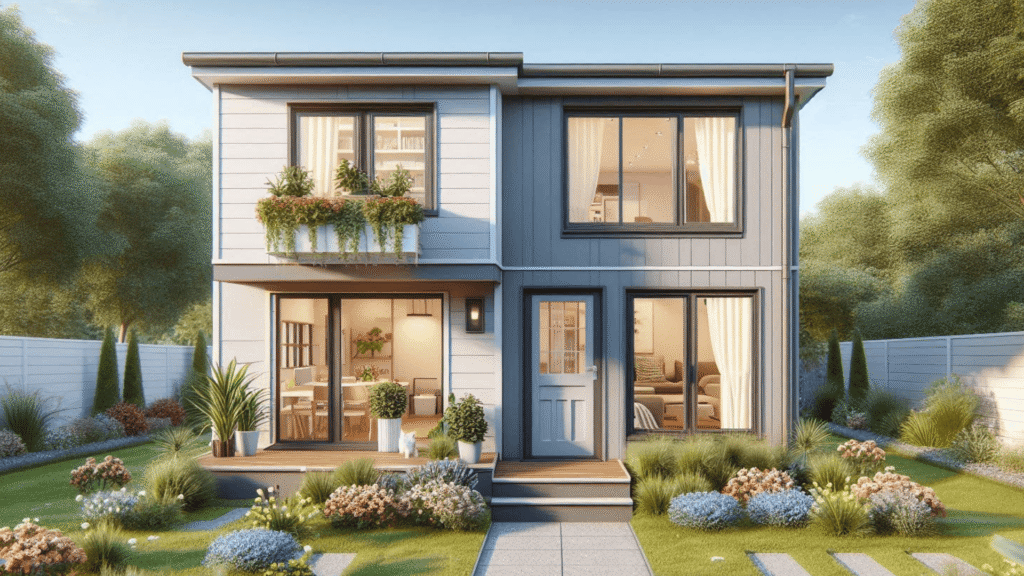
Melbourne’s property prices push families toward smaller blocks where standard single-storey granny flats struggle to fit within setback requirements. A two storey granny flat solves space constraints by building vertically rather than horizontally, potentially doubling liveable area within the same ground footprint. However, double-storey construction adds $35,000-$50,000 to costs whilst triggering planning permit requirements that single-storey builds often avoid.
Understanding when two storey granny flat designs make financial and practical sense versus when single-storey layouts deliver better value helps you invest wisely. This guide explains exactly which block situations justify vertical construction, what additional costs and regulations apply, and how to determine whether your property benefits from double-storey investment.
When Your Block Actually Needs Two Storey Design
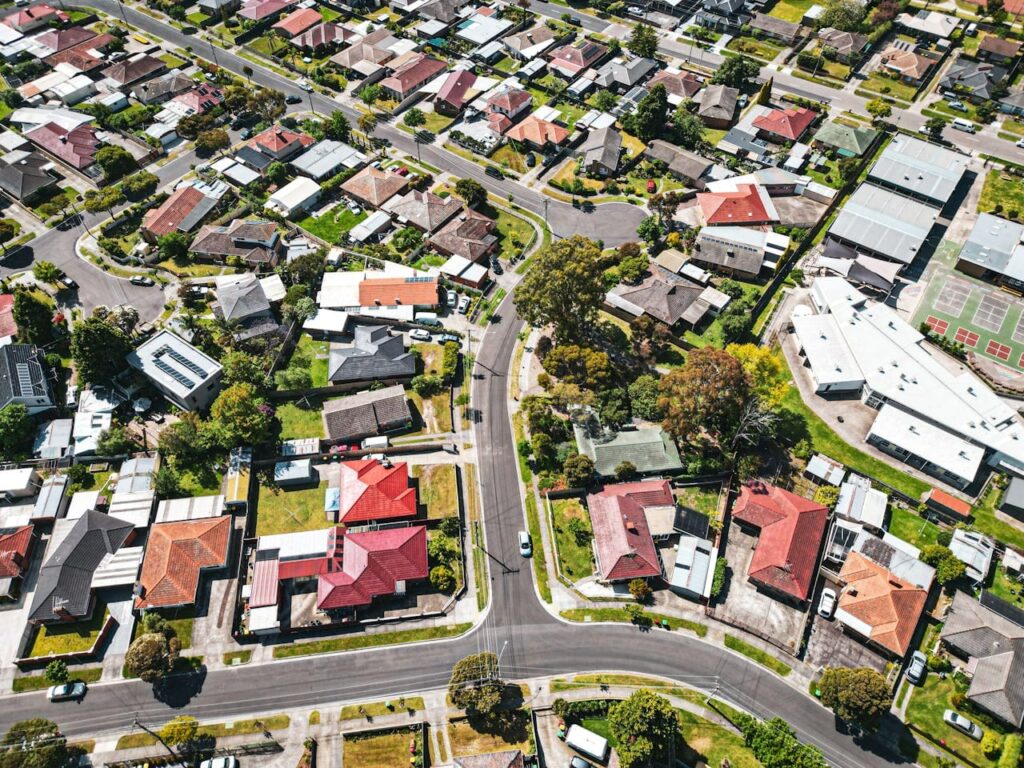
Not every small block requires two storey granny flat construction. Several specific situations make vertical building the optimal or only viable solution.
Blocks under 450m² with poor proportions: Narrow blocks (12-15 metres width) leave insufficient space for single-storey 60m² granny flats after applying setback requirements. Building upward creates necessary floor area without exceeding ground coverage limits.
Significant slope or elevation change: Blocks dropping or rising more than 2 metres from front to back often suit split-level or two storey construction better than expensive cut-and-fill for single storey. Using natural slope reduces earthworks costs whilst creating distinctive architecture.
Maximising land value on premium sites: In high-value suburbs where land costs $800,000-$1,500,000+, extracting maximum dwelling capacity justifies two storey investment. The $40,000-$50,000 additional construction cost becomes negligible against six-figure land values.
Heritage or character overlays restricting footprint: Some Melbourne councils limit ground coverage percentages in heritage areas. Building vertically respects these restrictions whilst achieving necessary floor area.
Desire for separated living zones: Two storey layouts naturally separate bedrooms upstairs from living areas downstairs, creating superior privacy compared to single-storey open plans. For multigenerational living where elderly parents need quiet upstairs whilst family activities happen below, this separation proves valuable.
Planning Permit Requirements For Two Storey Builds
Unlike many single-storey granny flats under 60m² that avoid planning permits, two storey granny flat construction almost always triggers permit requirements adding time and cost.
Why permits are required: Victorian planning schemes classify most double-storey secondary dwellings as developments requiring formal assessment regardless of floor area. Councils examine overlooking, overshadowing, neighbourhood character, and visual bulk concerns more carefully with vertical construction.
Typical permit timeline: 6-12 weeks from application to decision in growth corridor councils (Casey, Cardinia, Wyndham). 12-20 weeks in inner Melbourne councils (Yarra, Port Phillip) where planning scrutiny intensifies.
Additional permit costs:
| Cost Element | Single Storey | Two Storey | Additional |
|---|---|---|---|
| Planning permit application | Not required | $2,000-$3,500 | +$2,000-$3,500 |
| Detailed design plans | $2,000-$4,000 | $4,000-$7,000 | +$2,000-$3,000 |
| Shadow diagrams | Not required | $800-$1,500 | +$800-$1,500 |
| Planning consultant | Not required | $2,500-$4,500 | +$2,500-$4,500 |
| Total planning costs | $2,000-$4,000 | $10,300-$17,000 | +$8,300-$13,000 |
According to the Victorian Planning Authority, 78% of two storey secondary dwelling applications receive approval, but 22% face refusal or require significant modifications addressing overlooking or overshadowing concerns.
Construction Cost Reality: Single vs Two Storey
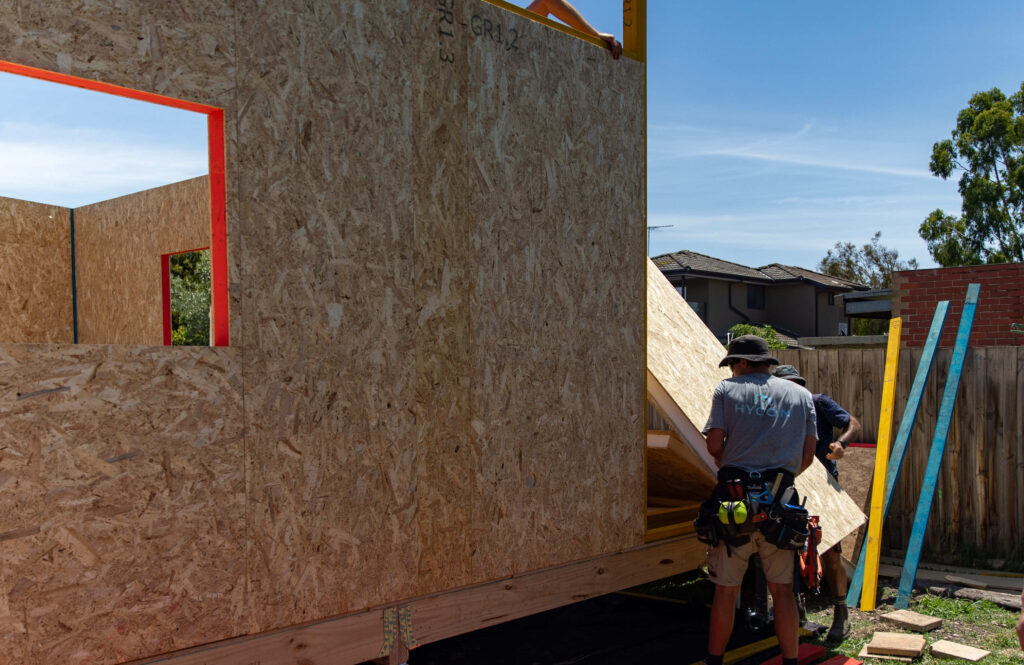
Beyond planning complexity, two storey granny flat construction costs substantially more than equivalent floor area built single-storey.
Why vertical costs more:
Structural requirements: Two storey construction requires stronger foundations supporting double loads, reinforced ground floor framing, and engineered stairs. These structural elements add $12,000-$18,000 compared to single-storey slabs.
Scaffolding and safety: Working at height requires extensive scaffolding rental throughout construction. Budget $6,000-$10,000 for scaffolding single-storey builds don’t need.
Plumbing and electrical complexity: Running services vertically through floors costs more than horizontal runs. Bathrooms positioned above living areas need careful waterproofing and drainage design adding $3,000-$5,000.
Staircase costs: Quality internal stairs cost $8,000-$15,000 depending on materials and design. This entire cost element doesn’t exist in single-storey construction.
Access challenges: Delivering materials to upper floors and working in confined elevated spaces reduces construction efficiency. Labour costs increase 15-20% for upper floors compared to ground-level work.
Total cost comparison for 80m² floor area:
- Single storey 80m²: Not possible on most small blocks
- Two storey 40m² per floor: $230,000-$280,000
- Premium: $35,000-$50,000 for vertical construction
For granny flat builders Melbourne teams, two storey projects require specialised experience with vertical construction, not just residential building experience.
Design Considerations That Make Two Storey Work
Successful two storey granny flat designs require thoughtful planning addressing vertical living challenges.
Staircase positioning and accessibility: Stairs consume 6-9m² of valuable floor area whilst creating accessibility barriers for elderly occupants or anyone with mobility limitations. For families with ageing parents, this effectively eliminates two storey options unless parents occupy ground floor only.
Acoustic insulation between floors: Poor acoustic design creates nightmare scenarios where upstairs footsteps disturb ground floor occupants constantly. Quality two storey construction includes acoustic underlay, resilient channels, and careful detailing adding $2,000-$4,000 but preventing livability problems.
Natural light to ground floor: Upper floors shade ground floor spaces potentially. Strategic window placement, light wells, or skylights ensure both levels receive adequate natural light. This requires experienced design rather than simply stacking two rectangular floors.
Privacy from neighbouring properties: Two storey designs must carefully consider window positions avoiding direct overlooking of neighbouring yards or living spaces. Planning authorities scrutinise this carefully, often requiring obscure glazing, high sills, or screening reducing desirability.
Climate control efficiency: Heating two storey granny flat spaces requires properly specified systems accounting for heat rising. Single split systems often underperform in vertical layouts. Multi-head systems or ducted solutions add $3,000-$6,000 but deliver necessary comfort.
When Single Storey Delivers Better Value

Despite two storey benefits on constrained blocks, many situations favour single-storey construction even when space is tight.
Blocks 450m²+ with reasonable proportions: Standard single-storey 60m² granny flats fit comfortably within setback requirements. The $35,000-$50,000 saved on vertical construction delivers better returns than extra floor area rarely needed.
Rental property focus: Single-storey rental properties appeal to broader tenant demographics including elderly, disabled, and families with young children. Two storey limits your tenant pool whilst costing more upfront.
Budget constraints under $230,000: Quality single-storey construction at $190,000-$230,000 outperforms compromised two storey builds squeezing budgets. Never sacrifice construction quality for extra floor area.
Ageing parent accommodation: Unless parents are limited to ground floor only, vertical living creates accessibility challenges as mobility declines. Purpose-built single-storey layouts serve elderly occupants far better.
Quick approval timelines: Avoiding planning permits saves 6-12 weeks minimum. For families needing accommodation quickly, single-storey speed often outweighs two storey space advantages.
Neighbouring Property Considerations
Two storey granny flat designs face heightened scrutiny around neighbour impacts compared to single-storey construction.
Overshadowing analysis required: Planning permits require detailed shadow diagrams showing winter solstice impacts on neighbouring properties. If your two storey casts shadows over neighbour’s living areas or yards for extended periods, councils may refuse permits or require height reductions.
Overlooking and privacy: Windows or balconies facing neighbouring properties create privacy concerns. Planning authorities often require:
- Windows with obscure glazing limiting views
- Window sills 1.7m+ above finished floor level
- Privacy screens blocking direct sightlines
- Setbacks increased beyond single-storey minimums
These requirements sometimes negate the space-saving advantages of vertical construction.
Perceived bulk and scale: Two storey structures appear more imposing than single-storey equivalents. In established low-density suburbs, councils may refuse permits based on neighbourhood character concerns even when technical requirements are met.
Proactive neighbour consultation: Before submitting applications, discuss plans with adjacent property owners. Addressing concerns early through design modifications prevents formal objections delaying or derailing permits.
Alternative Solutions For Small Blocks
Before committing to two storey complexity and costs, consider whether alternative approaches solve space constraints more effectively.
Compact single-storey designs: Well-designed 43m² single-storey layouts provide comfortable 1-bedroom accommodation on blocks where 60m² doesn’t fit. Sacrificing second bedroom may deliver better overall value than expensive vertical construction.
Split-level designs: On sloping blocks, split-level construction (3-4 steps between living zones) creates visual separation and maximises natural slope without full two-storey costs. Split-level adds $8,000-$15,000 versus $35,000-$50,000 for full two storey.
Clever boundary setback strategies: Sometimes working with councils to reduce specific setbacks allows single-storey construction on seemingly impossible blocks. Professional builders experienced with council negotiations often find solutions avoiding vertical construction.
Attached additions instead: If the main house sits on the constrained block, attached additions sometimes prove more cost-effective than freestanding two storey granny flats. Building inspectors assess these differently under building regulations.
Your Next Steps To Smart Vertical Decisions
Two storey granny flat investment makes sense in specific situations but isn’t automatically superior to single-storey alternatives.
Get professional site assessment: Book a free site assessment where we’ll evaluate whether your block genuinely requires two storey construction or whether clever single-storey design delivers better value.
Understand planning requirements: Before committing, contact Innovista Group to discuss likely planning approval paths, timelines, and costs for your specific council and property.
Compare true all-in costs: Factor in additional $43,000-$63,000 for two storey (construction premium + planning costs) when calculating whether vertical investment delivers acceptable returns.
Consider long-term flexibility: Custom built granny flats built single-storey retain broader appeal for future sales or rental compared to two storey limiting occupant demographics.
Ready to determine whether your block justifies two storey investment or whether single-storey delivers superior value? Our experience with Melbourne council requirements across vertical and horizontal construction helps you make informed decisions protecting both your budget and timeline whilst maximising your block’s potential.


