

Melbourne councils reject approximately 60% of flat pack granny flats applications on first submission, compared to 15-20% rejection rates for professionally designed permanent construction. The primary rejection reasons centre on inadequate engineering for Melbourne’s reactive clay soils, energy rating failures, and non-compliant materials unsuitable for Victorian building standards. Understanding why councils reject flat pack applications helps you avoid wasting $3,000-$8,000 on rejected permit applications whilst investing months in ultimately unsuccessful projects.
This guide exposes the specific deficiencies causing Melbourne councils to refuse flat pack granny flats permits, what modifications might achieve approval, and why permanent construction typically proves more cost-effective than fighting for flat pack approval.
The Engineering Deficiency Problem
The single largest rejection cause involves engineering specifications inadequate for Melbourne’s challenging soil conditions.
Why generic engineering fails: Flat pack granny flats manufacturers provide engineering designed for “typical” soil conditions. Melbourne’s expansive clay soils aren’t typical anywhere. They expand dramatically when wet and shrink when dry, creating foundation movement that standard flat pack engineering doesn’t address.
What Melbourne councils require:
- Site-specific geotechnical reports identifying soil classification
- Foundation design for Class H, H1, H2, or E soils (most Melbourne suburbs)
- Specific pier depths, spacing, and reinforcement for reactive soils
- Waffle pod or reinforced concrete slabs designed for soil movement
- Structural engineering sealed by Victorian-registered engineers
What flat pack suppliers provide:
- Generic engineering assuming Class A or S soils (stable, non-reactive)
- Foundation specifications inadequate for clay soil movement
- Engineering sealed by interstate engineers not registered in Victoria
- No site-specific soil testing or classification
The modification cost trap: When councils reject flat pack engineering, suppliers quote $4,000-$8,000 for “site-specific engineering upgrades.” However, proper engineering often reveals the entire flat pack system requires structural modifications costing $12,000-$18,000. At this point, you’ve invested $3,000 in rejected permits plus $8,000 in engineering, approaching permanent construction cost differences without any flat pack advantages remaining.
Energy Rating Failures (7-Star Requirement)

Victoria mandates 7-star energy ratings for all new residential construction since October 2023. Flat pack designs pre-dating these requirements routinely fail compliance.
Common energy rating failures:
| Deficiency | Why It Fails | Fix Cost |
|---|---|---|
| Insufficient insulation | R-values below 7-star requirements | $3,000-$5,000 |
| Single-glazed windows | Heat loss/gain exceeds limits | $4,000-$6,000 |
| Poor thermal breaks | Metal framing conducting heat | $2,000-$4,000 |
| Inadequate sealing | Air leakage exceeds permitted levels | $1,500-$3,000 |
| Generic orientation | Not optimised for Melbourne climate | Requires redesign |
Total energy compliance upgrades: $10,500-$18,000 to bring non-compliant flat pack designs to 7-star standards.
Why permanent builds achieve compliance easily: Professional granny flat builders design for 7-star from initial planning, using appropriate insulation, double glazing, and thermal breaks as standard. These aren’t upgrades; they’re baseline requirements already incorporated in pricing.
Interstate design problems: Many flat pack manufacturers operate from Queensland or NSW where different energy requirements apply. Their standard designs meet those states’ requirements but fail Victorian standards. Modifications sometimes prove impossible without complete redesign.
Non-Compliant Materials and Methods
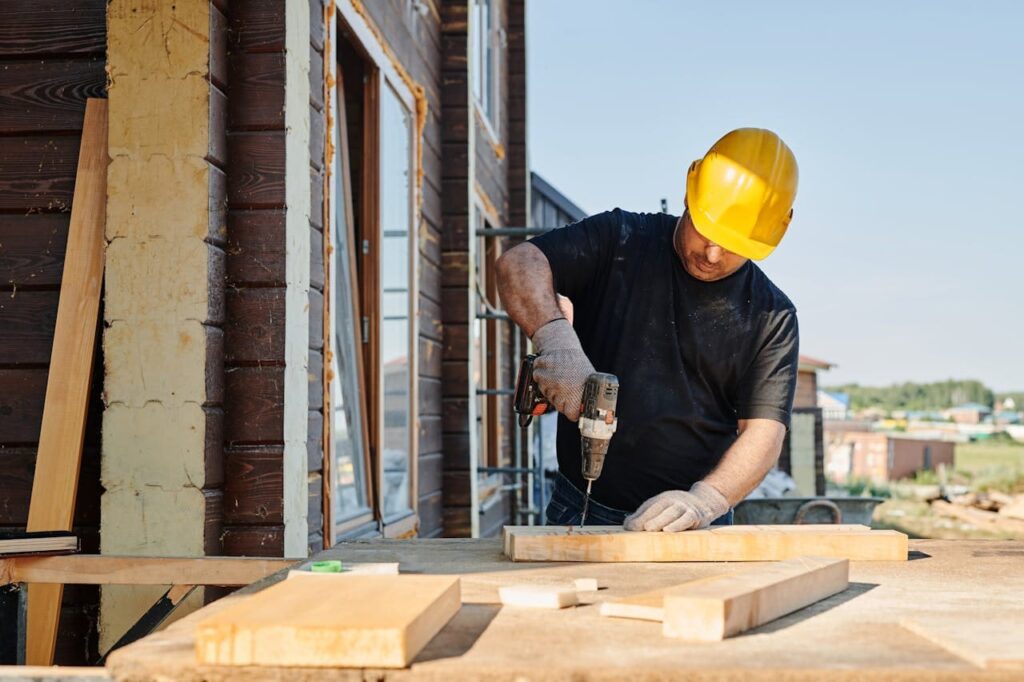
Melbourne councils frequently identify materials or construction methods in flat pack systems that don’t meet Victorian building codes.
Common material non-compliance:
Wall cladding: Some flat pack systems use materials not listed in Victorian Deemed-to-Satisfy provisions. Achieving compliance requires engineer certification or using different cladding, typically costing $6,000-$12,000.
Structural connections: Bolted connections in flat pack systems sometimes lack required engineering for Melbourne’s wind loading. Upgrading connections costs $3,000-$6,000.
Roofing specifications: Interstate flat pack designs sometimes specify roofing unsuitable for Melbourne’s climate, particularly snow loading in certain areas or wind ratings for exposed sites.
Electrical and plumbing rough-ins: Pre-installed electrical or plumbing in flat pack panels must meet Victorian standards. Modifications by licensed Victorian tradies often require cutting into panels, destroying the flat pack efficiency advantage.
Bushfire compliance: Properties in bushfire overlay areas need BAL-rated construction. Generic flat pack designs rarely include necessary ember guards, sealing, or materials required for bushfire zones, requiring extensive modifications costing $8,000-$15,000.
The Soil Testing Revelation
Most flat pack buyers discover soil problems only after purchasing flat pack systems, when engineering for permits reveals challenging conditions.
The typical sequence:
- Purchase flat pack based on advertised pricing ($120,000-$150,000)
- Order engineering for permits ($2,000-$4,000)
- Soil testing reveals Class H or H1 reactive clay ($800-$1,500)
- Engineering declares flat pack foundations inadequate
- Supplier quotes foundation upgrades ($8,000-$15,000)
- Modified design still fails council review
- Additional structural modifications required ($10,000-$18,000)
Total invested before abandoning flat pack: $23,800-$40,500 with nothing built.
Why permanent construction avoids this: Professional builders conduct soil testing during quoting, incorporating proper foundation design from the start. You receive realistic pricing reflecting your actual site conditions, not generic assumptions.
Assembly Complexity Reality vs Marketing
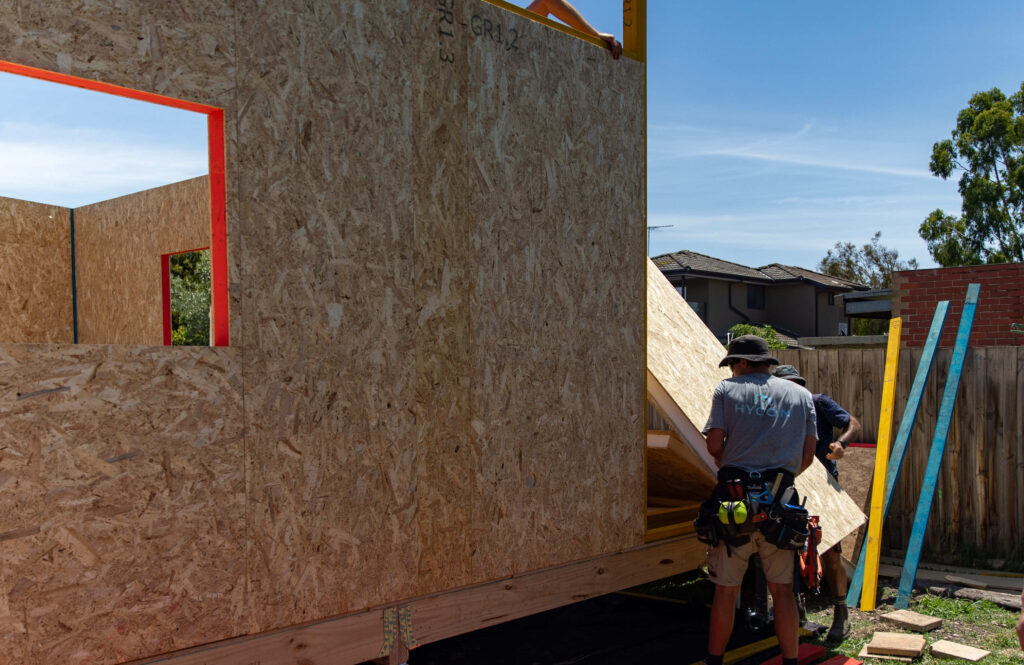
Councils reviewing flat pack applications increasingly scrutinise whether assembly is actually achievable to acceptable standards.
Professional assembly requirements: Some councils now require evidence that licensed builders will assemble flat pack systems, not DIY owners. This eliminates the labour cost savings flat pack marketing promotes.
Inspection frequency: Flat pack builds require identical building surveyor inspection frequency as permanent construction: at footing stage, at frame stage, at lock-up, and at final. The marketing claim that flat pack is “easier to permit” proves false—inspection requirements are identical.
Quality concerns from past failures: Several Melbourne councils have dealt with poorly-assembled flat pack granny flats requiring expensive remediation. This history makes surveyors scrutinise flat pack applications more carefully, increasing rejection likelihood.
Professional assembly costs: When councils require licensed builder assembly, labour costs reach $15,000-$30,000, eliminating flat pack’s primary cost advantage over permanent construction.
Council-Specific Rejection Patterns
Melbourne’s 31 councils treat flat pack applications with varying scepticism.
Most restrictive councils (highest rejection rates):
- Yarra Ranges (concerned about bushfire compliance)
- Boroondara (strict architectural standards)
- Bayside (quality and heritage concerns)
- Stonnington (design quality expectations)
These councils reject 70-80% of flat pack applications on first submission, with many never achieving approval.
Moderate approach councils:
- Casey, Cardinia (growth corridors, more flexible)
- Wyndham, Melton (pragmatic development approach)
- Frankston (accepts compliant designs)
These councils reject 40-50% of flat pack applications, primarily on engineering grounds. Compliant designs achieve approval.
What this means: Even growth corridor councils supposedly “easy” for approvals reject half of flat pack applications. The problem isn’t councils being difficult—it’s flat pack systems failing to meet Victorian building standards.
Check your specific council’s requirements before investing in flat pack systems. Some councils have effectively stopped approving them due to past compliance problems.
What Actually Gets Flat Pack Approved
A small percentage of flat pack applications succeed. Understanding what works helps if you’re committed to this approach.
Compliant flat pack applications include:
- Site-specific engineering by Victorian-registered engineers ($6,000-$10,000)
- Energy rating certificates demonstrating 7-star compliance ($1,500-$2,500)
- Geotechnical reports addressing soil conditions ($1,200-$2,000)
- Professional assembly commitments from licensed builders ($15,000-$30,000)
- Council-specific design compliance demonstration ($2,000-$4,000)
Total additional costs achieving approval: $25,700-$48,500 on top of base flat pack pricing.
The ironic reality: Flat pack systems marketed at $120,000-$150,000 cost $145,700-$198,500 after compliance additions. Compare this to transparent permanent construction at $190,000-$230,000 fully compliant from the start.
Alternative: Purpose-Built For Melbourne Compliance
Rather than fighting to make interstate flat pack systems comply with Victorian requirements, purpose-built designs achieve approval smoothly.
What professional Melbourne builders provide:
- Initial designs incorporating 7-star energy ratings
- Foundation engineering for Melbourne’s clay soils
- Materials meeting Victorian building code requirements
- Proper wind loading and structural specifications
- Council-familiar design approaches reducing rejection risk
Approval rates: Professional permanent construction achieves first-submission approval 80-85% of the time in most Melbourne councils.
Timeline comparison:
- Flat pack: 3-6 months fighting rejections, modifications, resubmissions
- Permanent: 6-8 weeks standard permit timeline
Cost comparison (true all-in costs):
- Flat pack (after compliance): $145,000-$198,000, 6+ month delays
- Permanent construction: $190,000-$230,000, 16-20 week builds
The $0-$32,000 apparent savings disappear when accounting for actual compliance costs and timeline delays.
Questions Before Buying Flat Pack
If considering flat pack despite high rejection rates, these questions reveal whether specific systems will achieve Melbourne approval.
“Do you provide Victorian site-specific engineering as standard?” If they quote generic engineering, expect council rejection and expensive modifications.
“Can you show recent approvals in my specific Melbourne council?” Recent local approvals indicate the system can achieve compliance. Lack of local approvals signals problems.
“What’s your first-submission approval rate in Victoria?” Honest suppliers track this. Under 40% indicates serious compliance problems.
“Do you guarantee approval or refund deposits if rejected?” Quality suppliers confident in compliance offer guarantees. Those avoiding guarantees know rejection rates are high.
“What’s included in base pricing versus required upgrades?” Itemised inclusions versus “site-dependent” extras reveal true costs.
Your Next Steps To Successful Approval
Whether pursuing flat pack or permanent construction, understanding Melbourne council requirements prevents expensive failures.
Verify compliance before purchasing: Book a free site assessment where we’ll review any flat pack system you’re considering, identifying likely rejection issues before you invest.
Compare true costs: Contact Innovista Group for transparent permanent construction pricing. Often the true cost difference is minimal once flat pack compliance additions are included.
Review council-specific requirements: Some councils effectively don’t approve flat pack systems regardless of modifications.
Consider alternatives: Kit home alternatives and prefabricated options sometimes achieve better approval rates than true flat pack.
Ready to build with confidence in council approval? Our Melbourne-specific designs achieve 80%+ first-submission approval rates because we design for Victorian requirements from the start, not fight to retrofit interstate systems to local standards. Melbourne families deserve builders who understand local council requirements, soil conditions, and building standards, eliminating the rejection risks plaguing flat pack systems designed for other markets.