
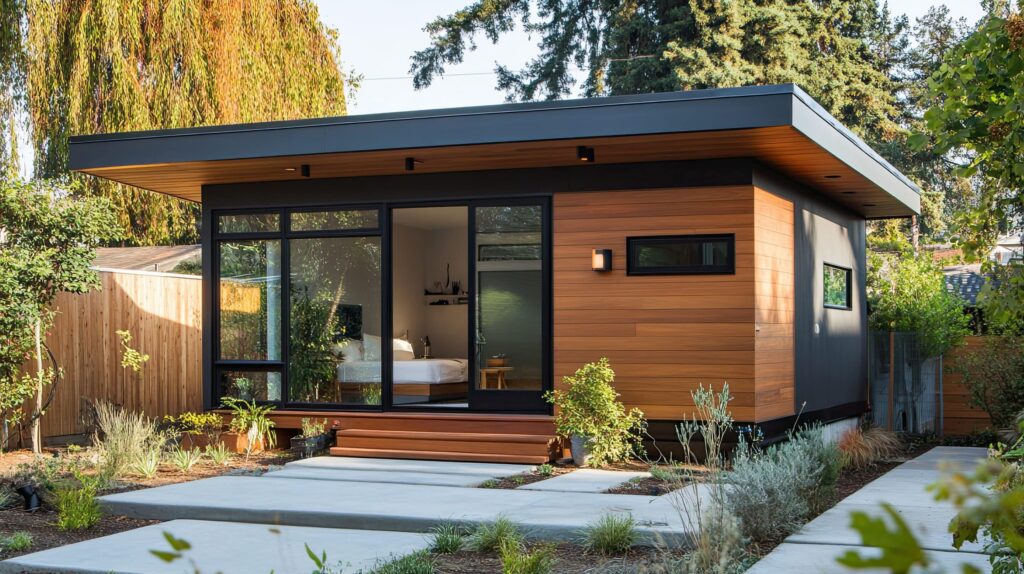
Foundation selection for Melbourne granny flats depends primarily on soil classification rather than personal preference or aesthetic considerations. The city’s predominantly reactive clay soils expand when wet and shrink during dry periods, creating ground movement that foundations must accommodate without transferring stress to building structures. Choosing between concrete slabs and elevated timber subfloors requires understanding your specific site’s soil classification and how each foundation type responds to Melbourne’s challenging ground conditions.
Both systems deliver successful outcomes when properly engineered and installed, but cost differences, construction timelines and long-term performance characteristics vary significantly. This guide explains how to build a granny flat foundation suited to your property’s soil type whilst balancing budget constraints against performance requirements.
Melbourne’s Reactive Clay Soil Challenge

Geotechnical testing classifies Melbourne soils from Class A (stable, non-reactive) through to Class H2 (highly reactive clay). Most Melbourne suburbs sit on Class H, H1 or H2 soils requiring specific engineering to manage seasonal ground movement.
Eastern suburbs (Whitehorse, Boroondara, Monash) typically feature Class H to H1 moderate reactive clays. Northern growth corridors (Hume, Whittlesea) contain variable soils ranging from Class M (slightly reactive) to Class H1. Western suburbs (Wyndham, Melton) often present Class H1 to H2 highly reactive clays requiring most rigorous engineering.
Soil classification determines foundation design complexity and cost. Class A or S stable soils allow simple slab construction with minimal reinforcement and standard footings. Class H2 highly reactive soils demand waffle pod slabs with deep edge beams, extensive reinforcement and specific moisture management, potentially doubling foundation costs compared to stable soil equivalents.
Timber Subfloor: The Flexible Solution
Timber subfloor construction elevates granny flat buildings 400-600mm above ground level on steel or concrete stumps. This creates an air gap between ground and floor structure, isolating buildings from direct soil contact and movement.
The system uses adjustable stumps allowing post-construction releveling if differential ground movement occurs. This flexibility proves valuable on reactive clay sites where seasonal moisture variations cause ongoing minor settlements. Stumps can be adjusted periodically to maintain level floors without structural damage, impossible with monolithic concrete slabs.
Timber subfloor systems for 60m² granny flats typically cost $18,000-$24,000 installed on Class H soils. This includes steel or concrete stumps at 1800-2400mm centres, H3-treated bearer and joist systems, and structural plywood flooring base. The elevated design naturally provides underfloor ventilation, reducing moisture accumulation that can affect structures and floor coverings.
Construction proceeds quickly since timber subfloors don’t require concrete curing periods. Framing can commence within 2-3 days of stump installation versus 7-14 days waiting for concrete slabs to cure adequately for wall loading.
Concrete Slab: The Solid Alternative
Concrete slabs sit directly on prepared and compacted ground, creating monolithic foundations that resist ground movement through mass and reinforcement rather than flexibility. Modern engineered slabs for reactive soils use waffle pod systems, where void formers create a grid of reinforced concrete beams supporting thinner slab panels.
Waffle pod slabs for Class H soils typically feature 300-450mm deep edge beams around perimeters, 200mm wide internal beams at 1200mm centres, and 85-100mm thick panels between beams. This provides strength and stiffness resisting differential ground movement whilst minimizing concrete volume and weight.
Slab construction for 60m² granny flats Melbourne properties costs $22,000-$28,000 on Class H soils, approximately $4,000-$6,000 more than equivalent timber subfloor systems. The premium buys perceived solidity and eliminates underfloor spaces that some owners prefer avoiding for maintenance or pest management reasons.
Concrete slabs require 7-10 days curing before wall framing commences, extending construction timelines compared to timber alternatives. However, slabs integrate well with in-slab hydronic heating systems for those prioritizing radiant floor heating, though this represents an additional $8,000-$12,000 investment.
Insulation Requirements: R4.0 Subfloor vs R1.5 Slab

Energy rating requirements under NCC 2022 mandate different insulation provisions depending on foundation type. Timber subfloor construction requires R4.0 insulation between joists to meet 7-star ratings, whilst concrete slabs need only R1.5 perimeter edge insulation.
This affects both initial costs and long-term energy performance. R4.0 subfloor insulation costs $2,000-$3,000 installed for 60m² granny flats, partially offsetting timber subfloor’s lower base cost advantage. However, superior underfloor insulation delivers marginally better thermal performance, potentially reducing heating/cooling costs by $80-$120 annually compared to minimum-compliant slab insulation.
The Signature and Luxe packages specify R4.0 subfloor insulation as standard in timber subfloor configurations, exceeding minimum compliance to enhance comfort and energy efficiency. Affordable packages meet minimum R4.0 requirements, providing code-compliant performance at entry pricing.
Long-Term Performance and Maintenance
Both foundation types require minimal maintenance when properly installed, but failure modes and remediation costs differ significantly.
Timber subfloor failures typically involve individual stump settlements or bearer deterioration from moisture exposure. These localized issues cost $800-$2,000 per affected area to remediate, and buildings remain structurally sound during repairs. Annual inspections checking stump levels and timber condition cost $200-$300, preventatively identifying issues before they cause damage.
Concrete slab failures manifest as cracking when ground movement exceeds design parameters. Minor cosmetic cracks require no intervention, but structural cracks can cost $8,000-$15,000 to repair through resin injection or underpinning. Slab failures affect entire structures rather than localized zones, making remediation more complex and expensive.
According to Standards Australia, properly engineered foundations on reactive soils experience failure rates under 2% within 25 years. Both timber subfloor and concrete slab systems achieve this reliability when designed for specific soil classifications rather than using generic specifications.
Site-Specific Factors Influencing Foundation Choice
Beyond soil type, several site characteristics favour one foundation system over the other.
Sloping blocks often suit timber subfloor construction better since adjustable stumps accommodate grade changes without extensive earthworks. Leveling sites for concrete slabs on 1-2 metre slopes costs $8,000-$15,000 in cut-and-fill versus $2,000-$4,000 additional stump height costs.
Properties with existing large trees nearby benefit from timber subfloor flexibility. Tree root activity and moisture extraction create localized ground movements that adjustable stumps accommodate whilst concrete slabs risk cracking.
Coastal Bayside properties sometimes prefer elevated timber construction for improved ventilation and reduced rising damp risks in high water table areas.
Your Next Steps to Foundation Selection
Foundation decisions require geotechnical testing revealing your specific soil classification. Book a free site assessment where we arrange soil testing and provide engineering recommendations for your property.
Contact Innovista Group to discuss timber subfloor and concrete slab options with transparent pricing for your soil conditions. Our structural engineers design foundations matching your site’s specific requirements rather than applying generic solutions unsuited to Melbourne’s variable ground conditions.