
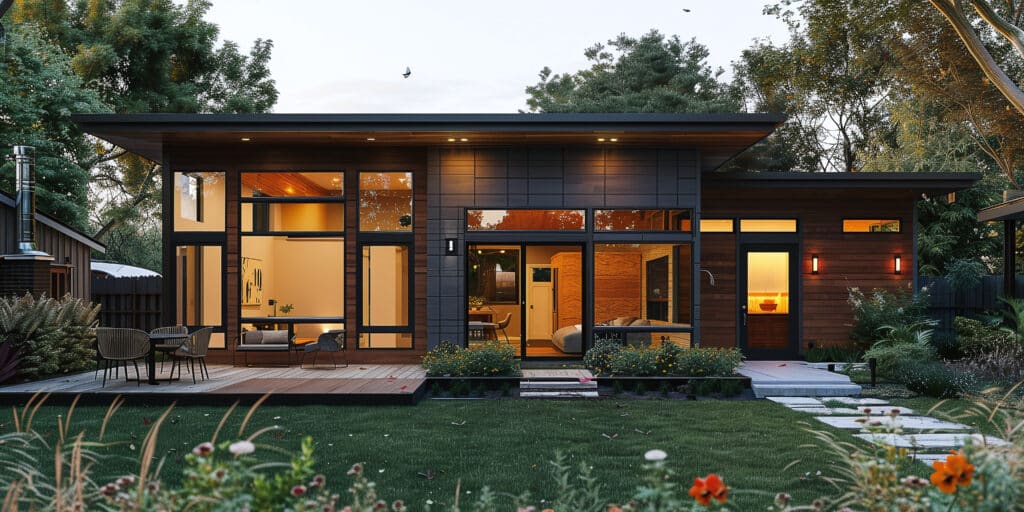
When comparing granny flat packages, the gap between standard $190,000 builds and luxury $255,000 versions appears significant. That $65,000 difference represents 34% additional investment requiring careful justification. The question isn’t whether luxury feels nicer—obviously it does—but whether the premium features generate sufficient additional rental income, tenant quality improvements, or property value increases to justify the cost.
Understanding exactly what the $65,000 buys, which upgrades deliver measurable returns, and whether your specific property location supports luxury pricing helps you invest wisely. This guide breaks down the luxury versus standard comparison systematically, revealing which features justify their premium and which represent expensive indulgences delivering minimal financial benefit.
What $65,000 Actually Buys: Feature-by-Feature Breakdown
The luxury granny flat premium isn’t random pricing—it reflects specific material and design upgrades. Understanding the itemized breakdown helps assess value.
Structural and architectural upgrades ($12,000-$15,000):
- 3000mm ceilings versus 2700mm standard (+$8,000)
- Enhanced insulation R5.5+ versus R5.0 (+$2,000)
- Triple-stack sliding doors versus double (+$2,000-$3,000)
- Skillion ceiling architectural features (+$0-$2,000)
Kitchen premium features ($15,000-$20,000):
- 40mm stone benchtops versus 20mm (+$6,000)
- Curved island bench versus straight (+$2,000)
- Bosch appliance package versus Haier (+$3,500)
- Soft-close throughout versus selected drawers (+$1,500)
- Butler’s pantry integration (+$2,000-$3,000)
- Premium mixer tap and sink (+$1,000-$1,500)
Bathroom luxury elements ($8,000-$12,000):
- Underfloor heating versus none (+$3,000-$4,000)
- Rainfall showerhead plus handheld versus standard (+$800)
- Floor-to-ceiling premium tiles versus mid-height (+$2,500-$3,500)
- Floating vanity with premium storage versus standard (+$1,200)
- Designer fixtures and fittings (+$1,500-$2,000)
Climate, flooring, and finishes ($12,000-$18,000):
- Multi-head air conditioning versus single split (+$4,500)
- 9mm premium hybrid flooring versus 6mm standard (+$2,500)
- Designer lighting package versus standard LED (+$3,000-$5,000)
- Premium window treatments versus basic (+$2,000-$3,000)
Total itemized upgrades: $47,000-$65,000 depending on specifications.
Rental Income Impact: The Critical ROI Question

Premium features only justify their cost if they generate proportional rental income increases or reduce vacancy periods significantly.
Melbourne rental market premium analysis:
| Package Level | Build Cost | Weekly Rent | Annual Income | Gross Yield |
|---|---|---|---|---|
| Standard (Affordable 60) | $190,000 | $480-$520 | $24,960-$27,040 | 13.1-14.2% |
| Mid-tier (Signature 60) | $230,000 | $520-$560 | $27,040-$29,120 | 11.8-12.7% |
| Luxury (Luxe 60) | $255,000 | $570-$610 | $29,640-$31,720 | 11.6-12.4% |
Key insights from data:
Yields decrease with luxury: Despite higher absolute rents, percentage yields drop as investment increases. Standard builds deliver 13-14% yields versus luxury at 11.6-12.4%. For pure investors focused on yield, standard construction performs better.
Dollar returns favour luxury: However, luxury generates $4,680-$4,680 additional annual income compared to standard. Over 10 years, that’s $46,800-$46,800 additional income for $65,000 investment—recovering the premium in approximately 14 years.
Location dependency: These rental premiums apply primarily in Melbourne’s premium suburbs. In outer growth corridors, luxury features struggle to command proportional rent increases.
Where Luxury Premiums Actually Work

Not all Melbourne locations support luxury granny flat rental premiums. Understanding where they work prevents overinvestment in wrong markets.
Premium suburbs supporting luxury rents:
Inner Melbourne (Yarra, Port Phillip, Stonnington): Professional couples and relocated executives pay $600-$650/week for quality. Luxury features essential to compete in this market. Premium over standard: $120-$130/week.
Bayside (Brighton, Sandringham, Beaumaris): Established wealth and professional demographics. Luxury granny flats achieve $580-$620/week. Premium over standard: $100-$120/week.
Eastern suburbs (Boroondara, Whitehorse): Family-oriented professionals value quality. Premium granny flats rent $560-$600/week. Premium over standard: $80-$100/week.
Growth corridors (Casey, Wyndham, Melton): Budget-conscious renters prioritize affordability. Luxury features generate minimal premiums ($20-$40/week). Standard construction delivers better investment returns in these areas.
Regional centres: Limited professional tenant pool. Luxury features don’t generate meaningful rent premiums. Focus on quality standard builds instead.
Tenant Quality vs Rental Income Considerations
Beyond pure rental dollars, luxury granny flat properties attract different tenant demographics affecting long-term investment performance.
Standard build tenants:
- Young families prioritizing affordability
- Students or recent graduates
- Single professionals on tighter budgets
- Higher turnover frequency (12-18 month tenancies)
- Moderate property care standards
Luxury build tenants:
- Established professionals ($100,000+ incomes)
- Relocated executives (often company-subsidized)
- Empty nesters downsizing temporarily
- Longer tenancies (24-36 months common)
- Excellent property care (treat it like ownership)
Financial impact of tenant quality:
| Factor | Standard Tenants | Luxury Tenants | Financial Difference |
|---|---|---|---|
| Average tenancy | 12-18 months | 24-36 months | 50% less turnover cost |
| Vacancy between | 14-21 days | 7-14 days | $200-$400 savings |
| Maintenance claims | 3-5 per year | 1-2 per year | $800-$1,500 savings |
| End-of-lease damage | Moderate | Minimal | $500-$1,200 savings |
Annual tenant quality value: $1,500-$3,100 additional effective income through reduced costs.
When factoring tenant quality benefits alongside rental premiums, luxury investment returns improve significantly. Total benefit reaches $6,180-$7,780 annually versus pure rental premium alone.
Which Luxury Features Deliver vs Which Don’t
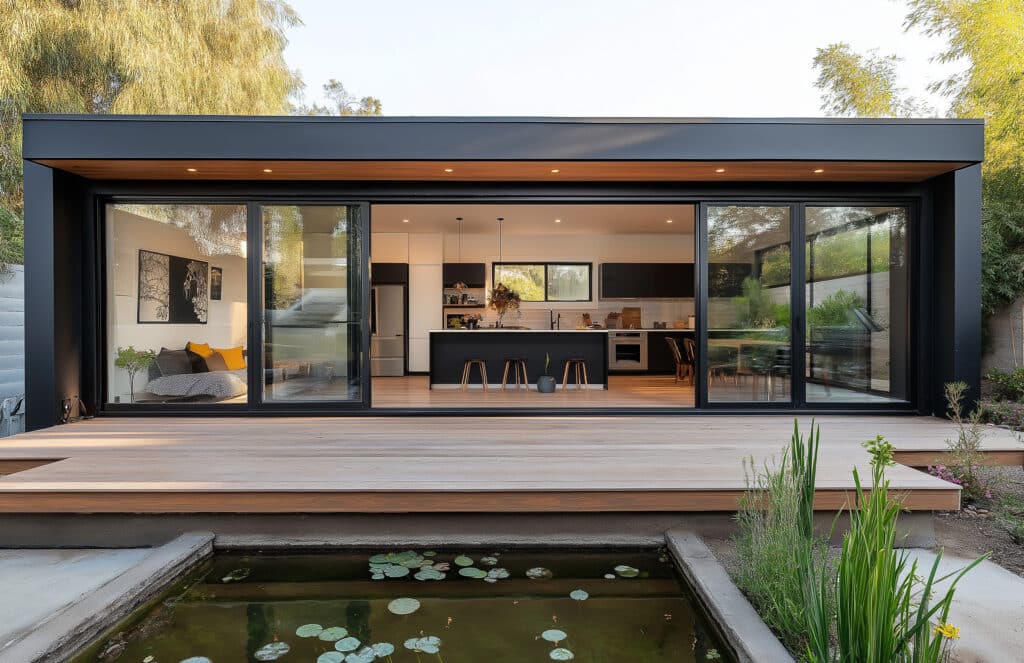
Not all $65,000 in upgrades generate equal returns. Strategic selection of high-impact features at $30,000-$40,000 often delivers 80% of luxury benefits at 60% of cost.
High-ROI luxury features (invest here first):
3000mm ceilings (+$8,000): Dramatic space perception. Photographs exceptionally well in listings. Justifies $30-$50/week premium alone. Payback: 3-4 years.
40mm stone benchtops (+$6,000): Immediate quality signal. Photographs well. Generates $20-$30/week premium. Payback: 4-5 years.
Multi-head air conditioning (+$4,500): Melbourne’s temperature extremes make this functional necessity for professional tenants. Premium: $15-$25/week. Payback: 3-4 years.
Bosch appliances (+$3,500): Brand recognition matters to professionals. Premium: $15-$25/week. Payback: 3-4 years.
Total high-ROI features: $22,000 investment generating $80-$130/week premium = $4,160-$6,760 annual return. These four features alone recover investment in 3.2-5.3 years.
Low-ROI luxury features (skip unless owner-occupied):
Premium window treatments (+$2,500): Tenants rarely notice or value. Generates $0-$5/week premium.
Designer tapware (+$2,000): Functions identically to mid-tier fixtures. Tenants don’t inspect tap brands. Premium: $0/week.
Underfloor bathroom heating (+$3,500): Nice luxury but not photographable or typically mentioned in listings. Premium: $10-$15/week maximum. Payback: 10+ years.
Butler’s pantry (+$2,500): Space efficiency sometimes better served elsewhere. Premium: $5-$10/week. Questionable value.
The Hybrid Strategy: Selective Luxury
Smart investors often pursue hybrid approaches, selecting high-impact luxury features whilst maintaining standard specifications elsewhere.
Example hybrid package ($220,000 total):
- Start with Standard $190,000 base
- Add 3000mm ceilings (+$8,000)
- Upgrade to 40mm stone benchtops (+$6,000)
- Include multi-head air conditioning (+$4,500)
- Upgrade to Bosch appliances (+$3,500)
- Add premium hybrid flooring (+$2,500)
- Enhance lighting package (+$3,000)
Hybrid package performance:
- Build cost: $217,500
- Achievable rent: $550-$580/week
- Annual income: $28,600-$30,160
- Gross yield: 13.1-13.9%
The hybrid delivers 90% of luxury rental premium at 65% of luxury cost, generating superior yields (13.1-13.9%) compared to both standard (13.1-14.2%) and full luxury (11.6-12.4%).
Location-Specific Decision Framework
Your property’s location determines whether luxury, standard, or hybrid delivers optimal returns.
Choose full luxury ($255,000) when:
- Property in premium suburbs (Inner Melbourne, Bayside, Eastern established)
- Land value exceeds $800,000
- Rental market supports $600+/week for granny flats
- Long-term hold strategy (10+ years)
- Owner may occupy in future
Choose hybrid ($210,000-$230,000) when:
- Property in middle suburbs (Whitehorse, Monash, Knox)
- Rental market supports $540-$580/week
- Investment-focused with 5-10 year horizon
- Want yield optimization with quality tenant appeal
Choose standard ($190,000) when:
- Property in growth corridors (Casey, Wyndham, Melton)
- Rental market tops out $520-$540/week
- Maximum yield priority
- Shorter investment timeline (3-5 years)
- Land value under $500,000
Property Value Impact Beyond Rental Income
Luxury granny flat construction affects overall property values differently than standard builds, particularly relevant for eventual sale.
Standard granny flat value addition: Typically adds $120,000-$160,000 to property values in most suburbs. Buyers recognize functional rental income but don’t pay premiums for standard finishes.
Luxury granny flat value addition: Adds $150,000-$220,000 in premium suburbs where buyers appreciate quality. However, in outer suburbs, luxury might only add $130,000-$170,000—less proportional return than standard builds.
Strategic implication: If planning to sell within 5 years, luxury only makes sense in premium suburbs where property buyers value quality construction. Growth corridor properties selling quickly favor standard builds with better value-add ratios.
Your Next Steps To Strategic Package Selection
Choosing between luxury, standard, or hybrid requires analyzing your specific property, location, and investment goals.
Location analysis first: Book a free site assessment where we’ll evaluate whether your suburb supports luxury rental premiums or favours standard construction returns.
Review comparable rents: Research actual luxury versus standard rental rates in your specific suburb, not generic Melbourne averages.
Calculate your ROI: Contact Innovista Group for detailed financial modeling showing luxury versus standard returns for your property and suburb.
Consider hybrid options: Discuss custom selections of high-impact features avoiding unnecessary luxury elements.
Ready to invest in the package level delivering optimal returns for your circumstances? Our experience across Melbourne’s diverse markets helps you match construction quality to location realities. Premium suburbs justify luxury investment; growth corridors reward standard quality—knowing the difference prevents expensive over- or under-investment relative to market capacity.