
Granny flat kit homes promise an affordable path to secondary dwelling ownership through DIY or trade assembly. The marketing looks appealing: buy a kit for $80,000-$120,000, assemble it yourself, and save thousands. However, here’s what the industry doesn’t advertise: those kit prices represent maybe 40% of what you’ll actually spend for a completed, liveable, certified granny flat.
I’ve watched dozens of Melbourne property owners buy granny flat kit homes thinking they’re getting a bargain, only to discover the kit is just the beginning. Moreover, by the time they add foundations, connections, fit-outs, and trades, total costs reach $160,000-$230,000 while consuming 6-12 months managing coordination and problems.
This guide reveals the complete reality of granny flat kit homes in Melbourne, including what kits actually include versus what you need separately, realistic assembly requirements and timelines, true total costs, and honest comparisons showing when kits make sense versus when premium packages deliver better value.
What Granny Flat Kit Homes Actually Include
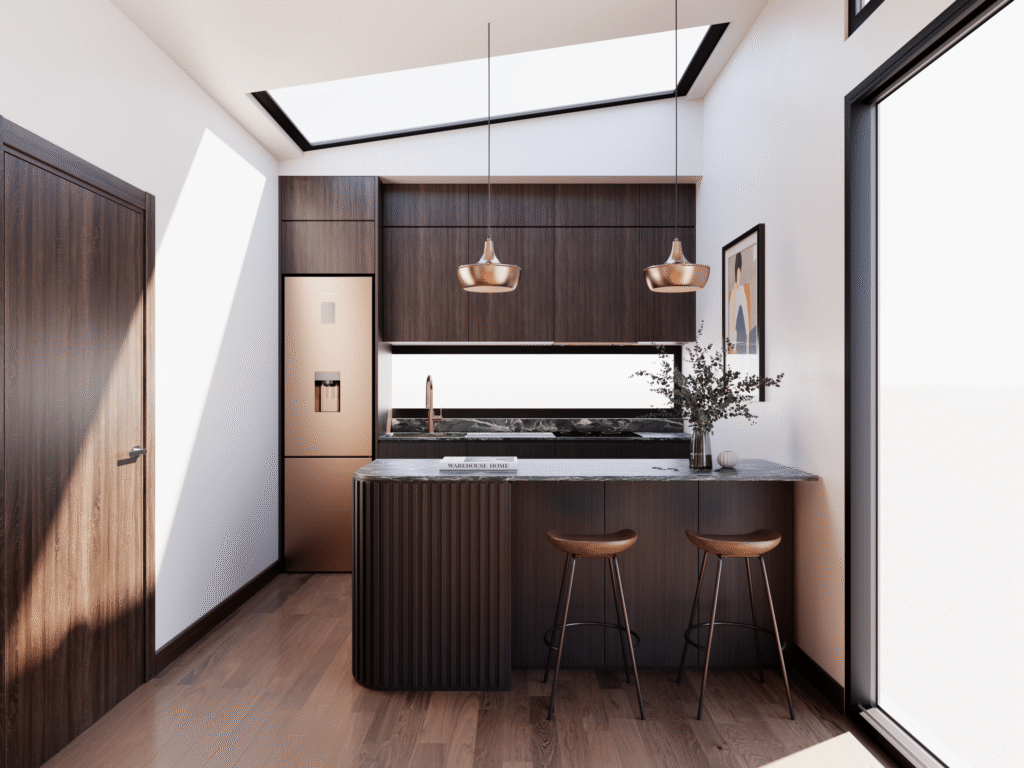
Understanding what’s in the kit versus what you need to source separately prevents budget shocks later.
A typical granny flat kit home includes pre-cut structural components like wall frames, floor joists, and roof trusses that arrive ready for assembly. You’ll get basic external cladding materials, though quality varies dramatically between suppliers. Additionally, windows and doors come included, usually builder’s grade quality at minimum specifications. Some kits include basic internal wall frames, though many expect you to build these yourself from supplied materials.
That’s essentially what you’re buying: the structural skeleton and weather shell components. Consequently, everything else becomes your responsibility to source, coordinate, and pay for separately.
What granny flat kit homes don’t include tells the real story about total costs. You’re responsible for foundation or concrete slab work, which requires engineering and certification. All plumbing materials and installation fall on you, from rough-in through to fixtures and final connections. Electrical materials and installation are separate, requiring licensed electricians for rough-in, fit-out, and final certification. Furthermore, kitchen cabinetry, benchtops, and appliances aren’t included in basic kits. Bathroom fixtures, tiles, and complete fit-out are your responsibility. Insulation batts need to be purchased and installed separately. Internal and external painting aren’t included. Floor coverings throughout require separate purchase and installation.
Beyond physical materials, you’re handling council approvals and associated fees, engineering documentation and certifications, site preparation and levelling work, service connections to utilities, final building inspections, and occupancy certificate processing. These administrative and professional service costs add up quickly but rarely appear in kit marketing materials.
The kit itself might cost $95,000, but the foundation, trades, fit-outs, approvals, and connections needed to turn that kit into a liveable dwelling add another $65,000-$135,000 depending on specifications and how much work you can realistically do yourself.
Assembly Requirements: Skills, Time, and Tools
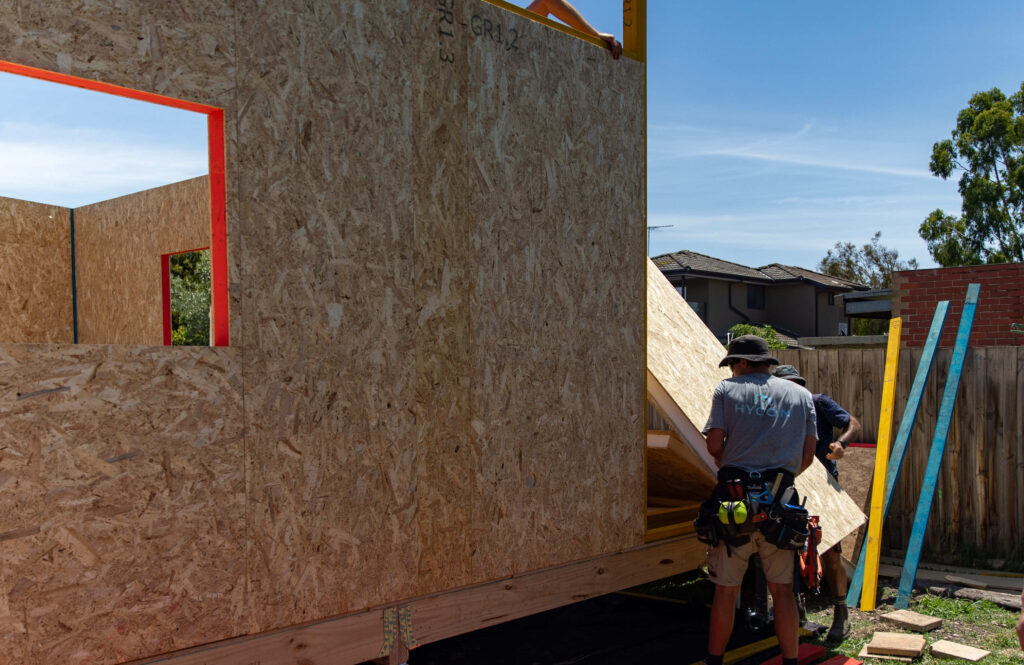
Granny flat kit homes require substantial skills, time investment, and tools that most property owners underestimate.
Skills Required
From a skills perspective, you need trade-level carpentry abilities including framing techniques and understanding of structural requirements. Building code knowledge becomes essential since you’re responsible for compliance even if you’re doing the work yourself. Additionally, reading and interpreting construction plans and assembly instructions sounds straightforward until you encounter inevitable ambiguities or errors in documentation. Problem-solving skills matter enormously because kits rarely fit together as perfectly as instructions suggest, requiring creative solutions to issues that arise during assembly.
Time Requirements
Time requirements are significant even for experienced builders. An experienced carpenter working full-time can typically assemble a granny flat kit home in 6-12 weeks, not counting foundation work, services, fit-outs, or finishing. Competent DIY enthusiasts working weekends and evenings realistically need 12-24 weeks just for the structural assembly phase. Furthermore, when you add foundation preparation, service installation, internal fit-out, and finishing work, total project timelines stretch to 20-40 weeks from starting foundation work to achieving occupancy certificate.
Tool Requirements
Tool requirements include essential power tools like framing nailers, circular saws, impact drivers, and drills. You’ll need measuring and levelling equipment that’s accurate enough for construction work. Scaffolding or quality ladder systems become necessary for working at height safely. Safety equipment including harnesses, hard hats, and protective gear is essential. If you don’t already own quality versions of these tools, you’re looking at $2,000-$5,000 in tool investment that rarely gets factored into kit home cost comparisons.
Physical Demands
The physical demands shouldn’t be underestimated either. Assembling granny flat kit homes involves heavy lifting of wall frames, trusses, and materials. You’re working at heights during roof and wall assembly. Extended periods of physical labour test endurance. Hot Melbourne summers and cold winters make outdoor construction work challenging. Most property owners in their 40s, 50s, or 60s find the physical demands more taxing than anticipated.
Hidden Costs: What Granny Flat Kit Homes Really Cost Complete
Let’s break down actual total costs using a realistic example of a 50m² granny flat kit home in Melbourne.
The kit purchase itself runs $95,000 for a basic 50m² package including structural components, basic cladding, and builder’s grade windows and doors. Foundation and slab work adds $12,000-$18,000 including engineering, excavation, concrete, and finishing. Council fees and CDC application cost $2,500-$6,000 depending on your municipality and whether any complications arise. Engineering documentation and certifications add $3,000-$5,000 for structural engineering, soil testing, and required certifications.
Plumbing Costs
Plumbing work becomes a major expense category. Rough-in plumbing during construction costs $4,000-$6,000. Complete bathroom fit-out including fixtures, tiles, and installation runs $10,000-$18,000. Kitchen plumbing and connections add another $1,500-$3,000. Total plumbing costs: $15,500-$27,000.
Electrical Costs
Electrical work similarly adds up across multiple phases. Rough-in electrical during construction costs $3,000-$5,000. Complete electrical fit-out including all fixtures and outlets runs $3,000-$5,000. Final connection and certification adds $1,000-$2,000. Total electrical costs: $7,000-$12,000.
Kitchen Installation
Kitchen installation becomes expensive when you’re sourcing everything separately. Cabinetry costs $6,000-$10,000 for basic quality. Benchtops add $2,000-$4,000 for laminate (stone would be $5,000-$8,000). Appliances including oven, cooktop, rangehood, and dishwasher run $3,000-$6,000 for decent quality. Total kitchen costs: $11,000-$20,000.
Additional Necessities
Additional necessities include insulation batts throughout at $2,000-$4,000, internal and external painting at $4,000-$7,000, floor coverings (carpet, vinyl, or hybrid flooring) at $3,000-$6,000, final service connections at $4,000-$8,000, and basic landscaping and pathways at $3,000-$6,000.
If you’re hiring trades for assembly rather than doing it yourself, add $15,000-$25,000 for competent trades to frame and clad the kit structure.
Total actual costs for a completed, certified, liveable 50m² granny flat kit home in Melbourne: $175,000-$235,000. That’s nearly double to more than double the advertised kit price. Learn about why cheap granny flats cost more long-term.
Assembly Process: What to Expect Step by Step
Understanding the assembly process helps evaluate whether you’re prepared for flat pack granny flats.
Foundation preparation comes first: engineering consultation, excavation, formwork, concrete pouring, and curing. This takes 2-3 weeks and costs $12,000-$18,000 before your kit arrives.
Frame assembly involves unpacking components, assembling wall frames flat, lifting and bracing them in position, installing floor frames, erecting roof trusses, adding cladding, and fitting windows and doors. This takes 4-8 weeks for experienced builders, longer for DIY.
Rough-in services require licensed trades for plumbing and electrical work before walls close in. Consequently, coordinating multiple trades becomes one of the most challenging aspects.
Internal fit-out includes wall frames, insulation, plasterboard, kitchen installation, bathroom tiling, painting, and floor coverings. This takes 4-6 weeks with various trades working sequentially.
Final completion covers external finishing, service connections, inspections, occupancy certificate, and basic landscaping. This takes 2-3 weeks but extends if inspections reveal issues.
Total realistic timeline: 16-24 weeks from foundation to occupancy certificate, assuming no major delays.
When Kit Homes Make Sense Versus Premium Packages
Granny flat kit homes suit specific situations but premium packages work better for most Melbourne property owners.
When Kit Homes Make Sense
Kit homes make genuine sense if you’re a licensed builder or experienced carpenter with spare time and comprehensive tools. You possess the skills to assemble properly, understand building codes thoroughly, can troubleshoot problems independently, and value your time differently than someone running a business. Kit homes also work for remote properties where professional granny flat builders rarely operate and DIY becomes the most practical option by necessity.
Very tight budgets with significant time availability can justify kit homes if you’re genuinely prepared for 200+ hours of work, can handle physical demands of construction labour, have realistic expectations about total costs reaching $175,000+, and possess patience for the learning curve and inevitable problems.
When Premium Packages Work Better
Premium packages work better for busy professionals who value time and want quick completion without coordination stress. First-time builders without construction experience avoid overwhelming challenges and potential costly mistakes. Quality-focused buyers prioritizing long-term performance appreciate warranties, professional construction, and proven designs. Additionally, investors benefit from faster completion meaning earlier rental income, professional quality commanding higher rent, and lower maintenance costs from proper construction.
The math often favors premium packages even at higher upfront costs. A $220,000 premium package completed in 12-16 weeks with everything included and professionally installed often delivers better long-term value than a $95,000 kit that becomes $185,000-$215,000 after adding necessities while consuming 6-12 months of your time and creating significant stress.
Granny Flat Kit Homes vs Professional Packages: Real Comparison
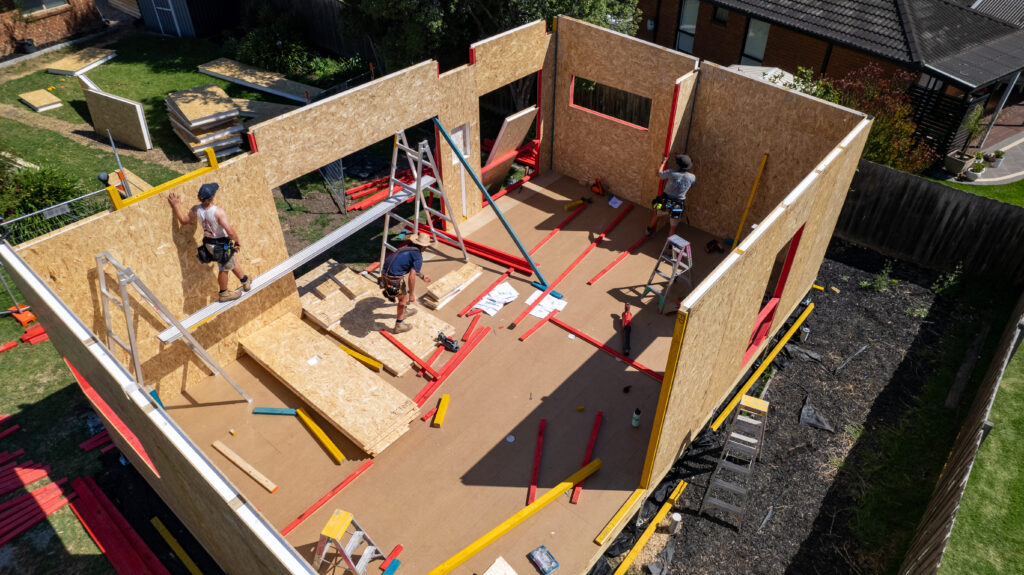
Let’s compare actual outcomes using real numbers from Melbourne projects.
Typical Kit Home Project
A typical kit home project looks like this:
- $95,000 kit purchase
- $80,000-$120,000 in additional necessary costs
- 20-30 weeks total timeline from foundation to completion
- 200+ hours of your time coordinating trades and managing the project
- Variable quality depending on your skills and trade quality
- Limited warranty (usually materials only, not installation)
- High stress from constant decision-making and problem-solving
Our $220,000 Signature Package
Our $220,000 Signature package delivers quite differently:
- $220,000 total cost with everything included and no surprises
- 12-16 weeks guaranteed timeline from contract to occupancy certificate
- Minimal time investment beyond initial decisions and occasional check-ins
- Consistent factory-controlled quality throughout
- Comprehensive warranty coverage on both materials and installation
- Low stress with single point of contact managing everything
The price difference is $25,000-$45,000 depending on how kit home costs shake out, but you’re completing 8-14 weeks faster, saving 200+ hours of your time and stress, getting guaranteed quality and warranties, and achieving earlier rental income if you’re investing. Learn about prefabricated construction benefits.
For investors specifically, that 10-week earlier completion means 10 weeks of rental income at $500 weekly equals $5,000 additional income that partially offsets the price premium. Over 10 years, the professional build’s higher rental rates (typically $30-$50 weekly more due to better presentation and quality) add $15,600-$26,000 in additional income. Learn about maximising rental income.
Common Problems with DIY Kit Home Assembly
Learning from others’ mistakes helps avoid common pitfalls with granny flat kit homes.
Frame alignment issues create cascading problems. Walls that aren’t perfectly plumb make roof installation difficult. Small errors compound upward, creating significant gaps or misalignments by the time you reach roofing.
Waterproofing failures represent the most expensive mistake. DIY bathroom waterproofing regularly fails inspections or worse, passes but fails in use months later. Consequently, rectification costs $15,000-$30,000, eliminating any kit home savings.
Trade coordination challenges consume time. Plumbers, electricians, and inspectors all need scheduling. One trade running late delays everyone else. Managing this becomes a part-time job.
Permit failures happen frequently with DIY builds. Inspectors find issues requiring rectification and re-inspection, adding weeks and costs. Some face permit cancellations when work doesn’t meet code.
Budget overruns affect most projects. The $95,000 kit estimate becomes $120,000 with upgrades. Foundation costs exceed quotes. Trade costs come in higher than expected. Total costs often exceed professional package pricing.
Conclusion
Granny flat kit homes in Melbourne advertise at $80,000-$120,000 but actually cost $160,000-$230,000 once you add foundations, trades, fit-outs, approvals, and connections necessary for completed dwellings. Assembly requires trade-level skills, 200+ hours coordination time, and 20-30 week timelines with high stress throughout. Moreover, premium packages at $220,000 complete in 12-16 weeks with everything included, professional quality, and comprehensive warranties while eliminating coordination stress.
Most Melbourne property owners find professional packages deliver better long-term value despite higher upfront costs through faster completion, guaranteed quality, and earlier rental income. Contact Innovista Group to compare complete package pricing against kit home total costs for your specific project. Additionally, request your free site assessment to explore your options.