
When planning to build a granny flat, the structural system choice affects construction speed, energy performance, long-term durability and total project costs. Most Melbourne builders default to traditional timber framing (MPG10 treated pine) because it’s familiar, readily available and cost-effective for standard residential construction. However, Structural Insulated Panels (SIPs) offer performance advantages that justify their premium pricing for buyers prioritizing energy efficiency, build speed or superior insulation.
Understanding the genuine differences between these construction methods helps you evaluate whether SIPs upgrades deliver proportional value for your specific circumstances. This guide compares both systems across the factors that actually matter for granny flat construction, cutting through marketing claims to reveal measurable performance differences.
Construction Speed: SIPs 3-Week Advantage
Timber frame granny flats require sequential construction stages that weather delays can extend significantly. Frames must be erected, braced and temporarily protected before insulation batts can be installed between studs, then internal and external cladding applied. This multi-stage process typically spans 6-8 weeks from foundation to weatherproof lock-up stage.
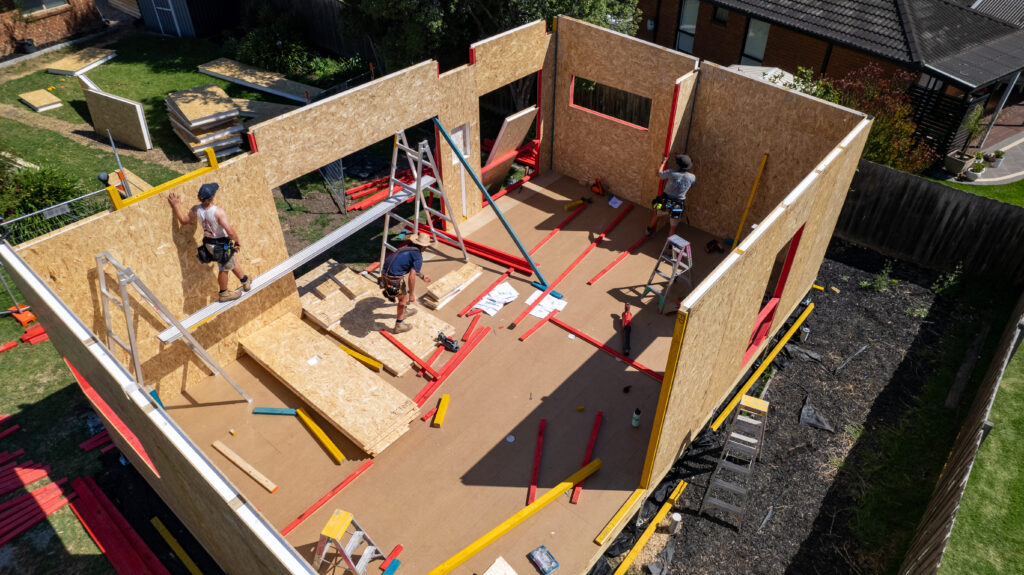
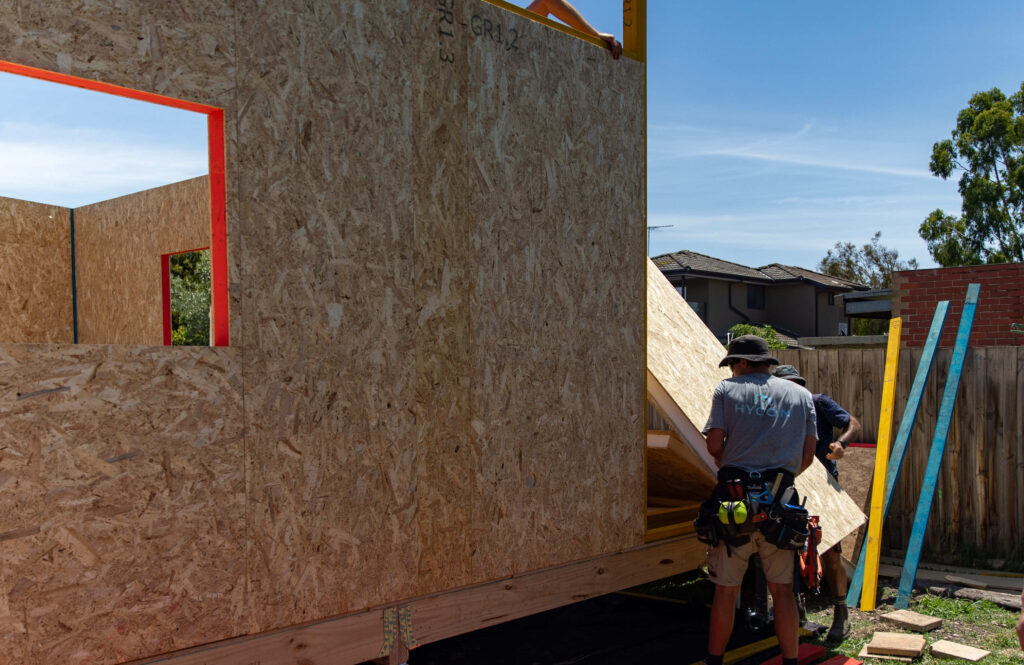
SIPs arrive on-site as prefabricated panels with insulation already laminated between structural facings. Wall and roof panels install in 5-7 days for typical 60m² granny flats, reaching weatherproof lock-up stage 3-4 weeks faster than equivalent timber framing. This compressed timeline delivers multiple benefits beyond mere speed.
Faster lock-up means internal trades (electricians, plumbers, plasterers) commence earlier, potentially advancing overall completion dates by 2-3 weeks. For families building for elderly parents who’ve sold existing homes with fixed settlement dates, this timeline advantage sometimes prevents expensive temporary accommodation needs.
Reduced on-site construction duration also minimizes weather exposure risks. Melbourne’s unpredictable conditions can delay timber framing for days or weeks during extended wet periods. SIPs’ rapid installation reduces vulnerability windows, providing more predictable completion schedules.
Insulation Performance: R6.0+ vs R5.0 Ceiling Reality
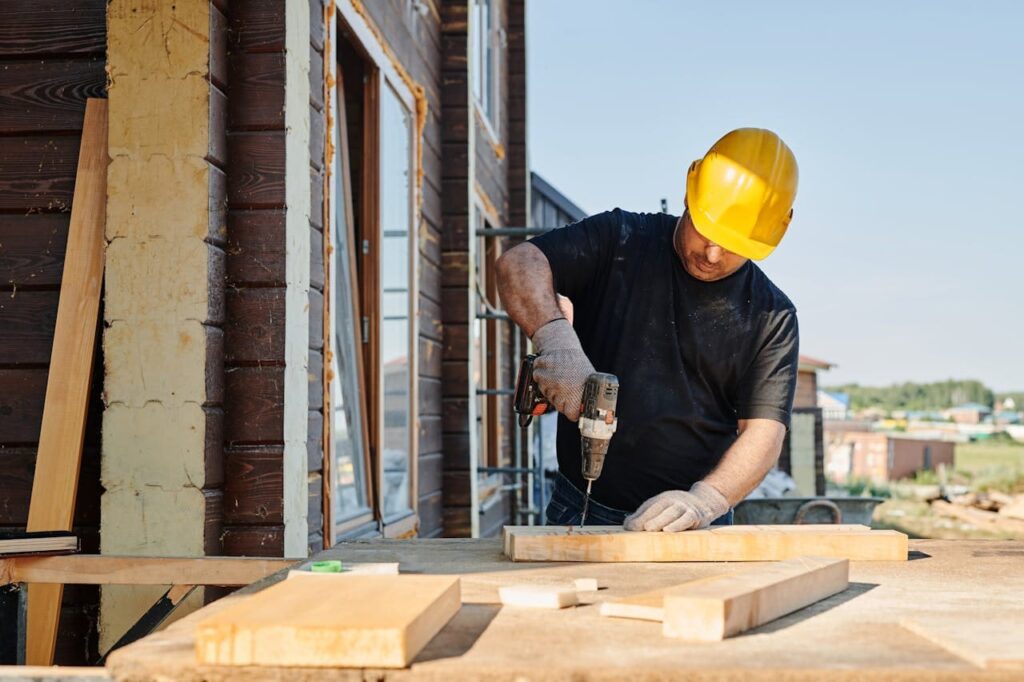
Standard timber frame construction with R5.0 ceiling batts and R2.5 wall batts meets current 7-star energy rating requirements. However, thermal bridging through timber studs (typically 90mm × 45mm members at 450-600mm centres) creates pathways for heat transfer that reduce actual wall insulation to approximately R2.0-R2.2 effective performance despite R2.5 batts between studs.
SIPs eliminate thermal bridging by providing continuous insulation without interrupting timber members. A 165mm SIPs panel delivers R6.0-R6.5 continuous insulation throughout walls and roofs, substantially exceeding standard construction’s effective performance. This translates to measurable energy consumption differences.
Independent testing by the Australian SIPs Association shows 25-35% lower heating and cooling costs in SIPs buildings compared to equivalent timber-framed structures in Melbourne’s climate. For granny flats, this represents $400-$600 annual energy savings. Over 25 years, accumulated savings reach $10,000-$15,000, recovering significant portions of the initial SIPs premium.
Superior insulation also improves thermal comfort. SIPs buildings maintain more stable internal temperatures, reducing the 3-4°C temperature swings common in standard construction when heating/cooling systems cycle. For elderly occupants sensitive to temperature fluctuations, this stability provides meaningful comfort improvements.
Airtightness: The Hidden Performance Factor
Beyond insulation R-values, building airtightness dramatically affects actual energy performance. Standard timber framing with multiple joints, penetrations and material interfaces allows significant air infiltration. Blower door testing typically reveals 8-12 air changes per hour at 50 pascals pressure (ACH50) in conventional construction.
SIPs construction achieves 2-4 ACH50 due to large panel sizes with fewer joints and factory-controlled manufacturing tolerances. This superior airtightness prevents the drafts, cold spots and energy waste that compromise timber buildings’ theoretical insulation values.
The improved airtightness also enhances acoustic performance. External noise transmission reduces by 3-5 decibels in SIPs construction compared to equivalent timber framing, meaningful when granny flats face busy roads or require privacy from main houses.
Structural Strength and Longevity
SIPs panels provide exceptional structural strength due to the composite action between oriented strand board (OSB) facings and rigid foam core. This creates incredibly stiff wall and roof assemblies that resist racking and deformation better than timber framing.
Wind loading performance proves superior in coastal or exposed sites where Melbourne’s weather extremes test building integrity. SIPs walls withstand higher wind pressures without the flexing that can develop in timber-framed walls over time, particularly relevant for properties in Bayside councils or elevated locations.
Dimensional stability represents another advantage. Timber framing experiences shrinkage and movement as moisture content equilibrates post-construction, sometimes causing plaster cracks, door misalignment or window operation issues in the first 2-3 years. SIPs’ factory-controlled moisture content and composite construction minimizes these movements, reducing warranty claims and maintenance needs.
Durability testing indicates SIPs systems maintain structural integrity and insulation performance for 50+ years when properly detailed and installed. Timber framing longevity depends heavily on moisture management, with potential degradation in wet areas if water penetration occurs.
Cost Analysis: $12,000-$18,000 Premium
SIPs construction for 60m² granny flats typically adds $12,000-$18,000 compared to equivalent timber framing specifications. This premium includes materials, specialized installation labour and engineering certification.
Breaking down this cost helps assess value:
- Materials premium: $8,000-$12,000
- Specialized labour: $3,000-$4,000
- Engineering certification: $1,000-$2,000
Against this investment, consider:
- 3-week faster completion (avoiding rental costs or temporary accommodation)
- $400-$600 annual energy savings (25-year total: $10,000-$15,000)
- Reduced maintenance from superior dimensional stability
- Enhanced comfort and acoustic performance
For investment properties targeting premium rental markets, SIPs’ energy efficiency becomes a marketing advantage. Tenants increasingly value low utility costs, with energy-efficient properties commanding $10-$20 weekly rental premiums in Melbourne’s competitive market.
When Timber Framing Remains the Better Choice
Despite advantages, SIPs don’t suit every project. Budget-constrained builds where the $12,000-$18,000 premium stretches finances unnecessarily should prioritize timber framing with quality installation over compromised SIPs execution.
Properties in mild climates or where occupants spend minimal time in granny flats (occasional guest accommodation) won’t realize sufficient energy savings to justify SIPs premiums. The benefits compound most significantly for full-time occupied buildings in areas with hot summers or cold winters.
Builders lacking SIPs installation experience create risks through improper detailing. Poor joint sealing, inadequate fastening or incorrect panel cuts eliminate the airtightness advantages that make SIPs worthwhile. Ensure your granny flat builder has demonstrated SIPs competency before committing to this upgrade.
Your Next Steps to Construction Method Selection
Deciding between SIPs and timber framing requires evaluating your priorities, budget and intended use. Contact Innovista Group to discuss whether SIPs upgrades suit your specific granny flat project.
Book a free site assessment where we explain both systems’ performance characteristics and provide transparent pricing for timber and SIPs options. Our experience with both construction methods helps you make informed decisions based on genuine value rather than marketing claims.