
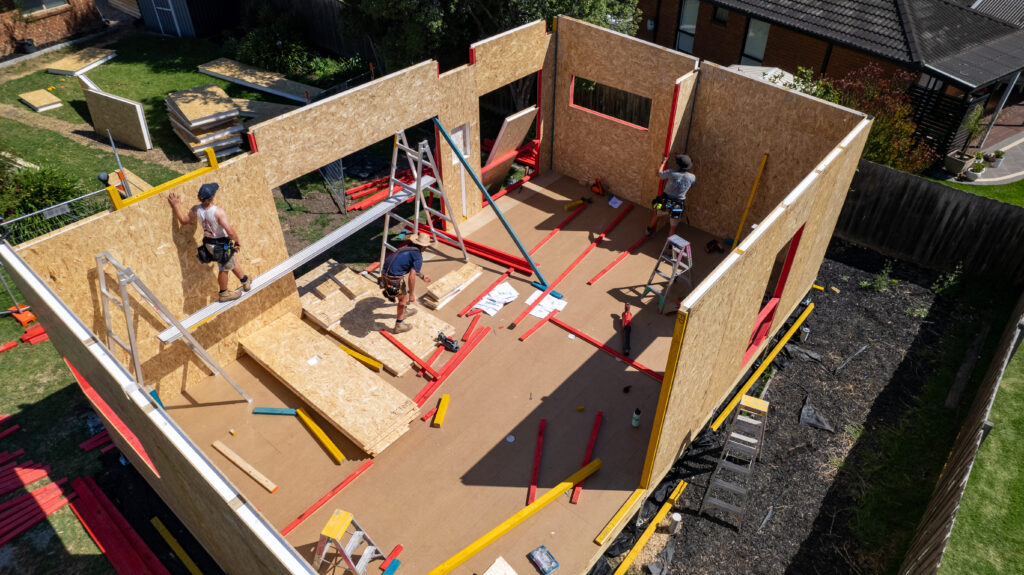
Choosing between prefabricated granny flats and brick veneer affects how your build ages, performs and costs to maintain. Melbourne’s climate, cold winters, hot summers and heavy rain, tests both materials differently. This guide compares durability, weather resistance, thermal performance, speed, acoustics and 25 year costs across the main structural options, so you can decide with confidence when you build a granny flat on your property.
Structural Longevity: Both Materials Last Decades
MPG10 treated pine framing, used in every G-Flat™ package, resists termites and decay for 50 years or more. H3-treated external timbers add further protection in exposed spots. James Hardie cladding carries 15 year warranties with a functional life well beyond that. Brick veneer also lasts indefinitely when mortar stays intact, though repointing is needed roughly every 25 to 40 years. Both options comfortably outlast a typical ownership period, so longevity alone should not decide your material choice.
Weather Resistance and Maintenance
James Hardie cladding on prefabricated granny flats resists moisture well, though repainting is typically needed every 8 to 12 years to keep the finish protected. Brick veneer needs little surface maintenance and handles Melbourne’s UV and rain without repainting. Brick usually costs more upfront, often $15,000 to $25,000 more for a comparable 60 square metre build.
Pricing is indicative only and varies by site, package and current material costs.
Thermal Performance and Energy Costs
Brick’s thermal mass reputation matters less than insulation quality in modern builds. Prefabricated granny flats built with SIPs panels reach R6.0 plus insulation, well above standard brick veneer walls. Both approaches can meet the 7-star NCC 2022 energy rating required for new builds, but in Melbourne’s heating-dominated climate, better-insulated materials typically save $200 to $400 a year on energy bills. Over a 25 year period, that gap adds up to a meaningful saving.
Construction Speed
Prefabricated builds usually finish 6 to 10 weeks faster than brick veneer for a similar size. Bricklaying alone can take two to three weeks for a 60 square metre granny flat, once framing is complete and trades are available. A faster build means less disruption for the main household, and for rental properties, an earlier start to rental income.

Acoustic Performance
Brick veneer blocks more external noise than standard timber-framed cladding, which matters near busy roads, schools or commercial strips. Upgrading insulation in prefabricated granny flats with denser batts narrows this gap while keeping prefab’s cost and speed advantages intact.
Resale Value by Suburb
In brick-dominant suburbs such as Boroondara and Whitehorse, brick granny flats can add a small resale premium. In newer growth corridor areas, cladding finishes are common and resale differences are minimal. Check local buyer expectations before choosing materials for your build, as the right answer varies street by street.
25 Year Cost Comparison
Looking at construction, maintenance and energy costs together, prefabricated granny flats typically cost less overall than an equivalent brick veneer build, once you factor in brick’s higher upfront price against prefab’s energy savings. Brick generally needs less ongoing maintenance spend, but this rarely closes the initial cost gap.
Figures are estimates for comparison purposes only; request a fixed quote for your site.

Matching Materials to Your Package
Innovista’s Affordable and Homestead packages use standard prefabricated framing and cladding suited to most sites. Signature and Luxe packages step up to SIPs construction for buyers prioritising thermal performance and acoustic comfort. Whichever tier you choose, our team can talk through how brick accents or upgraded cladding options affect both cost and street appeal.
Which Should You Choose When You Build a Granny Flat?
Your decision comes down to your suburb’s resale expectations, noise exposure and budget. Explore our floor plans and packages to compare specifications, or book a free site assessment to discuss the best material approach for your property.
FAQs
How long do prefabricated granny flats last? Well-built prefabricated granny flats last 50 years or more when framing and cladding are properly maintained, similar to brick veneer construction.
Is brick more durable than prefab for a granny flat build? Brick offers stronger acoustic and weather resistance, but prefabricated materials with quality insulation match brick’s durability while typically costing less to build.
Which material adds more resale value? It depends on your suburb. Brick can add value in established, brick-dominant areas, while cladding finishes suit newer growth corridor suburbs.
Can I mix brick and prefabricated materials on one build? Yes. Many clients use brick accents on the street-facing elevation with prefabricated construction elsewhere to balance cost and street appeal.
Contact Innovista Group on 0491 176 012 or enquiries@innovistagroup.com.au to talk through material options for your G-Flat™ granny flat.