
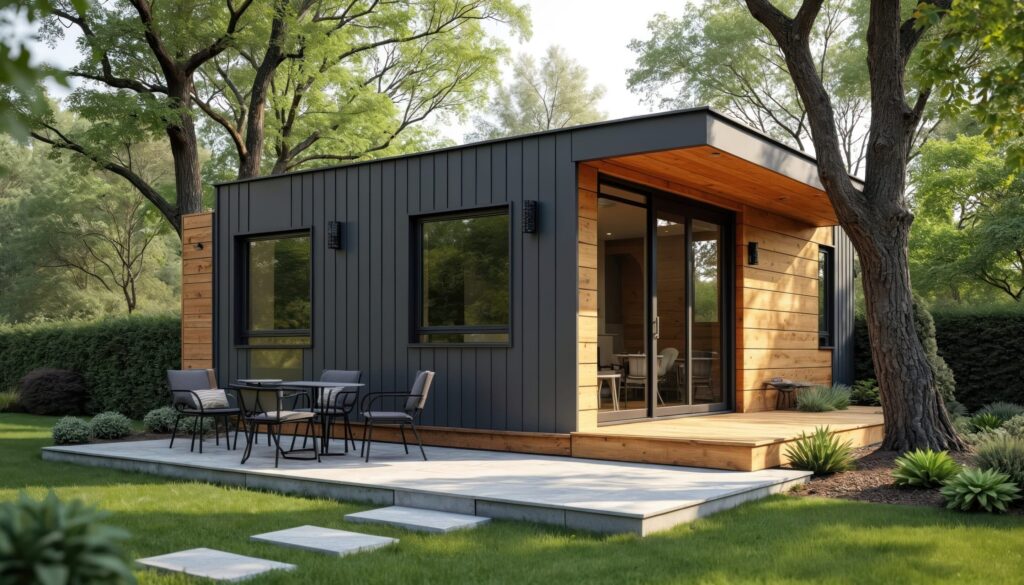
Sloping blocks present Melbourne’s most common site challenge for granny flat construction, with established suburbs featuring natural topography that developers left largely unmodified during original housing construction. Properties in hillside suburbs like Eltham, Warrandyte, Templestowe, Montrose and parts of Knox and Maroondah frequently feature 1-3 metre grade changes across typical 600-900m² residential blocks. These slopes create engineering challenges requiring specific solutions that add $8,000-$25,000 to standard construction costs depending on grade severity and chosen approach.
Understanding your options before committing to builders helps you evaluate quotes accurately, avoiding underprepared builders who underestimate sloping site costs and overcapitalize your investment with unnecessarily expensive solutions. This guide explains the three primary engineering approaches for sloping blocks, when each suits different grade profiles, and realistic cost expectations preventing budget surprises.
Measuring Slope Severity: Understanding Your Block’s Grade
Slope severity determines which engineering approach delivers best value. Measuring grade accurately requires more than eyeballing from street level.
Surveyors measure grade as vertical rise over horizontal distance, expressed as percentages or ratios. A 1:10 slope (10%) rises 1 metre for every 10 horizontal metres. Melbourne residential blocks averaging 30 metres depth with 1:10 slopes feature 3 metre total grade changes—significant but manageable with appropriate engineering.
Mild slopes (under 1 metre total grade change): Extended stump heights accommodate these grade variations economically. Adjustable steel stumps reaching 600-900mm above standard heights cost $2,000-$4,000 additional over standard flat-site subfloors.
Moderate slopes (1-2 metre total grade change): Cut-and-fill earthworks or combination approaches become cost-effective at this grade range. Costs range $6,000-$14,000 depending on soil conditions and access constraints.
Severe slopes (2+ metre total grade change): Split-level designs or substantial retaining wall systems become necessary, adding $15,000-$25,000 to standard construction costs. These sites require structural engineering certification and sometimes planning permits for retaining walls.
Extended Stumps: The Simple Solution for Mild Slopes
Steel stump systems for elevated timber subfloor construction accommodate grade changes simply by varying individual stump heights. Where flat sites use uniform 400mm stump heights, sloping sites specify stumps ranging from 400mm on high sides to 900-1500mm on low sides, with intermediate heights across the grade.
This approach proves most economical for mild slopes where height differences across building footprints remain under 600-800mm. Extended stumps cost $80-$120 each above standard heights, with typical 60m² granny flats requiring 20-25 stumps. A 600mm average height extension across all stumps adds $1,600-$3,000 to foundation costs—minimal compared to earthwork alternatives.
The elevated underfloor space on low sides sometimes provides valuable storage or utility areas. This otherwise wasted zone accommodates water tanks, garden equipment or general storage without consuming building footprint, partially offsetting engineering costs through gained functionality.
Cut-and-Fill Earthworks: Levelling the Site
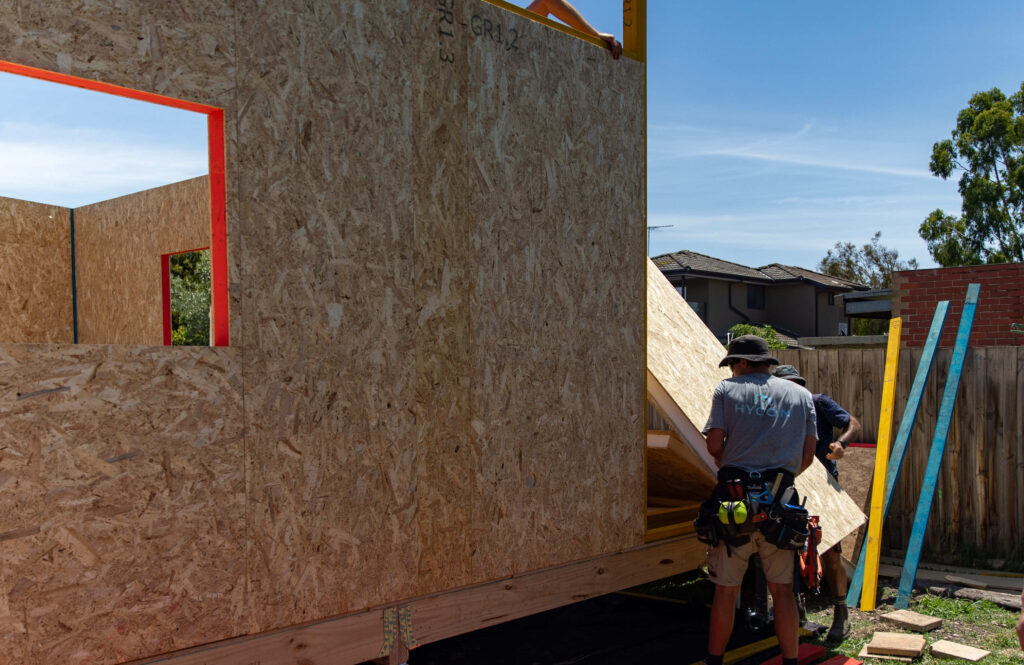
Cut-and-fill earthworks excavate higher ground areas whilst using excavated material to build up lower areas, creating level platforms for standard slab or subfloor construction. This approach suits moderate slopes and blocks where post-construction yard functionality matters.
Excavation costs depend on soil type, volume and site access. Melbourne’s clay soils require hydraulic excavation ($120-$180/hour) rather than hand excavation, with typical moderate slope sites requiring 4-8 hours earthwork. Material disposal adds $80-$150 per truck load when excess fill requires removal.
Total cut-and-fill costs for moderate slopes range $8,000-$14,000 including excavation, compaction, retaining structures containing earthworks and surface restoration. This creates level building platforms allowing standard construction above without ongoing slope management.
Retaining walls contain cut-and-fill earthworks, preventing erosion and maintaining grade transitions. Timber retaining walls ($200-$400/m²) suit informal garden areas. Concrete block or poured concrete alternatives ($400-$800/m²) provide permanent solutions for structural applications adjacent to buildings. A typical 10m long, 800mm high retaining wall costs $2,000-$8,000 depending on material selection.
Split-Level Design: Working With the Slope
Split-level construction positions building sections at different floor levels matching natural grade rather than fighting it. This approach eliminates extensive earthworks by stepping floor levels 300-600mm between building zones, accommodating grade changes through architecture rather than bulk excavation.
This suits severe slopes where levelling entire building footprints requires prohibitive earthworks. Split-level designs position living areas at one level with bedrooms stepping down or up 400-600mm, connected by 3-4 internal steps. This configuration feels natural on sloping sites and creates interesting architectural character impossible on flat blocks.
Engineering costs for split-level approaches concentrate in structural design rather than earthworks. Structural engineers certify stepped foundation systems, floor level transitions and load paths through non-standard configurations. Engineering fees add $3,000-$6,000 over standard designs, with construction premiums adding another $8,000-$12,000 for additional foundation complexity and structural elements at level transitions.
The split-level approach preserves natural topography more completely than cut-and-fill alternatives, maintaining existing trees and vegetation that earthworks would disturb. For blocks with protected trees where disturbance restrictions prevent extensive excavation, split-level design often becomes the only viable approach.
Drainage Engineering on Sloping Sites
Sloping blocks concentrate stormwater flows requiring specific drainage engineering beyond standard flat-site provisions. Granny flat roofs and surrounding hardscaping redirect natural water flows, creating concentrated runoff requiring managed discharge.
Subsoil drainage systems capture water migrating downslope through permeable soils, preventing accumulation against building foundations. Agricultural pipe systems installed at 400-600mm depths along upslope boundaries cost $1,500-$3,000 for typical residential blocks.
Surface drainage channels redirect concentrated runoff away from building foundations and downslope property boundaries. ACO channel systems or concrete-lined drains cost $100-$200 per linear metre installed, with typical sloping sites requiring 10-20 metres of drainage infrastructure.
Council stormwater requirements mandate on-site detention for properties exceeding certain impervious surface coverage. Sloping sites adding granny flat roofs and decking to existing impervious areas sometimes trigger detention requirements adding $3,000-$6,000 for compliant storage systems.
Retaining Wall Planning Permit Requirements

Retaining walls exceeding specific heights trigger planning permit requirements in most Melbourne councils, adding approval time and cost to sloping site projects.
Most councils exempt retaining walls under 1 metre height from planning permit requirements. Walls between 1-2 metres require building permits with structural engineering certification. Walls exceeding 2 metres trigger both building and planning permits, adding 8-16 weeks approval time.
Sloping sites requiring 1.5-2 metre retaining walls should anticipate permit costs of $2,500-$5,000 and timeline extensions of 8-12 weeks. Designing retaining walls in multiple tiers under 1 metre height sometimes avoids permit requirements whilst achieving necessary grade transitions, though this approach requires more horizontal space for stepped terracing.
Your Next Steps to Sloping Block Solutions
Accurately assessing sloping block engineering requirements needs professional site evaluation before construction commitments. Book a free site assessment where we measure actual grade changes, assess soil conditions and provide engineering recommendations matching your slope profile.
Contact Innovista Group to discuss sloping block solutions with transparent pricing for extended stumps, cut-and-fill earthworks or split-level designs. Our structural engineering expertise ensures recommendations optimize cost-effectiveness rather than defaulting to expensive approaches when simpler solutions adequately address your specific slope challenge.
Ready to build a granny flat on your sloping Melbourne block? The right engineering approach transforms challenging topography into manageable construction whilst preserving budget for the quality inclusions that matter most.