

Searching for “granny flat showroom near me” means you’re smart enough to want firsthand experience before committing $200,000+ to a secondary dwelling. Granny flat showrooms let you walk through actual spaces, touch real materials, and get a feel for quality that photos simply can’t convey. However, showrooms also function as marketing tools designed to sell rather than educate, so you need to approach visits with a critical eye and systematic inspection process.
I’ve watched countless Melbourne buyers fall for beautifully styled granny flat showrooms without asking the hard questions that reveal whether what they’re seeing represents actual standard packages or heavily upgraded marketing showcases. The difference between what you see in showrooms and what you’ll actually receive can amount to $30,000-$50,000 in specifications, which is why systematic inspection matters more than emotional reactions to attractive presentations.
This guide provides your complete showroom inspection checklist, covering quality indicators that separate premium from budget construction, questions that reveal true pricing and specifications, how to distinguish standard inclusions from expensive upgrades, and what showrooms deliberately hide about construction processes and service quality.
Your Pre-Visit Preparation Checklist

Successful showroom visits start before you arrive.
Research the builder online first: Check their website for specifications, read Google reviews and independent platforms, look for patterns in feedback, and verify they build in Melbourne. Furthermore, comparing granny flat builders helps you understand what quality standards to expect.
Prepare your question list covering pricing transparency, construction methods, timeline expectations, warranty coverage, and reference availability.
Bring measurement tools: Tape measure, phone for photos and notes, and a notebook for recording answers.
Schedule adequate time: Allow 45-60 minutes per showroom for thorough inspection.
Plan to visit 3-4 showrooms in one day for direct comparison.
Materials and Finishes: What to Inspect Closely
Showroom visits let you assess material quality impossible to evaluate from photos or descriptions.
Kitchen Benchtops
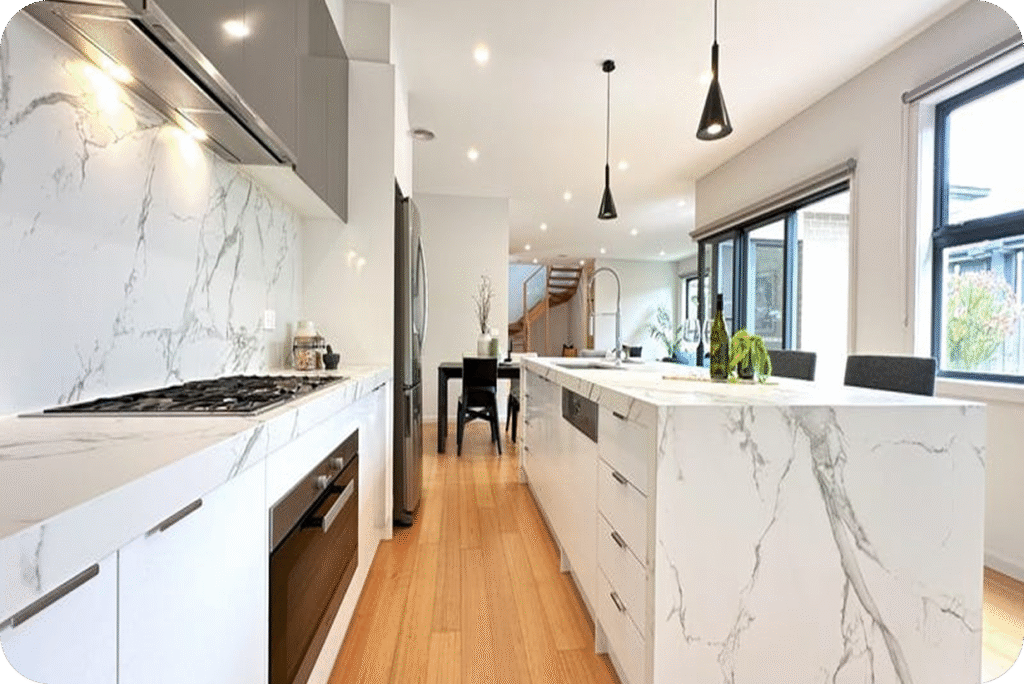
Kitchen benchtops reveal quality through multiple indicators. Run your hands along the surface to feel finish quality and smoothness. Additionally, check edge profiles to see if they’re properly finished or rough. Look at joins and corners for clean installation. Ask whether the benchtop in the showroom matches standard specifications or represents an upgrade. Stone thickness matters: 20mm is standard, 30mm is premium, and laminate trying to look like stone is budget.
Cabinet Quality
Cabinet quality shows through operation rather than appearance. Open and close all doors and drawers to check for soft-close mechanisms versus basic hinges that slam. Moreover, examine internal construction and finish quality inside cabinets where builders cut corners on budget work. Check drawer slides for smooth operation and adequate weight capacity. Quality cabinetry uses proper hinges, solid drawer construction, and attention to internal finishing.
Bathroom Tiles and Fixtures
Bathroom tiles and fixtures indicate overall construction standards. Check if tiles run floor-to-ceiling or stop at half-height (budget approach that leads to mould problems). Furthermore, look at grout lines for consistency and professional installation. Test tap operation for smooth function. Examine shower screens to determine if they’re frameless, semi-frameless, or basic shower curtains. Quality bathrooms show attention to detail in waterproofing, tile work, and fixture installation.
Flooring Quality
Flooring throughout reveals material quality. Hybrid or engineered timber feels and looks different from vinyl plank. Additionally, check for quality underlayment that prevents hollow sound when walking. Look at transitions between rooms for professional installation. Ask if showroom flooring matches standard packages or represents upgraded specifications.
Windows and Doors
Windows and doors matter more than most buyers realize. Check window operation for smooth opening and closing. Moreover, examine seals and weatherstripping for quality materials. Test door operation and check for solid construction versus hollow lightweight doors. Quality windows and doors provide better insulation, noise control, and long-term durability.
Space Planning and Layout Assessment

Physical walkthrough reveals space planning realities photos can’t convey.
Room Flow
Room flow becomes obvious when you actually move through spaces. Walk from entry through living areas to bedrooms following typical daily patterns. Notice if the layout feels natural or awkward. Furthermore, check if kitchen work triangle (sink, stove, fridge) creates efficient movement. Evaluate whether bedroom positioning provides adequate privacy from living areas.
Furniture Placement
Furniture placement helps you visualize actual living. Bring basic measurements of your own furniture or imagine standard pieces in each room. Will a queen bed fit in the master bedroom with space for bedside tables? Additionally, can the second bedroom accommodate a double bed and desk? Does the living area allow for a lounge and dining table without feeling cramped?
Storage Adequacy
Storage adequacy determines long-term livability in compact spaces. Open wardrobes to check actual hanging space and shelf configurations. Moreover, examine kitchen pantry depth and height for usable storage. Check bathroom vanities for drawer functionality. Count storage locations throughout and consider whether they meet realistic needs. Insufficient storage makes small spaces feel constantly cluttered.
Ceiling Height
Ceiling height affects perceived space significantly. Standard 2.4m ceilings feel very different from 2.7m heights. Notice whether ceilings feel open or closed-in. Higher ceilings create better sense of space in compact granny flats but may not come standard in all packages.
Natural Light and Ventilation
Natural light and ventilation only reveal themselves during in-person visits. Stand in each room and observe window placement and size. Furthermore, check if multiple windows allow cross-ventilation. Notice whether any rooms feel dark or stuffy. These factors dramatically affect comfort but don’t photograph well.
Questions That Reveal True Quality and Value
Strategic questions transform showroom visits from marketing presentations into valuable research.
The Critical Pricing Question
Start with the critical pricing question: “What’s the total drive-away price for exactly what I’m seeing here, installed on my property with occupancy certificate?” This single question cuts through marketing and reveals whether the showroom represents actual packages or heavily upgraded versions requiring thousands in extras.
Specification Clarity
Follow with specification clarity: “Which elements in this showroom are standard inclusions versus upgrades?” Get specific answers about benchtop material and thickness, appliance brands and models, flooring type throughout, tile coverage in bathroom, fixture and tapware quality, and any other materials you’re evaluating. Write down answers for comparison across showrooms.
Construction Methods
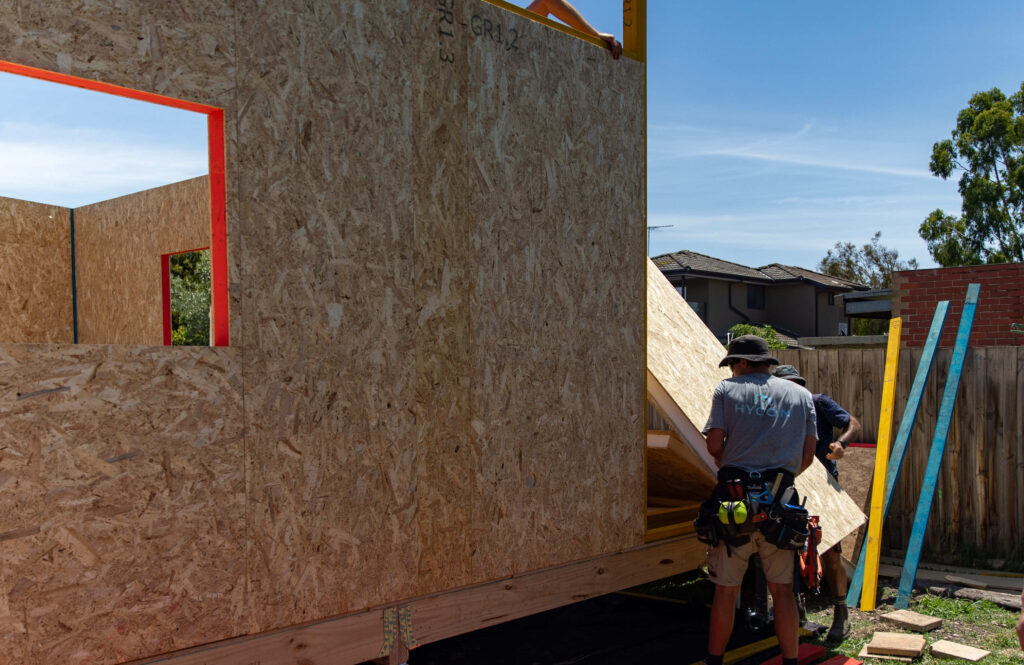
Probe construction methods: “Is this showroom built the same way you’ll build my granny flat?” Some showrooms showcase site-built permanent structures while customer units use factory construction, creating potential quality differences. Furthermore, ask: “Can I visit your factory where customer granny flats are actually built?” Factory tours reveal production reality better than marketing showrooms. Learn more about prefabricated construction differences.
Timeline Realism
Question timeline realism: “What’s your actual average timeline from contract signing to occupancy certificate?” Be skeptical of promises under 12 weeks for quality factory construction or under 20 weeks for site-built work. Additionally, ask: “What percentage of your projects complete on schedule?” Honest builders admit some delays while unrealistic builders promise perfection.
Warranty Coverage
Clarify warranty coverage: “What warranty do you provide beyond Victorian legal minimums?” Quality builders offer comprehensive coverage confidently. Moreover, request: “Can you show me your warranty document?” Review actual terms rather than relying on verbal promises.
Verification
Request verification: “Can you provide current licensing and insurance certificates?” Never proceed without verified credentials. Furthermore, ask: “Can you give me contact information for 3-4 recent clients?” Actually contact references to learn about real experiences versus marketing promises.
What Showrooms Deliberately Hide
Understanding what showrooms don’t reveal helps you make informed decisions.
Upgrade Costs
Upgrade costs rarely get mentioned during initial showroom tours. That beautiful 30mm stone benchtop might be a $6,000 upgrade over standard 20mm. Similarly, those Bosch appliances could be $8,000 more than no-name standard options. The floor-to-ceiling tiles might add $4,000 versus standard half-height installation. Consequently, total upgrades in styled showrooms can exceed $30,000-$50,000 above base package pricing. Understanding what’s actually included helps avoid surprises.
Factory Construction Quality
Factory construction quality differs from showroom construction when showrooms are built on-site for permanent display. Your actual granny flat gets manufactured in a factory under different conditions than the showcase you’re touring. Therefore, ask to visit production facilities to see how customer units are actually built.
Service Quality
Service quality and communication remain invisible during showroom visits. Beautiful spaces say nothing about whether builders return calls, provide regular updates, handle problems professionally, or deliver on timeline promises. Only client references reveal service reality.
Installation Challenges
Installation challenges and site preparation costs often get glossed over during showroom focus on the finished product. Difficult access, challenging soil conditions, or service connection complications can add thousands to final costs. Furthermore, showrooms showcase ideal conditions, not the variations your property might present. Learn about site preparation requirements beforehand.
Long-Term Durability
Long-term durability can’t be assessed in pristine new showrooms. Visit completed projects from 2-5 years ago to see how materials and construction hold up over time. This reveals quality far better than spotless displays.
Comparing Multiple Showrooms Effectively
Strategic comparison across multiple showrooms yields better decisions than visiting only one.
Create a Standardized Evaluation Sheet
Create a standardized evaluation sheet covering key factors: benchtop material and quality, appliance brands and specifications, flooring type and quality, bathroom fixtures and tile coverage, cabinet quality and soft-close mechanisms, window and door quality, ceiling height, overall space feel, and total drive-away price.
Use Photography
Use your phone to photograph details for later comparison. Take photos of benchtops showing edge profiles, cabinet interiors showing construction quality, bathroom tile work and fixtures, flooring throughout spaces, and any specific details you want to compare. Consequently, photos prevent memory confusion when evaluating multiple showrooms.
Take Detailed Written Notes
Take detailed written notes about answers to your questions. Record specific material brands and specifications rather than generic descriptions. Furthermore, note verbal promises about inclusions and pricing. Written contemporaneous notes protect you from later disagreements about what was promised.
Rate Objectively and Subjectively
Rate each showroom on both objective criteria (material quality, specifications, pricing) and subjective factors (space feel, layout efficiency, design appeal). Therefore, separating objective from subjective helps make rational decisions rather than purely emotional choices.
Follow Up in Writing
Follow up each showroom visit with email confirming what you learned about standard inclusions, pricing, timeline estimates, and warranty coverage. Written confirmation creates accountability and prevents future disputes.
When Showroom Visits Make Sense
Showroom visits provide value for specific buyer types while others benefit more from alternative research.
First-Time Buyers
First-time granny flat buyers without construction experience benefit enormously from showroom visits. Seeing and touching real materials helps you understand quality differences impossible to grasp from descriptions. Moreover, walking through actual spaces helps visualize how 60m² translates to real living areas.
Builders Comparison
Buyers comparing similar packages from multiple builders need showroom visits for direct quality comparison. When two builders offer seemingly similar packages at comparable prices, showroom visits reveal material quality and finishing differences. Learn more about choosing premium quality builders.
Premium Specifications
Property owners planning premium specifications wanting to evaluate luxury materials and finishes justify showroom visits. If you’re considering $255,000+ Luxe packages, experiencing premium materials firsthand helps confirm the investment makes sense for your needs.
Size Requirements
Buyers uncertain about size requirements benefit from walking through different size options. Experiencing the difference between 50m², 60m², and 70m² firsthand helps determine which size truly suits your needs versus theoretical planning.
Conclusion
Granny flat showrooms provide valuable opportunities to assess material quality, space planning, and construction standards when you inspect systematically rather than emotionally. Bring measurement tools, prepare detailed questions about standard inclusions versus upgrades, and recognize that styled showrooms may contain $30,000-$50,000 in extras not mentioned during tours.
Furthermore, visit 3-4 showrooms for direct comparison, take photos and detailed notes, and follow up visits with written confirmation of specifications and pricing. Contact Innovista Group to visit recently completed customer projects showing actual standard specifications rather than upgraded marketing showrooms. Additionally, consider booking a free site assessment to understand what’s possible on your property.