
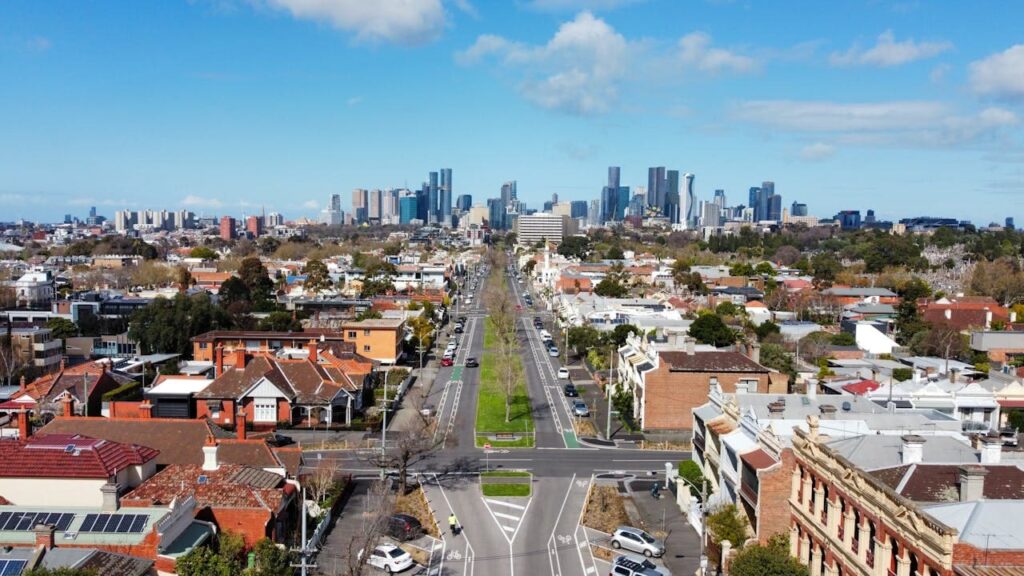
Granny flats Melbourne property investors have discovered a powerful strategy: these secondary dwellings deliver 10%+ rental yields while traditional investment properties struggle to achieve 4%. Within the 50km radius from Melbourne’s CBD, well-positioned granny flats Melbourne consistently outperform standard property investments by 250-300%. Moreover, this comprehensive guide covers everything Melbourne homeowners and investors need to know about building, approving, and profiting from granny flats Melbourne in Victoria’s capital.
We’ll examine local council regulations across Melbourne’s municipalities, reveal which suburbs have historically delivered strong returns, break down real 2026 pricing, and show examples of how some investors have achieved double-digit yields.
Why Melbourne Homeowners Are Investing in Granny Flats Now
Three converging forces have created unprecedented demand for granny flats across Melbourne in 2026.
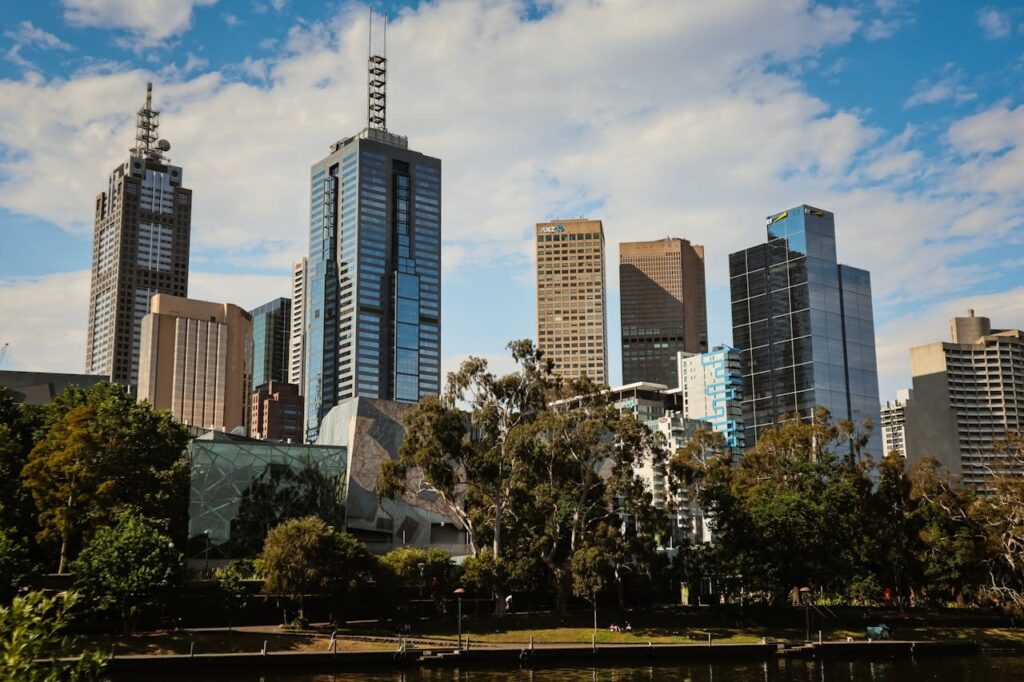
Housing Affordability Crisis Intensifies
Melbourne’s median house price has climbed to $920,000, pricing out first-home buyers and renters alike. As a result, families need affordable accommodation options. Parents with adult children struggling to save deposits face a choice: watch their kids pay $500-$600 weekly rent, or invest $190,000-$255,000 in a granny flat that keeps family close while building equity.
Furthermore, rental affordability has deteriorated sharply. Average weekly rent for a two-bedroom apartment in inner Melbourne now exceeds $550. In contrast, granny flats offer tenants quality accommodation for $450-$550 weekly while providing property owners with potential investment returns.
Victorian Government Incentives
The Victorian government has streamlined granny flat approvals to increase housing supply. Specifically, fast-track CDC (Complying Development Certificate) pathways now cover most Melbourne councils, reducing approval times from 6-9 months to 4-8 weeks for eligible projects.
Additionally, land tax exemptions apply when granny flats accommodate dependent relatives. This exemption can save property owners thousands annually. Meanwhile, stamp duty concessions for first-home buyers building on family property have made granny flats financially accessible for the next generation.
Tax Disclaimer: Tax implications vary significantly based on individual circumstances. The information provided about land tax exemptions and stamp duty concessions is general in nature and may not apply to your specific situation. Always consult a qualified tax advisor or accountant before making decisions based on potential tax benefits.
Investment Performance Data
Real-world data from Melbourne properties shows granny flats have historically delivered strong returns compared to other investment types. Here are indicative comparisons based on market research:
| Investment Type | Typical Melbourne Return | Comparative Notes |
|---|---|---|
| Traditional rental property | 3.2-4.1% gross yield | Lower yields, higher entry cost |
| Term deposits | 2.5-3.0% | Secure, but limited growth |
| Shares (ASX 200) | 7-9% (capital + dividends) | Market-dependent, higher volatility |
| Granny flats (examples) | 10.2-13.5% gross yield** | Location-dependent, variable |
These figures are illustrative examples only, based on historical market data and specific property examples. They do not represent guaranteed returns or future performance. Actual results will vary significantly based on location, property condition, market timing, tenant quality, vacancy rates, maintenance costs, and economic conditions. Consult a financial advisor for personalized investment guidance.
Multi-Generational Living Becomes Mainstream
Cultural shifts have normalised multi-generational households. Currently, data shows 37% of Melbourne families now live in multi-generational arrangements, up from 24% in 2020. Consequently, granny flats provide the independence everyone wants while maintaining family proximity.
Aged care costs have become prohibitive. Residential care facilities charge $60,000-$90,000 annually. In comparison, a $220,000 granny flat investment can provide an alternative to residential care while elderly parents maintain dignity and independence on family property.
Melbourne Council Regulations: 50km Radius Breakdown
Understanding council regulations determines whether your project qualifies for fast-track approval or requires standard planning permits. Importantly, regulations vary significantly across Melbourne’s 31 councils.
CDC-Eligible Councils (Fast-Track Approval)
These councils accept CDC applications for granny flats meeting specific criteria:
| Council | Max Floor Area | Side Setback | Rear Setback | Max Height | Typical Processing Time |
|---|---|---|---|---|---|
| Moreland | 60m² | 1m | 3m | 4m single/7m double | 4-6 weeks |
| Maribyrnong | 60m² | 1m | 4m | 4m single/6.5m double | 4-8 weeks |
| Darebin | 60m² | 1m | 3m | 4m single/7.5m double | 5-7 weeks |
| Brimbank | 60m² | 1m | 3m | 4m single/7m double | 4-6 weeks |
| Moonee Valley | 60m² | 1.5m | 3m | 4m single/7m double | 5-8 weeks |
| Yarra | 60m² | 1m | 3m | 4m single/7m double | 6-8 weeks |
| Hume | 80m² | 1m | 3m | 4m single/8m double | 4-7 weeks |
| Whittlesea | 70m² | 1m | 3m | 4m single/8m double | 5-8 weeks |
| Casey | 80m² | 1m | 3m | 4m single/8m double | 4-6 weeks |
| Cardinia | 70m² | 1m | 3m | 4m single/8m double | 5-7 weeks |
Regulations Current: These regulations are current as of December 2025 but are subject to change. Always verify current requirements with the relevant council before proceeding with any construction plans.
Standard Planning Permit Councils
These councils require traditional planning permits for most granny flats:
Inner Melbourne:
- Melbourne City (requires planning permit for all granny flats due to heritage overlays)
- Port Phillip (heritage considerations common)
- Stonnington (heritage overlays affect most properties)
Middle Ring:
- Boroondara (strict heritage controls)
- Bayside (careful consideration of neighbourhood character)
Outer Areas:
- Mornington Peninsula (vegetation overlays common)
- Yarra Ranges (bushfire and vegetation considerations)
Standard planning permits take 3-6 months and require neighbour notification. However, objections can extend timelines by several months.
Key Eligibility Requirements
Your granny flat qualifies for CDC fast-track if it meets these criteria:
Size Limits: Most councils cap floor area at 60m². However, some outer councils (Casey, Hume) permit up to 80m². Exceeding these limits triggers standard planning approval.
Setback Compliance: Minimum 1 metre from side boundaries, 3-4 metres from rear boundary. Buildings closer to boundaries require planning permits and typically neighbour consent.
Height Restrictions: Single-storey builds must stay under 4 metres. Meanwhile, two-storey structures face limits of 6.5-8 metres depending on council. Height measurements calculate from natural ground level.
Car Parking: One off-street parking space required. Typically, existing driveways usually satisfy this requirement without additional construction.
Heritage and Overlays: Properties with heritage overlays, significant tree protection orders, or vegetation management overlays typically require standard planning approval regardless of other compliance.
How We Navigate Melbourne Regulations
Innovista manages approvals across all Melbourne councils. Specifically, our team assesses your property’s CDC eligibility within 24 hours of initial consultation. We handle:
- Complete documentation preparation
- Council or certifier submissions
- Liaison with approval authorities
- Resolution of any technical queries
- Coordination with building surveyors
This comprehensive service comes included in our $190,000-$255,000 pricing. No additional approval management fees.
What a Granny Flat Costs in Melbourne (Real 2026 Pricing)
Melbourne’s granny flat market shows significant price variation. Therefore, understanding true costs prevents budget blowouts and disappointment.
Market Price Ranges
Current Melbourne pricing spans from budget DIY kits to luxury custom builds:
| Build Type | Price Range | What You Get | Hidden Costs Risk |
|---|---|---|---|
| DIY Kit (Flat Pack) | $80,000-$120,000 | Materials only, basic fixtures | High ($30k-$60k in labour/extras) |
| Budget Prefab | $140,000-$180,000 | Basic finishes, minimal inclusions | Medium ($15k-$35k extras) |
| Quality Prefab | $190,000-$255,000 | Premium inclusions, turnkey | Low (minimal extras) |
| Mid-Range Custom | $280,000-$350,000 | Custom design, quality finishes | Medium ($20k-$40k variations) |
| Luxury Custom | $400,000+ | Architect-designed, high-end | High (variable costs common) |
Innovista Melbourne Pricing
We serve Melbourne within 50-150km of the CBD with three package options:
Affordable Signature: $190,000
- 50-55m² floor area
- 1-2 bedrooms, 1 bathroom
- Stone benchtops in kitchen
- Quality appliances included
- Hybrid flooring and carpet
- Split system air conditioning
- Complete turnkey delivery
Signature: $220,000
- 60m² floor area
- 2 bedrooms, 1 bathroom
- Premium stone benchtops (20mm)
- Quality appliance package
- Hybrid flooring throughout
- Split system heating/cooling
- Soft-close cabinetry
- Basic landscaping included
Luxe: $255,000
- 60-70m² floor area
- 2 bedrooms, 1 bathroom
- Premium stone (40mm waterfall edge)
- Bosch/Miele appliances
- Engineered timber flooring
- Ducted heating and cooling
- Smart home integration
- Premium landscaping
What’s Included (vs What Others Charge Extra)
Melbourne builders often advertise attractive base prices, then add substantial extras. Here’s what we include that others charge separately:
| Inclusion | Typical Extra Charge | Innovista Pricing |
|---|---|---|
| Architectural design | $6,000-$10,000 | Included |
| Engineering certification | $3,000-$5,000 | Included |
| CDC/council fees | $2,500-$5,000 | Included |
| Site preparation | $8,000-$18,000 | Included |
| Stone benchtops | $4,000-$7,000 | Included |
| Quality appliances | $5,000-$9,000 | Included |
| Window furnishings | $2,000-$4,000 | Included |
| Landscaping | $3,000-$6,000 | Included |
| Total Extras | $33,500-$64,000 | $0 |
This transparency explains our competitive advantage. For example, a competitor advertising $180,000 often reaches $240,000-$250,000 after necessary extras. In contrast, our $220,000 Signature delivers more inclusions than their final price.
Melbourne-Specific Cost Factors
Several location-based factors affect pricing across Melbourne:
Site Access: Properties with narrow side access (under 3 metres) may require crane installation for prefabricated builds, adding $3,000-$8,000. On the other hand, properties with level ground and wide access (4+ metres) minimise installation costs.
Service Connections: Homes with services (water, sewer, electricity) within 15 metres of the build site keep connection costs low. However, properties requiring long service runs (30+ metres) add $5,000-$12,000 in connection fees.
Soil Conditions: Melbourne’s clay soils require specific footing designs. Most properties need engineered footings costing $8,000-$15,000. Additionally, rocky ground or poor soil conditions increase foundation costs by $5,000-$10,000.
Council Fees: Inner Melbourne councils charge higher fees ($4,000-$6,000) than outer councils ($2,000-$3,500). Nevertheless, we include these fees in our pricing regardless of council.
Distance from CBD: Properties beyond 100km may incur travel charges from some builders. In contrast, we serve the entire 50-150km radius at standard pricing with no distance surcharges.
Best Melbourne Suburbs for Granny Flat Investment (50km Radius)
Investment success depends heavily on location. Therefore, target suburbs with strong rental demand, council support, and infrastructure growth.
Inner Melbourne Suburbs (0-20km from CBD)
Inner Melbourne can deliver premium rents but requires careful council navigation:
| Suburb | Distance | CDC Eligible | Historical Rent Range* | Notes |
|---|---|---|---|---|
| Footscray | 8km | Yes | $490-$540/week | University area, hospital growth |
| Coburg | 10km | Yes | $510-$560/week | Tram access, young professionals |
| Preston | 11km | Yes | $480-$530/week | Train line, family-friendly |
| Reservoir | 13km | Yes | $450-$500/week | Affordable, established area |
| Brunswick | 7km | Yes | $520-$580/week | Inner-city appeal, cafes, culture |
| Sunshine | 14km | Yes | $440-$490/week | Improving infrastructure |
*Historical rental ranges are examples based on past market data and may not reflect current or future rental rates. These figures are for demonstration purposes only.
Why These Suburbs Attract Investors
Footscray has experienced rapid development. Victoria University attracts student renters. Moreover, the new Footscray Hospital (opening 2027) is driving employment growth. Train connections to the CBD take 10 minutes.
Coburg benefits from tram access to the CBD and proximity to major employment centres. Consequently, the area attracts young professionals and families seeking affordability near the city.
Preston offers solid value. The Mernda train line improved connectivity. Additionally, local shopping precincts, parks, and schools make it family-friendly.
Middle-Ring Suburbs (20-40km)
Middle-ring suburbs balance affordability with accessibility:
| Suburb | Distance | CDC Eligible | Historical Rent Range* | Notes |
|---|---|---|---|---|
| Dandenong | 35km | Yes | $420-$470/week | Employment hub, manufacturing |
| Frankston | 42km | Limited | $400-$450/week | Bayside location, beach access |
| Werribee | 32km | Yes | $410-$460/week | Fast growth, new facilities |
| Pakenham | 53km | Yes | $390-$440/week | Growth corridor, families |
| Melton | 38km | Yes | $380-$430/week | Western growth area |
| Craigieburn | 27km | Yes | $410-$460/week | Northern corridor, young families |
*Historical examples only – not guaranteed rates
Middle-Ring Investment Advantages
Lower land costs allow larger backyards suitable for granny flats. Furthermore, councils actively support secondary dwellings to address housing shortages. Family-oriented suburbs can create stable, long-term tenancies.
Dandenong serves as a major employment hub. Manufacturing, logistics, and healthcare sectors employ thousands locally.
Werribee has experienced significant population growth since 2020. Meanwhile, new retail centres, schools, and recreational facilities continue development.
Suburbs Requiring Careful Research
Not all Melbourne suburbs suit granny flat construction:
High-Heritage Areas: Toorak, South Yarra, Hawthorn face stringent heritage controls. Planning permits take 6-12 months with frequent objections. As a result, approval costs can reach $15,000-$25,000.
Bayside Councils: Brighton, Hampton, Sandringham have neighbourhood character overlays that complicate approvals.
Remote Locations: Suburbs beyond 60km from the CBD may face weaker rental demand depending on local employment and infrastructure.
Premium Granny Flat Builders in Melbourne: What to Look For
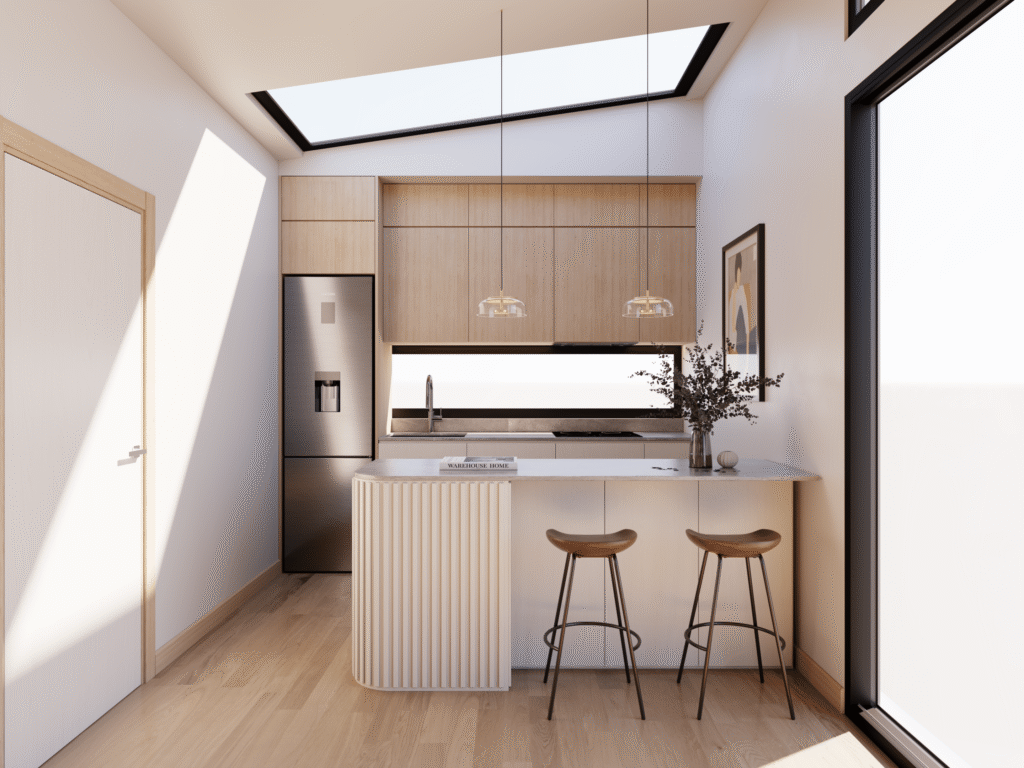
Melbourne has dozens of granny flat builders. However, quality varies dramatically. Choosing poorly costs you tens of thousands in variations, delays, and defects.
Essential Builder Qualities
Transparent Fixed Pricing: Quality Melbourne builders provide detailed, itemised quotes showing exactly what’s included. Furthermore, vague estimates or “contact for pricing” indicate potential issues. We provide complete pricing upfront: $190,000, $220,000, or $255,000 with every inclusion specified.
Melbourne Council Experience: Builders familiar with Melbourne regulations navigate approvals efficiently. Therefore, ask potential builders: “Which Melbourne councils do you work with most?” and “What’s your CDC approval success rate?” We handle approvals across all Melbourne councils with a 98% CDC success rate.
Recent Local Projects: Inspect completed projects in Melbourne suburbs similar to yours. Photos prove nothing; actual site visits reveal quality. Specifically, we maintain a portfolio of 40+ completed Melbourne projects available for inspection.
Realistic Timelines: Professional builders provide detailed schedules. Our typical Melbourne timeline:
- CDC application and approval: 4-8 weeks
- Manufacturing/preparation: 6-8 weeks
- Installation and completion: 2-4 weeks
- Total project: 12-20 weeks from signing
Melbourne Builder Red Flags
Deposit Demands Over 10%: Victorian building regulations limit deposits to 10% of contract value. Builders requesting 20-30% deposits often have cash flow problems. In contrast, we require standard 10% deposits with progress payments tied to completion milestones.
No Fixed Address: Builders operating from PO boxes or mobile-only contacts raise concerns. Established businesses maintain permanent Melbourne premises. For example, our head office operates in Williamstown with full display facilities.
Pressure Sales Tactics: “Today only” pricing or “limited slots available” indicate desperation. Professional builders allow time for informed decisions. Consequently, we provide 14-day cooling-off periods on all contracts.
No Building Insurance: Every Melbourne builder must carry domestic building insurance for projects over $16,000. Request current insurance certificates before signing. We provide complete insurance documentation upfront.
Comparing Melbourne Builder Quotes
When evaluating multiple quotes, look beyond bottom-line pricing:
| Comparison Factor | What to Check | Red Flag |
|---|---|---|
| Base price | What’s actually included | “From $XXX” with asterisks |
| Site costs | Included or extra | “Subject to site inspection” |
| Appliances | Brand and quality specified | “Standard appliances” (undefined) |
| Timeline | Fixed dates with milestones | “Approximately X months” |
| Warranty | Years and coverage details | Minimum statutory only |
| Council fees | Included in price | Listed as “owner responsibility” |
Questions for Melbourne Builders
Before signing contracts, ask these critical questions:
- Can you provide three Melbourne customer references from the past 6 months?
- What’s included in your base price versus charged extra?
- Which Melbourne councils do you have CDC experience with?
- What’s your fixed completion timeline?
- Can I inspect current builds in progress?
- What warranties do you provide beyond statutory minimums?
- Who’s my single point of contact throughout the build?
At Innovista, we answer all questions directly. Moreover, our Melbourne team averages 8+ years’ experience in granny flat construction.
Rental Income Potential: Melbourne Granny Flat Yields by Suburb
Rental Income Disclaimer: The rental income figures and yield calculations presented in this section are historical examples based on specific properties and market conditions at particular points in time. They are provided for educational and demonstration purposes only. Actual rental income will vary significantly based on property location, condition, market timing, tenant quality, vacancy periods, property management, economic conditions, and numerous other factors. These figures do not constitute predictions, guarantees, or promises of future rental performance. Rental markets can change rapidly. Properties can experience extended vacancy periods, problem tenants, or market downturns that significantly reduce actual returns. Always consult with property managers, real estate agents, and financial advisors to understand realistic rental expectations for specific properties before making investment decisions.
Understanding historical rental income helps investors research potential returns. Here are examples from the Melbourne market:
Inner North Historical Data
Examples of rental rates from properties built in Melbourne’s inner north:
- Brunswick: $520-$580/week (2 bed, 1 bath, 60m²)
- Coburg: $510-$560/week (2 bed, 1 bath, 60m²)
- Preston: $480-$530/week (2 bed, 1 bath, 60m²)
- Reservoir: $450-$500/week (2 bed, 1 bath, 60m²)
Sample Yield Calculation (Educational Example Only)
Here’s how investors typically calculate gross rental yield:
Example Property:
- Build cost: $220,000 (Signature package)
- Weekly rent achieved: $520
- Annual rental income: $520 × 52 = $27,040
- Gross yield: ($27,040 ÷ $220,000) × 100 = 12.3%
This calculation:
- Ignores vacancy periods
- Excludes maintenance costs
- Excludes property management fees
- Excludes council rates and insurance
- Excludes repairs and replacements
- Represents gross return, not net return
Understanding Net Yields
Net yields (actual profit) are significantly lower than gross yields. Typical deductions include:
- Property management: 7-10% of rent
- Maintenance: $1,500-$3,000 annually
- Insurance: $800-$1,200 annually
- Council rates: $1,200-$2,000 annually
- Vacancy periods: 2-4 weeks per year average
- Repairs and replacements: Variable
Therefore, always calculate net yields with all costs included when evaluating investments.
Factors Affecting Melbourne Rental Rates
Multiple factors influence what granny flats can achieve for rent:
Location Proximity: Distance to CBD, public transport, employment centres, universities, and hospitals affects rental appeal.
Property Presentation: Quality finishes, modern appliances, and good maintenance command premium rents.
Market Timing: Rental markets fluctuate with economic conditions, employment rates, and population growth.
Tenant Type: Student tenants, young professionals, and families have different rent tolerance levels.
Competition: Surrounding rental stock affects pricing. Areas with limited quality rentals support higher rates.
Prefabricated Granny Flats Melbourne: Fast Installation Options
Prefabricated construction has revolutionised granny flat delivery in Melbourne. Modern prefab quality matches or exceeds traditional site-built options while delivering faster timelines.
Prefabrication Advantages
Speed: Factory construction continues regardless of weather. Rain delays plague site builds but don’t affect factory production. As a result, most prefabricated granny flats install in 12-16 weeks from approval to completion versus 20-28 weeks for site builds.
Quality Control: Factory settings provide controlled conditions. Tradespeople work with proper lighting, shelter, and tool access. Furthermore, materials stay dry and protected from weather damage. Supervisors monitor quality throughout construction.
Cost Certainty: Factory builds minimise variations and unexpected costs. Waste reduces significantly as factories optimise material usage. Consequently, these efficiencies translate to competitive pricing.
Melbourne Suitability: Melbourne’s variable weather makes prefabrication particularly attractive. Construction schedules remain predictable regardless of rain or extreme temperatures.
Prefab vs Site-Built Comparison
| Factor | Prefabricated | Site-Built |
|---|---|---|
| Timeline | 12-16 weeks | 20-28 weeks |
| Weather impact | Minimal | Significant |
| Quality consistency | High (factory control) | Variable (site conditions) |
| Cost predictability | High (fixed manufacturing) | Medium (weather/site variables) |
| Design flexibility | Good (modular options) | Excellent (fully custom) |
| Access requirements | 3-4m clear path needed | Flexible (built on-site) |
Installation Process
Prefabricated granny flat installation follows a structured timeline:
Week 1-2: Site Preparation
- Ground leveling and compaction
- Footing installation
- Service connections (plumbing, electrical rough-in)
- Final site inspection before delivery
Week 3: Module Delivery and Crane Installation
- Factory-finished modules transport to site
- Crane positions modules on foundations
- Modules connect and seal
- Initial weatherproofing complete
Week 4-6: Final Connections and Finishing
- Plumbing and electrical connections finalise
- Interior finishing touches
- Landscaping and pathways
- Final inspections and certification
Access Requirements
Prefabricated modules need clear crane access and transport paths. Therefore, properties require:
Width: Minimum 3 metres clear path from street to build location. Four metres provides comfortable clearance.
Overhead: Clear overhead access for crane operations. Power lines, tree branches, and overhangs can complicate installation.
Ground Conditions: Stable ground for crane positioning. Soft soil may require temporary ground reinforcement.
Properties with restricted access can still accommodate prefab builds. However, they may incur additional crane setup costs ($2,000-$5,000).
Multi-Generational Living Trends in Melbourne Families

Multi-generational living has shifted from exception to mainstream across Melbourne. Currently, data shows 37% of Melbourne families choose multi-generational arrangements.
Driving Factors
Economic Pressure: Adult children face challenges securing affordable housing. Living with parents while saving deposits has become standard practice. Consequently, granny flats provide independence while keeping family close.
Aging Population: Victoria’s population aged 65+ is growing 42% by 2030. Many families prefer supporting elderly parents at home rather than residential care facilities.
Cultural Acceptance: Multi-generational living carries no stigma in 2026. Friends, colleagues, and neighbours increasingly live in similar arrangements.
Financial Benefits: Families pool resources effectively. Parents provide housing; adult children contribute household expenses. Therefore, everyone benefits financially.
Granny Flat Advantages for Families
Privacy and Independence: Separate entrances, bathrooms, and kitchens ensure everyone maintains independence. Family members come and go without coordination.
Proximity with Boundaries: Elderly parents stay close for health monitoring and social connection. Meanwhile, they maintain their own space and routines.
Flexible Usage: Granny flats adapt as needs change. They accommodate adult children initially, transition to elderly parents later, or generate rental income when empty.
Property Value: Quality granny flats increase property values $80,000-$120,000 in Melbourne markets. As a result, families build equity while solving accommodation needs.
Design Considerations for Multi-Gen Living
Accessibility: Design with aging in place as priority. Wider doorways (900mm), step-free entries, and accessible bathrooms serve elderly parents immediately and future occupants long-term.
Sound Insulation: Quality insulation between main house and granny flat preserves everyone’s peace. Furthermore, double glazing and insulated walls reduce noise transmission.
Separate Utilities: Individual utility metering allows clear expense allocation. Separate connections prevent disputes about consumption.
Outdoor Space: Private courtyard or patio areas give granny flat occupants their own outdoor retreat.
Why Innovista’s $220k Signature Outperforms $300k+ Competitors
Direct comparison reveals our competitive advantage. We deliver more inclusions at lower pricing than premium competitors.
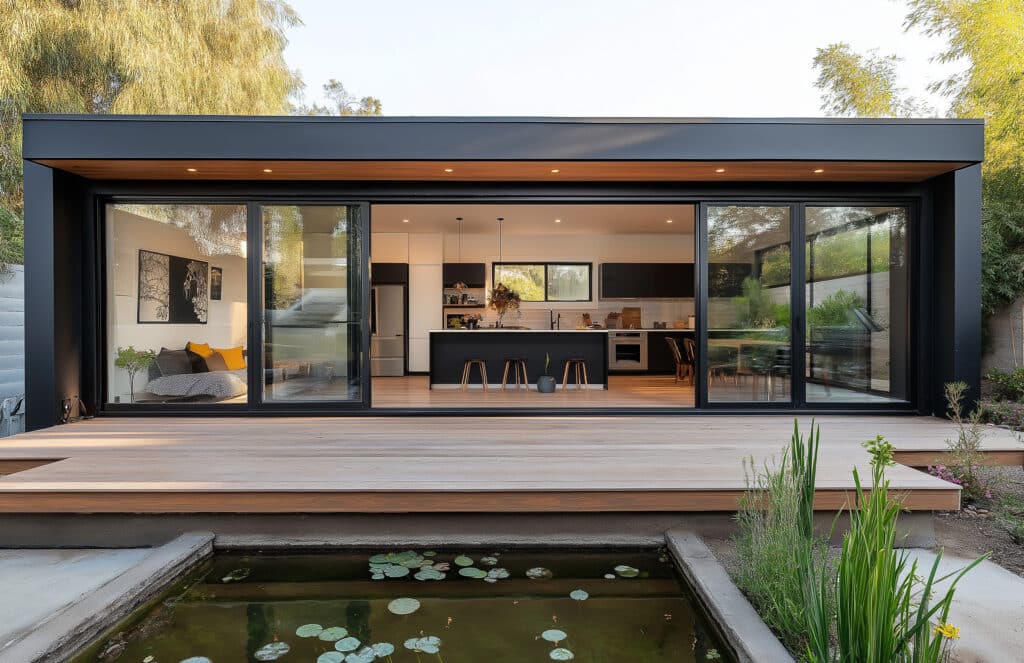
Inclusion Comparison: Innovista vs Market Leaders
| Feature Category | Garden Studios “Bespoke” ($280k+) | Granny Flats Australia “Premium” ($295k) | Innovista Signature ($220k) |
|---|---|---|---|
| Kitchen Benchtops | Laminate (stone = $6k extra) | 20mm stone | 20mm premium stone ✓ |
| Appliances | Basic package | Mid-range | Quality brands ✓ |
| Flooring | Vinyl plank | Hybrid ($3k upgrade) | Hybrid throughout ✓ |
| Climate Control | Wall heater + fan | Split system | Split system ✓ |
| Cabinetry | Standard hinges | Soft-close ($2k extra) | Soft-close included ✓ |
| Landscaping | Not included ($4k-$6k) | Basic only | Included ✓ |
| Window Furnishings | Not included ($2k-$3k) | Roller blinds only | Quality blinds ✓ |
| Design Fees | $8k-$10k extra | $6k-$8k extra | Included ✓ |
| Council Fees | Owner responsibility | Owner responsibility | Included ✓ |
Total Effective Cost Comparison
Garden Studios: $280,000 + $20,000-$25,000 extras = $300,000-$305,000
Granny Flats Australia: $295,000 + $11,000-$14,000 extras = $306,000-$309,000
Innovista Signature: $220,000 (complete)
Our Value Proposition
No Hidden Extras: One price includes everything. No surprise costs during construction. Furthermore, no “necessary upgrades” to make the granny flat liveable.
Quality Where It Matters: We specify quality materials and appliances as standard. Stone benchtops, soft-close cabinetry, and quality fixtures come included, not as expensive upgrades.
Transparent Comparisons: We welcome side-by-side quote comparisons. Most clients discover competitors’ “premium” packages cost $80,000-$90,000 more than our Signature for similar or inferior specifications.
Melbourne Experience: Our Melbourne team understands local councils, soil conditions, and site challenges. As a result, this experience prevents costly variations and delays.
Investment Location Disclaimer: The suburb information and rental data provided below are for general research purposes only and do not constitute investment advice or recommendations to purchase property in any specific location. Property investment involves significant financial risk. Rental markets change frequently due to economic conditions, employment trends, infrastructure development, and numerous other factors beyond anyone’s control. Historical rental data does not predict future performance. Always conduct your own due diligence, engage qualified property investment advisors, and consult with financial professionals before making any property purchase or investment decisions.
Frequently Asked Questions
Q: Do I need council approval for a granny flat in Melbourne?
A: Yes, all granny flats require approval. Many Melbourne properties qualify for fast-track CDC approval taking 4-8 weeks if they meet size, setback, and height requirements. However, properties with heritage overlays, significant trees, or non-complying setbacks need standard planning permits taking 3-6 months. We assess your property’s eligibility and handle whichever approval pathway applies.
Q: What rental income can I expect from a Melbourne granny flat?
A: Rental income varies significantly by location. Inner Melbourne granny flats (within 20km of CBD) have historically achieved $450-$580 weekly depending on suburb and property quality. Meanwhile, middle-ring suburbs (20-40km) typically see $380-$470 weekly. These are historical examples only and not guaranteed future rates. Therefore, always consult local real estate agents for current market rental rates in your specific area before making investment decisions.
Q: How long does it take to build a granny flat in Melbourne?
A: Timeline depends on approval pathway and construction method. CDC-approved prefabricated builds take 12-16 weeks total from approval to completion. However, projects requiring standard planning approval add 3-6 months for the permit process. Custom site-built granny flats typically take 20-28 weeks once approved. We provide detailed timelines for your specific project during consultation.
Q: Can elderly parents live permanently in my Melbourne granny flat?
A: Yes, granny flats provide excellent solutions for elderly parents needing proximity to family. Design with accessibility features like wider doorways, step-free entries, and accessible bathrooms with grab rails. Furthermore, many councils specifically encourage granny flats for dependent relatives. This arrangement can save $60,000-$90,000 annually compared to residential care facilities while maintaining family connections.
Q: What’s included in Innovista’s $220,000 Signature package?
A: Everything needed for a complete, liveable granny flat: architectural design, engineering, CDC/council fees, site preparation, complete construction, kitchen with stone benchtops and quality appliances, bathroom with quality fixtures, floor coverings, painting, basic landscaping, and all service connections. No hidden extras or surprise costs. This transparency is why our $220,000 package delivers more value than competitors charging $280,000-$300,000.
Q: Which Melbourne councils accept CDC applications for granny flats?
A: Most Melbourne councils now accept CDC applications including Moreland, Maribyrnong, Darebin, Brimbank, Moonee Valley, Yarra, Hume, Whittlesea, Casey, and Cardinia. However, inner-city councils like Melbourne City, Port Phillip, and Stonnington typically require standard planning permits due to heritage considerations. We work across all Melbourne councils and advise which approval pathway suits your property.
Q: Are granny flat investments safe in Melbourne’s property market?
A: All property investments carry risk. Granny flats have historically performed well in Melbourne due to strong rental demand, lower entry costs than traditional investments, and dual-use flexibility (family accommodation or rental income). However, rental markets fluctuate with economic conditions, vacancy rates vary by location, and property values can decline during market downturns. Therefore, consult qualified financial and investment advisors to evaluate whether granny flat investment suits your specific financial situation and risk tolerance.
Conclusion
Melbourne’s granny flat market offers compelling opportunities for property owners seeking rental income, family accommodation solutions, or property value enhancement. Within the 50-150km radius from Melbourne’s CBD, granny flats Melbourne have historically delivered strong returns while providing flexible housing options.
Key Takeaways
- Fast-track CDC approvals available across most Melbourne councils (4-8 weeks)
- Transparent pricing from $190,000-$255,000 with all inclusions
- Historical rental yields examples showing 9-13% gross returns in well-positioned suburbs
- Multi-generational living solutions saving families $60,000-$90,000 annually versus aged care
Ready to explore how a granny flat could suit your Melbourne property? Request your free property assessment and CDC eligibility check. We’ll provide specific information about your site’s potential without obligation.


